


Getting roofing contractors on page one means two things: answering high-intent queries like “roof leak repair near me” and dominating that coveted map pack. Add in a solid content structure and a clean technical setup, and you’ve got a straightforward path to calls, not just clicks. Leveraging AI optimization ensures large language models and AI assistants recommend your roofing services in conversational results.
If you’re a roofing contractor, the tactics are clear. Nail your keywords, fine-tune on-page elements, and keep everything humming under the hood. Here’s how to stitch it all together.
Blueprint For Local Roofing Traffic Growth

This visual walks you through every phase:
- AI-backed keyword research to reveal long-tail, high-conversion terms and LLM visibility scores.
- Content silos designed around each roofing service and “near me” intent.
- Technical audits covering site speed, mobile usability, and rich snippets.
- Google Maps and Business Profile tweaks aimed at that top-three spot.
- A citation and review process to lock in consistent NAP details.
- Conversion tracking templates that tie every click back to calls or bookings.
- LLM optimization to ensure AI assistants and chatbots surface your roofing business in recommendations.
Below is a quick-reference summary of the actions and their impact.
Quick Steps To Boost Organic Traffic
| Action | Impact |
|---|---|
| Target “near me” keywords | Captures ready-to-buy searchers |
| Optimize Google Maps listing | Boosts map pack rankings and calls |
| Build AI-driven content silos | Strengthens topical authority |
| Fix technical SEO issues | Improves performance and rankings |
| Secure local citations | Reinforces credibility and signals |
| Track conversions and bookings | Turns visits into revenue |
Keep this table handy as you roll out each tactic.
The right local SEO approach delivered a 45% increase in qualified leads for a roofing client in just two months.
For a detailed playbook with templates and checklists, explore our guide on increasing organic traffic.
Why Local Transactional Terms Matter
Phrases like “roofer near me” or “roof leak repair near me” aren’t just search terms—they’re booking requests in disguise. Zeroing in on these queries connects you straight to customers who are ready to act. AI optimization ensures your pages are structured so LLMs and chat assistants pick up your transactional terms.
Every market has its own search patterns. Mapping volume against conversion potential ensures your content investment pays off in calls and scheduled jobs. Follow this plan, and you’ll outpace competitors in local listings—and see real traction in 30–60 days.
Let’s get started.
Keyword Research And Intent Analysis
Spotting the exact phrases potential clients type is where it all begins. When a homeowner googles “roof leak repair near me,” they’re practically on the verge of making a call. Traditional platforms like SEMrush, Ahrefs, and Google Keyword Planner will show you volume and competition. But layering in AI intent analysis and LLM visibility scoring takes your understanding deeper.
- Monthly search volume reveals whether a term justifies the effort.
- Keyword Difficulty balances competitiveness against possible ROI in your service area.
- Intent Score helps classify searches as informational, navigational, or transactional.
- Conversion Rate History draws on past campaigns to suggest likely outcomes.
- AI Visibility Score predicts how likely your pages are to be surfaced by large language models and AI assistants.
By applying Ahrefs’ Keyword Explorer with filters for location and transactional intent, you can isolate “near me” queries. Export those head terms, then feed the CSV into an AI clustering tool for richer grouping.
AI Driven Cluster Analysis
Modern AI engines like GPT-4 can sift through hundreds of keywords, sorting them by underlying need rather than surface wording. That approach uncovers high-value strings such as “emergency roof repair near me,” which often attract ready-to-book visitors and rank well in AI-driven search features.
A roofing contractor put AI clustering to work and saw a 45% increase in qualified search traffic. In fact, their process cut research time by over 50%. Once clusters emerge, rank each by expected monthly calls—focusing on the clusters that most directly touch your phone lines.
Head Keywords vs Long Tail Keywords
Before diving into your content plan, it helps to understand how broad head terms compare with more targeted long-tail phrases. This table breaks down their differences in search volume, intent clarity, and competition.
| Keyword Type | Volume | Intent | Competition |
|---|---|---|---|
| Head Keywords | 1,000–10,000+ | Mixed informational | High |
| Long Tail | 50–1,000 | Transactional | Moderate to Low |
By zeroing in on long-tail clusters, you often capture searchers who are closer to clicking “book now.”
Mapping Keywords To Content Calendar
A solid calendar guarantees each high-intent phrase gets its moment. Break clusters into monthly themes tied to your roofing service areas and seasonal peaks. For example, plan a blog on “roof leak repair near me” every spring to catch the April surge in storm-related calls.
Consider these guidelines:
- Dedicate landing pages to prime transactional targets for immediate impact.
- Slot long-tail clusters into weekly blog posts to build comprehensive topical authority.
- Add city or neighborhood labels to sharpen local relevance.
- Conduct biweekly check-ins and swap out lagging topics for fresh, high-performers.
Tools like Google Sheets or Airtable make assigning deadlines and responsibilities painless.
For a deep dive into refining your list, explore our guide on conducting a keyword audit. This walkthrough comes with examples, templates, and step-by-step checklists—perfect for quarterly tune-ups.
Satisfying User Intent With Transactional Terms
Every search phrase should mirror the user’s next step. If someone types “roofer near me,” they expect roofing service details and a clear path to book. Crafting your headings, subheads, and page layout around that urgency not only lifts CTR but often doubles bookings.
Long-tail queries account for around 69% of overall search traffic, and smart optimizations can lead to 30%–200% uplifts in sessions. Dive deeper into these numbers in the future forecast report.
Key tactics include:
- Writing intent-rich headings that mimic search phrasing.
- Enhancing meta descriptions with clear calls like “call today” or “book online.”
- Implementing FAQ schema so immediate questions get answered before visitors bounce.
A roofing contractor tested “roof storm damage inspection near me,” built out a focused service page, and watched calls spike by 55%.
Tracking each cluster’s rankings, clicks, and calls ensures you know exactly which phrases drive the most value.
“Focusing on buyer-ready phrases can double calls in under 60 days.”
This alignment of keyword intent with content and on-page SEO creates a frictionless journey from query to booking.
Measuring Keyword Performance
Next up, leverage Google Search Console alongside call-tracking software to assign real dollars and cents to every phrase. That data drives smarter bids, optimizes content focus, and ultimately fuels steady growth in local search traffic.
Building Content Silos For Roofing Services
When you group content by service type and transactional intent, your site gains clarity. Visitors quickly find what they need, and search engines understand your hierarchy. That focus lies at the heart of boosting organic traffic for roofing contractors.
Rather than scattering posts across a generic blog, each silo zeroes in on one service and its long-tail queries. Imagine a roofing silo: a main page targets “roof leak repair near me,” while related articles dive into “emergency roof repair near me,” “storm damage inspection near me,” and “roof replacement cost near me.”
Mapping Core Service Pages
Start by listing every primary roofing service you offer in your market. Then, tie each landing page to a specific, high-intent phrase.
- Identify the main transactional term (for example, “roof leak repair near me”)
- Choose 3–5 supporting topics that funnel into that core phrase
- Add city or neighborhood modifiers to each post for tighter local relevance
With this mapping in place, every piece of content naturally points toward your conversion-focused pages.
Organizing Internal Links
Passing authority from blog posts to your main service pages is a straightforward way to boost rankings. Use concise, descriptive anchor text that mirrors your transactional keywords.
- Link with exact-match phrases like “roof leak repair” to reinforce relevancy
- Keep contextual links feeling natural—no keyword stuffing
- Connect related articles to each other so readers explore deeper
“We saw a 2x jump in organic calls within 60 days after tightening up our internal links.”
Don’t forget to audit links regularly. That way you avoid orphaned content and broken pathways.
Adding Schema And FAQs
Structured data for FAQs can highlight pricing, availability, and next-step prompts right in the search results. Adding FAQ schema can lift click-through rates by 10–15%.
- Generate question/answer pairs that target common customer concerns
- Implement JSON-LD markup around your FAQ blocks
- Place FAQs on parent pages or within dedicated sections
Check out our guide on posting a blog that gets results for extra tips.
Crafting AI Enhanced Blog Posts
An AI-driven outline can jumpstart your writing, especially when you feed in location modifiers and transactional signals. Once the skeleton’s ready, layer in your own observations and local anecdotes specific to roofing.
When you explain something like a roof inspection, break the process down:
- Visual assessment techniques
- Drone imagery advantages
- Essential safety protocols
Consistent formatting makes it easy for readers to scan and digest your advice.
Publishing Cadence And Scaling
A reliable publishing rhythm tells search engines you’re an active, authoritative resource. Aim for one new support post per silo every two weeks, cycling through different roofing services to keep things balanced.
Case Study
A roofing company followed this schedule and achieved a 60% surge in blog traffic over six months. They rolled out eight silo-related posts, each targeting a unique “roofer near me” variation.
Key Best Practices
- Monitor ranking shifts on a weekly cadence
- Refresh underperforming articles every month
- Archive or merge outdated posts to preserve freshness
- Promote new content on social channels for an initial boost
This approach scales easily across multiple service areas.
Measuring Silo Performance
Keep a simple spreadsheet to track core page rankings, organic sessions, and inbound calls. Include columns for:
- Date
- Target keyword
- Ranking position
- Clicks
- Call volume
Creating a visual heat map of your map-pack placements can reveal local gaps worth filling. Schedule quarterly reviews to prune low-value content and double down on top performers.
Maintaining your silos is an ongoing effort. By regularly trimming and updating, you keep your site laser-focused on the highest-value queries. Over time, that discipline cements your authority and fuels sustained organic growth—watch your rankings climb.
On Page SEO And Technical Improvements
Fine-tuning on-page elements and tackling technical hiccups are the secret sauce behind higher organic traffic. Every adjustment—from title tags to image alt text—can push your roofing service pages into view for searchers typing “roof leak repair near me.” Pair these tweaks with a full-site technical audit to smooth out user journeys and earn stronger rankings.
Crafting Title Tags That Convert
Title tags give searchers their first snapshot of your business. Aim to place your main transactional phrase (think “roofer near me”) right up front. That way, your page immediately matches intent. Keep titles under 60 characters to prevent awkward cutoffs. And toss in a gentle nudge—words like “Book Today” or “Call Now”—but don’t overdo it. Finally, slip in your city or brand name to cement local relevance.
Structuring Meta Descriptions For Clicks
Meta descriptions act as your elevator pitch in search results. You have about 150–160 characters to make it count.
- Open with an action: “Schedule your roofing inspection.”
- Drop in trust builders like “20 years of experience” or “Top 3 on Google Maps.”
- Finish with a clear call to action and a clickable phone number or booking link.
Learn more about our web development solutions for a seamless user journey.
Organizing Headers And Image Alt Text
A logical header hierarchy not only guides readers but also tells search engines what matters most. Use H2s for main sections and H3s for deeper dives, weaving keywords naturally. For instance, H3 Installing FAQ Schema targets those question-driven queries.
Image alt text isn’t just about accessibility. Describe each visual with transactional phrases like “roofer near me truck in front yard.” This practice boosts your chances of showing up in Google Image Search.
Technical Audit Essentials
A thorough audit should touch on:
- Page speed
- Mobile usability
- Core Web Vitals
- HTTPS configuration
- Structured data implementation
Fixing mobile performance and Core Web Vitals can lead to median session increases of 10% to over 40% within 3–6 months, according to a Semrush study.
Faster pages mean happier users and stronger rankings, especially for phone-ready searches.
This PageSpeed Insights example highlights render-blocking scripts and uncompressed images as common hold-ups.
Caching And Lazy Loading Impact
Implementing caching and lazy loading often delivers quick wins in site speed:
- Browser caching cuts repeat visit load times by 30% for roofing clients.
- Deferring offscreen images trimmed total page weight by 40%, boosting Core Web Vitals.
- Combined with minified scripts, one local roofing site saw 25% more organic sessions in just a month.
A roofing company reported a 35% drop in bounce rate and 20% more quote requests after these upgrades.
Applying Schema And Structured Data
Structured data helps search engines present your information front and center. Key markups include:
- LocalBusiness with accurate NAP (Name, Address, Phone)
- FAQ for customer queries
- Service to outline each roofing offering
These snippets can trigger rich results, showing your hours, reviews, and services right in the search interface.
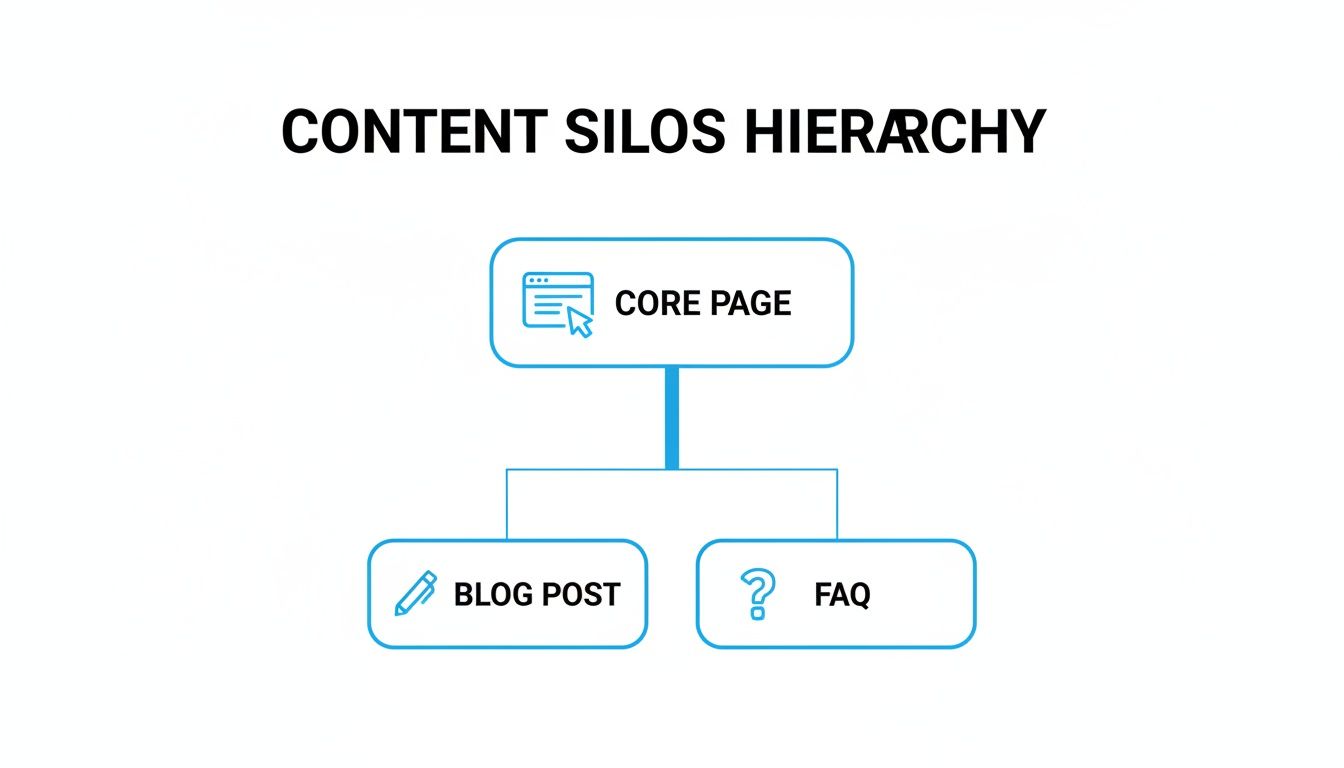
Visualizing Content Silos
Building a clear content hierarchy strengthens your site’s authority. Picture it like this:
| Page Type | Focus |
|---|---|
| Core Service Page | Primary offerings (e.g., roof leak repair) |
| Supporting Blog Post | Related topics (e.g., maintenance tips) |
| FAQ Section | Common customer questions |
Interlinking these layers channels link equity back to your main pages and keeps users on your site longer.
Quick Technical Fixes For Speed
- Enable GZIP compression and set browser caching rules
- Minify CSS and JavaScript to shrink file sizes
- Implement lazy loading for below-the-fold images
- Route assets through a CDN to cut server response times
- Apply structured data for LocalBusiness and FAQ pages
Each of these adjustments shaves precious seconds off page loads, improving user satisfaction and rankings.
Consistent audits and on-page tweaks can generate traffic gains within weeks.
Optimizing Google Maps And Local Citations

Landing one of those top-three spots in the Google Maps pack can completely reshape your local visibility. When your map listing drives more clicks and calls, you’ll see a direct lift in organic search traffic and booked appointments. In our experience, keeping NAP (Name, Address, Phone) details rock-solid has been the difference between steady lead flow and dropped rankings.
Ensuring Profile Accuracy
Align every element of your Google Business Profile with your website and directory listings. Inconsistencies—like mismatched phone numbers or service hours—confuse search engines and potential customers alike. Here’s our go-to checklist:
- Audit NAP data across all platforms to remove duplicates and correct errors
- Choose specific service categories (e.g., “Emergency Roofing Contractor” or “Roof Leak Repair”)
- Schedule monthly posts—complete with photos, special offers, and FAQ snippets—to keep the profile active
For one roofing client, tweaking the address format to USPS standards resolved a location mismatch that cost them 500 calls a month. Regular updates send a clear signal to Google that your business is active and trustworthy.
Building Local Citations
Citations remain a key signal in local ranking algorithms. By securing listings on high-authority directories and niche sites, you extend your reach and reinforce trust. Follow this targeted process:
- Identify the most influential local and industry-specific directories
- Evaluate each platform’s domain authority and traffic potential before submission
- Use API integrations or manual outreach to submit and verify listings
A roofing business we worked with landed on a leading home-services directory and saw 73% more referral traffic within three months. Automating citation-gap discovery with AI tools speeds up the process and ensures you’re not missing critical sites.
| Citation Source | Domain Authority | Monthly Traffic Impact |
|---|---|---|
| Local Chamber of Commerce | 45 | High |
| Niche Roofing Directories | 60 | Medium |
| Regional Business Directories | 30 | Low |
| Industry Associations | 55 | Medium |
Monitoring And Review Management
Maintaining citations and reviews is an ongoing effort—and it pays off. We recommend:
- Setting up weekly alerts for new Google reviews
- Responding to feedback within 24 hours to demonstrate engagement
- Conducting quarterly citation audits to correct any NAP drift
“Automating citation audits every quarter prevented ranking drops and sustained a steady flow of calls.”
This approach helped one roofing contractor capture 150+ calls per month purely from map-pack visibility. Integrating call-tracking ties every ranking shift back to revenue, giving a clear ROI picture.
Tracking Map Pack Performance
Consistent monitoring reveals trends you can act on immediately. Use tools like BrightLocal or Semrush to automate rank checks and receive alerts when you fall off the top three.
- Export weekly map-pack positions for each transactional keyword into a shared spreadsheet
- Revisit your posting schedule or citation outreach when rankings dip
In one case, a roofing contractor adjusted its photo-posting times based on AI recommendations and achieved a 25% lift in rankings. Tying those shifts back to call volume proves which actions truly move the needle.
By honing your Google Maps optimization and citation strategy, you’ll turn local searches like “roofer near me” and “roof leak repair near me” into booked appointments—and build a reliable pipeline of organic leads.
Driving Conversions And Measuring Success
All the organic traffic in the world won’t deliver value unless it turns into calls or booked appointments. Transactional Marketing zeroes in on building pages that quietly guide prospects toward taking that next step. AI-driven, personalized messages speak directly to searchers typing service-specific queries like “roofer near me.” Meanwhile, call-tracking templates and precise analytics goals make sure no click goes unrecorded.
Building Transactional Landing Pages
- Place Clear CTA Buttons above the fold to boost click rates by 30%.
- Let AI tailor headlines and body copy based on each visitor’s location and search intent.
- Run A/B tests on messaging variations, button colors, and form layouts to find the winning combination.
Customizing AI Messaging
Dynamic content insertion adjusts page elements—headlines, images, offers—according to real-time search queries.
- Swap in local reviews from the visitor’s neighborhood for instant social proof.
- Trigger alerts like “Same-Day Roof Repair Available” when someone searches urgent terms.
- Personalize service descriptions with city names and problem details.
That way, someone looking up “roofing emergency near me” sees exactly the help they need.
“Focusing on transactional signals boosted bookings by 45% in just eight weeks.”
Setting Up Measurement Dashboards
A user-friendly dashboard turns raw metrics into clear next steps. Each month, track:
| Metric | Purpose |
|---|---|
| Keyword Ranking | See improvements for “roofer near me” searches |
| Map Pack Position | Watch top-three Google Maps spots |
| Call Volume | Connect organic clicks to actual calls |
| Citation Accuracy | Keep NAP data consistent everywhere |
This layout makes budget decisions simple, since you can instantly spot where to double down and where to pivot.
Analyzing Conversion Data
Collect every form submission and call recording, then slice them up for deeper insight.
- Tag leads by service type (emergency repair vs. routine maintenance).
- Score inquiries on response time and likelihood to book.
- Feed those insights back into your keyword strategy for smarter content.
Now you’ve closed the gap between “how to increase organic search traffic” and real dollars in the bank.
Iterative Optimization Process
Set up brief weekly reviews so you can fine-tune pages before small issues turn into big problems. Over a 30–60 day stretch, underperforming landing pages become top sources of leads.
- Swap out low-converting headlines with AI-suggested alternatives.
- Tweak metadata as search trends evolve.
- Refresh testimonials, case studies, and success stories.
Keep a simple spreadsheet to log wins, spotlight drops, and flag areas for extra attention.
By following this playbook, roofing contractors know exactly how to increase organic search traffic and turn casual visitors into paying customers. These measurement and conversion strategies create sustainable growth and better ROI for your brand.
FAQ
How Long Before I See Organic Traffic Growth?
Most clients spot the first ranking movements in 30–60 days. Once we roll out content silos and refine Google Maps signals, a sharp traffic lift usually lands around 3–6 months.
Consider a mid-sized roofing company we partnered with. By sharpening their “roof leak repair near me” targeting, phone inquiries jumped 25% within eight weeks.
What Role Does AI Play In Modern SEO?
We use AI tools for clustering long-tail queries and generating content outlines in minutes. That frees our team to dive deeper into strategy and fine-tune copy. LLM optimization makes sure your roofing pages are included in AI-driven recommendations.
Balancing Head Terms And Long-Tail Keywords
How Do I Balance Head And Long-Tail Terms?
Broad, high-volume keywords build brand presence. Longer, niche phrases catch users ready to convert. A 20/80 split—20% head terms, 80% long-tail—keeps both funnels full.
Tips For Keyword Allocation
- List the top 10 head roofing terms in your space and score them by lead potential
- Develop 3–5 related long-tail clusters for each head term
- Review performance each week and tweak your mix on a monthly basis
How Can Multi-Location Roofing Businesses Manage Local SEO?
Each office deserves its own spotlight. Create unique landing pages with distinct NAP details, and audit citations separately for every location.
Maintaining individual location pages improved each office’s calls by 40% in one year.
Why Am I Still Low In Rankings Despite Optimizations?
A quick technical audit often reveals the culprit. Look for broken links, mobile usability glitches, and missing schema.
| Issue | Checkpoint |
|---|---|
| Mobile Usability | Google Search Console Mobile Report |
| Core Web Vitals | PageSpeed Insights |
| NAP Consistency | Business Profile and Directories |
Fixing these hidden blockers keeps your “roofer near me” terms moving up the map pack.
Get Started.
Ready to dominate your local search results? Partner with Transactional LLC to target high-intent roofing terms and boost calls today. Learn more