


Transactional searches drive local revenue. If your business does not show up when someone needs service now, Google is handing those calls and booked jobs to a competitor.
For service businesses, local SEO is not about traffic for its own sake. It is about showing up in Google Search and Google Maps when intent is high and the customer is ready to act. Google evaluates local results based on proximity, relevance, and prominence, as noted earlier. Those factors decide whether you appear for a broad query like “roofer” or the search that turns into work, like “roof repair near me.”
That distinction matters. “Emergency plumber near me,” “dentist near me,” and “AC repair near me” come from people ready to call, book, or request service. Generic visibility does not produce the same outcome. Revenue comes from ranking for searches tied to immediate demand and matching that visibility with a site and profile built to convert.
That is the standard at Transactional Marketing. Every action should tie directly to business outcomes, the same way disciplined operators use reporting systems and X8 Web Design professional SEO strategies to turn search visibility into measurable leads.
The ten practices below are not a generic checklist. They are a direct playbook for winning high-intent local searches and turning that demand into phone calls, appointments, and booked jobs.
1. Google Business Profile Optimization and Complete Verification
Practical rule: If your Google Business Profile cannot confirm who you are, where you work, what you do, and how to contact you in under a minute, it is costing you calls.
Google Business Profile drives visibility in the searches that turn into revenue. If your profile is incomplete, poorly categorized, or still waiting on verification, you will miss high-intent searches in Google Search and Maps.
As noted earlier, Google Business Profile signals heavily influence Local Pack visibility. Start with the fields that affect transactional discovery first. Choose the most precise primary category for the service that makes you money, set your service area correctly, complete every core business detail, and keep the listing verified. Those basics decide whether you show up for searches from people ready to book now.
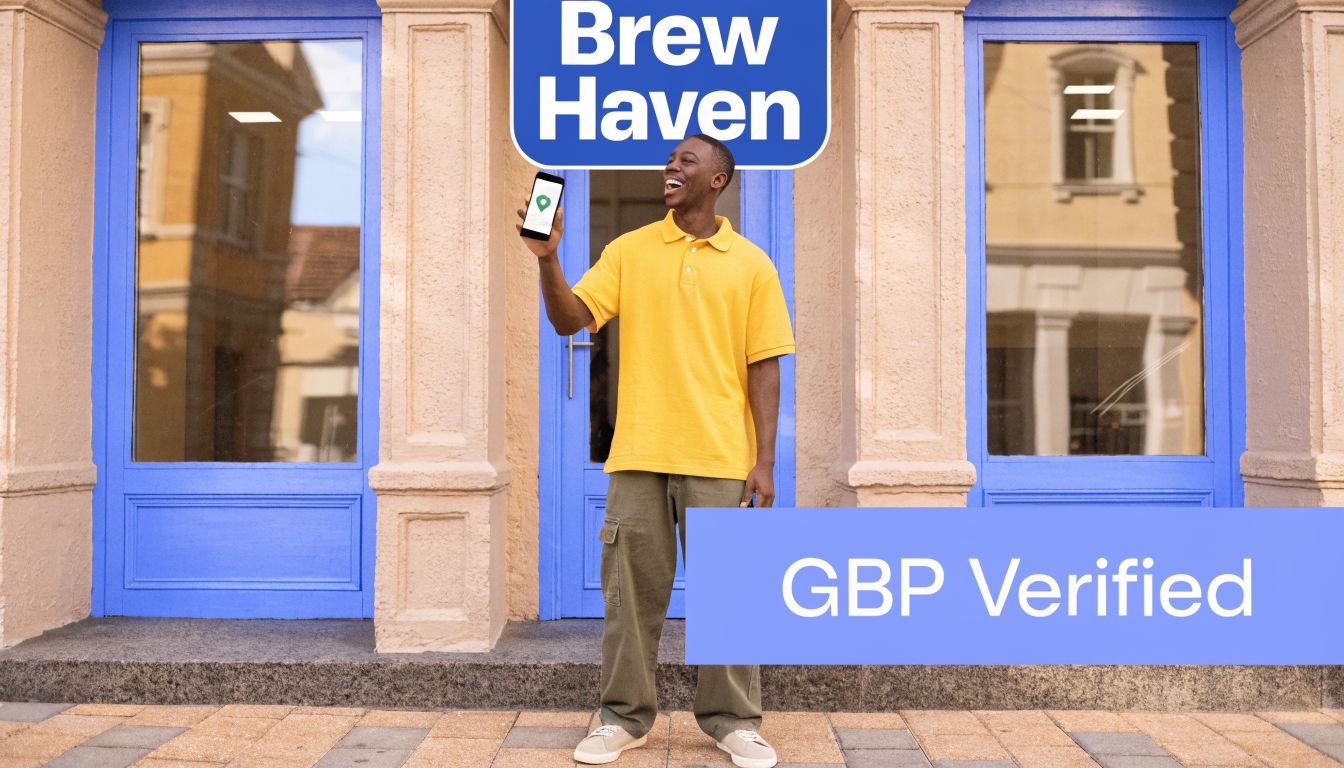
Treat your profile like a sales asset, not a directory listing. An HVAC company should use “HVAC contractor” if that is the closest fit. A dentist should publish current hours, real treatment categories, and photos that confirm the practice is active. A pest control company should list each service it sells, define the actual service area, and match those details to the website.
Monthly Google Business Profile maintenance checklist
- Set the right primary category: Pick the closest match to the service that brings in the best jobs.
- Complete service listings: Add every core service tied to local buying intent.
- Upload proof-of-business photos: Use current images of staff, vehicles, office, equipment, and completed work.
- Monitor Q&A: Answer common pre-sale questions before a prospect clicks another listing.
- Respond to reviews: Show that the business is active, trusted, and open for new work.
- Check hours and contact details: Wrong hours and bad phone numbers waste ready-to-buy traffic.
For a practical model, review how agencies approach X8 Web Design professional SEO strategies, then apply the same discipline to your own GBP.
Complete verification matters just as much as optimization. An unverified or suspended profile limits edits, weakens trust, and can block visibility when search demand spikes. Handle verification early, document every login and ownership detail internally, and resolve duplicate listings before they split authority or send leads to the wrong phone number.
A short walkthrough helps if your team needs process clarity.
2. Local Citation Building and Consistent NAP
Start with the platforms that send real local buying signals:
- Google Business Profile
- Apple Maps
- Bing Places
- Yelp
- Better Business Bureau
- Local chamber of commerce listings
- Trade association directories
- Industry-specific marketplaces
If your business name, address, phone number, and website differ across those profiles, you lose trust with Google and with ready-to-book customers. A bad phone number means missed calls. A duplicate listing sends people to the wrong address. A mismatched suite number creates doubt at the exact moment someone is deciding who to hire.
Citation work affects transactional searches because Google wants to rank businesses it can verify. Consistency gives Google a clean identity match across the web. That supports stronger visibility in Maps, better confidence in your local presence, and fewer leaks in the path from search to phone call.
Here's the rule. Standardize your NAP once, then copy that exact format everywhere.
A plumbing company should use the same local phone number on Google, Yelp, Apple Maps, and every trade directory. A dental practice should make sure healthcare directories match the website footer and contact page exactly. A roofing company with two offices should never let aggregators invent alternate versions of the business name or merge locations into one profile.
Citation priorities that actually matter
1. Clean core listings first.
Fix the major platforms before you touch smaller directories. That is where high-intent searchers check hours, call buttons, directions, and reviews.
2. Add niche citations that match how customers shop.
Use directories tied to your trade, not random submission sites. Relevant industry listings support trust and can put you in front of people comparing providers.
3. Match formatting exactly.
Pick one version of your business name, address, suite format, phone number, and URL. Use it everywhere. No shortcuts.
4. Remove duplicates fast.
Duplicate profiles split authority, confuse customers, and can route leads to the wrong listing.
5. Recheck citations after every business change.
Moves, rebrands, phone changes, and site migrations create citation errors fast.
Use a simple spreadsheet if you have one location. Use a citation management tool if you have multiple locations or frequent updates. The method matters less than the discipline. Accuracy wins.
Teams publishing city pages and service pages should also keep citation data aligned with the site. If your content strategy expands into neighborhood and metro-area terms, study how structured publishing supports discoverability in long-form content strategies for creators, then apply the same consistency to your local entity data.
Clean citations are not glamorous. They help you show up for searches from people who need a service now, trust what they see, and tap the call button without hesitating.
3. Location Based Content Silos and Service Page Optimization
Transactional local rankings come from page-to-query alignment. If someone searches "emergency plumber in Mesa" or "roof repair Scottsdale," Google wants a page built for that service in that place. A generic services page rarely wins that click, and it rarely turns into a call.
A smart site architecture directly addresses this by giving each high-intent search a clear destination. Build a parent page for every core service. Then create supporting location pages for the cities or neighborhoods that produce jobs.
An HVAC company should publish an "AC Repair" page, then separate pages for "AC Repair in Mesa" and "Emergency AC Repair in Tempe." A dentist should split "Dental Implants" from "Dental Implants in Scottsdale." A pest control company should separate "Termite Control" from "Termite Control in Gilbert." Each page targets a distinct buyer search and gives Google a stronger relevance match.
Build pages around booked-job intent
Your structure should mirror how customers buy, not how you organize your nav.
- Parent service pages: One page for each core revenue service.
- Child location pages: One page for each service plus city or neighborhood combination with real demand.
- Local proof on every page: Show the neighborhoods you serve, relevant testimonials, service-area details, and FAQs tied to that market.
- Tight internal linking: Link service pages to their location pages, and link location pages back to the main service page.
- Schema support: Add LocalBusiness, Service, and BreadcrumbList markup where it fits.
This only works if the pages are genuinely different. Do not swap city names and call it done. Add local project examples, area-specific pain points, response times, neighborhood references, and offers tied to the service. Thin duplicates waste crawl budget and weaken trust.
Teams building out dozens of pages need a system. The right approach is structured planning around demand, coverage, and page purpose. For teams scaling that process, these long-form content strategies for creators can help shape a publishable content model without losing transactional focus.
One more rule. Do not dump every city you serve onto a single page. Give each important market its own entry point so customers with money in hand land on the exact service page that gets them to call, book, or request a quote.
4. Local Link Building and Industry Specific Authority Acquisition
Links still matter, but local SEO rewards relevance over raw volume. A link from a chamber of commerce, supplier, local publication, or complementary service business can carry more local weight than a random national directory.
This is also where most businesses stay too isolated. They treat local SEO as a solo project. That's a mistake. Collaborative local SEO networks are an underserved opportunity for service businesses, especially when similar companies can promote each other without competing for the same exact jobs. The strategic point is simple: local trust compounds when trusted local businesses reference each other.
A roofer can partner with a gutter installer. A plumber can build relationships with restoration companies. A pest control business can earn mentions from property management firms, real estate offices, and local home service blogs. Those links send authority signals and often create referral traffic with real buying intent.
Where to get links that actually help
- Local business organizations: Chambers, BBB, neighborhood associations.
- Community sponsorships: Youth sports, school events, local fundraisers.
- Trade partners: Suppliers, subcontractors, complementary service providers.
- Local press opportunities: Storm response, community service, safety tips, seasonal guidance.
- Industry resource pages: Associations and vetted local business roundups.
A good local link does two jobs. It strengthens rankings and it puts your brand in front of the exact people who might hire you.
If you can build an industry-specific promotion network, even better. That aligns with how Transactional LLC positions collaborative visibility for service businesses. The payoff isn't abstract authority. It's more visibility for terms tied to calls and jobs.
5. Review Generation and Reputation Management Strategy
Reviews move rankings and they move conversions. That's why review generation needs a system, not a hope-based approach.
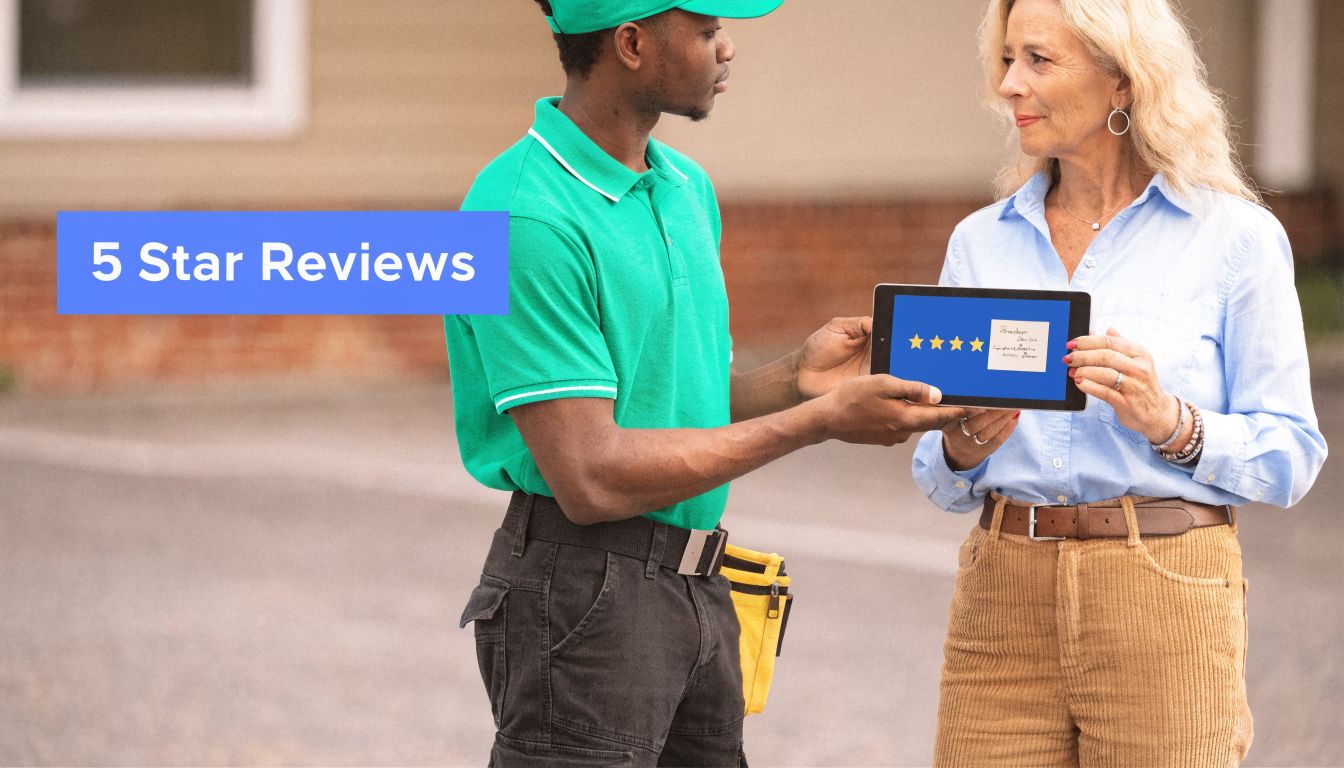
By 2025, reviews had become one of the strongest local SEO signals, and businesses with more reviews tend to rank better even when their average star rating isn't perfect, according to Rio SEO's analysis of what's working in local SEO in 2025. That matters for service businesses. You do not need a flawless profile to win. You need a steady flow of authentic feedback.
If you run a plumbing company, ask after the service call is complete and the customer confirms the issue is solved. If you run a dental office, request feedback after a positive visit and make the link easy to access. If you manage a pest control company, train technicians to mention reviews in person, then trigger a same-day text.
How to make reviews support rankings
Respond to every review. Positive and negative. Keep responses useful, professional, and locally relevant.
- Ask immediately: The best time is right after a good service experience.
- Use direct links: Remove friction so the customer can finish in seconds.
- Reply with context: Mention the service and location naturally when appropriate.
- Spread review sources: Google matters most, but Yelp, Facebook, and niche platforms also help credibility.
- Watch for patterns: Repeated complaints often point to an operations issue, not just a marketing issue.
Businesses with 50 or more reviews often rank two to three positions higher in local results, according to BrightLocal data summarized earlier. That's enough movement to change call volume in a meaningful way, especially in the map pack.
6. High Intent Keyword Research and Conversion Focused Search Strategy
Ranking for broad terms feels good. Ranking for buyer terms gets jobs booked.
A service business should build its keyword strategy around urgency, location, and service specificity. “Water heater repair near me,” “emergency electrician in Columbus,” and “dentist accepting new patients” all carry stronger purchase intent than broad category phrases. Those are the searches that signal money in hand.
The easiest place to start is Google Search Console. Look for queries that already generate impressions with clear transactional intent. Then tighten the page match. If a page is ranking for “furnace repair near me,” the title, heading, copy, and call to action should all support that exact intent.
What transactional keyword targeting looks like
- Prioritize service plus location: Build around “service in city” and “near me” demand.
- Create emergency pages where relevant: Especially for plumbing, HVAC, electrical, and urgent care categories.
- Separate commercial services: Don't bury “same-day,” “emergency,” or “new patient” terms inside general pages.
- Support with FAQs: Address cost, availability, timing, and service area questions directly.
- Match the offer to the search: If the search is urgent, the page should push immediate calls.
This is the center of local seo best practices for service companies. The right keyword isn't the one with the biggest search volume. It's the one most likely to produce a phone call.
7. Mobile Optimization and Local Search Experience
Mobile experience decides whether a high-intent search turns into a phone call or a lost job.
A person searching from a driveway, office parking lot, or kitchen table is not browsing. They are trying to hire someone now. If your site loads slowly, buries the phone number, or forces too many taps, Google may still send you the click, but your site will waste it.
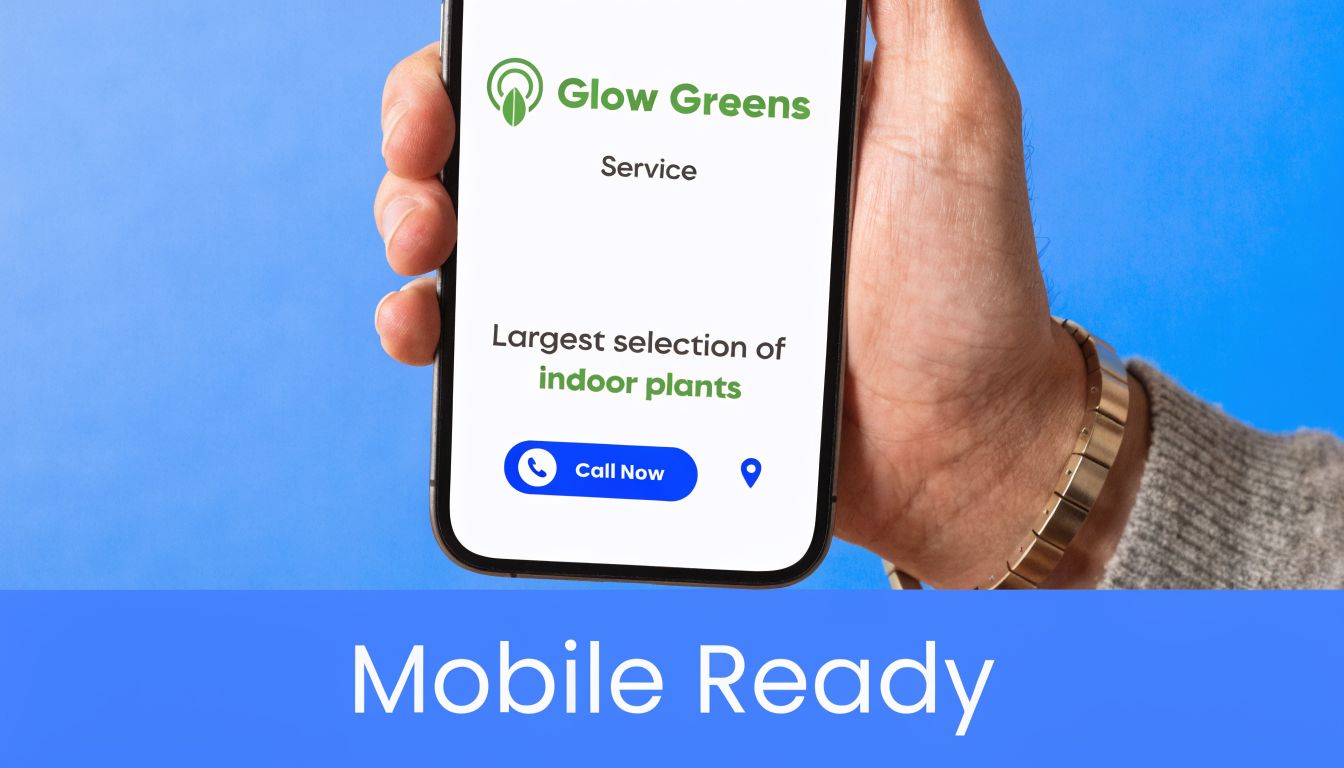
For service businesses, mobile optimization sits directly on the revenue path. The buyer wants three things fast: proof you serve their area, a clear next step, and an easy way to contact you. Put those elements at the top of the page and make them impossible to miss.
A roofer should show tap-to-call and service area details immediately. A chiropractor should make directions and appointment booking easy from the first screen. A med spa should remove friction between the search result and the booking form.
Mobile fixes that drive more local leads
- Put the primary conversion action first: Use a visible call button or booking button above the fold.
- Show trust fast: Display reviews, hours, and service area details near the top.
- Keep forms short: Name, phone, service need, and zip code are usually enough to start the sale.
- Cut page weight: Compress images, reduce bulky scripts, and remove design elements that slow load time.
- Make buttons thumb-friendly: Small buttons and crowded layouts kill action on phones.
- Test on real devices: Check iPhone and Android behavior, page speed, tap targets, maps, and form completion.
A mobile visitor with urgent intent should be able to call, book, or request service within seconds.
Treat mobile UX like sales infrastructure, not web design polish. The local brands that win transactional searches are the ones that make it easy for ready-to-buy customers to act immediately.
8. Schema Markup for Local Services and Rich Results
Schema markup helps Google match your business to high-intent searches with clearer confidence. For service businesses, that means a better shot at showing the right details to people who are ready to call, book, or request a quote.
Google should not have to guess what you offer, where you operate, or which page represents which service. Schema removes that ambiguity. It reinforces your local relevance at the page level and supports richer search presentations that can win more clicks from buyers comparing options fast.
A dentist can mark up office details, accepted services, provider information, and review content. An HVAC company can mark up repair and installation pages, service areas, and business identity. A plumber can connect service pages to core business data so Google sees a tighter relationship between the brand, the offer, and the local market served.
Schema types worth implementing
- LocalBusiness schema: Business name, address, phone, hours, and core identity signals.
- Service schema: Clear service-level detail on revenue-driving pages.
- BreadcrumbList schema: Stronger site structure and cleaner page relationships.
- Review schema: Useful when it follows Google's rules and reflects visible on-page content.
- FAQ schema: A smart fit for service pages that answer buyer questions before they bounce.
Use JSON-LD. Validate it. Keep it current when your hours, service areas, or business details change.
This is not a technical nice-to-have. It is a visibility and conversion play. If your service pages target transactional searches, schema should support the exact actions that make you money: calls, form fills, booked appointments, and quote requests.
If your site runs on Yoast SEO, Rank Math, or custom templates, implement the markup properly and finish the job. Incomplete schema leaves search visibility on the table.
9. Multi Location Strategy and Service Area Expansion
Expansion only works when Google can match each market you serve to a page and profile built for buyers in that market. If you want more calls from "near me," "same day," and city-specific service searches, give every location real local assets.
Cloned pages with swapped city names do not rank well, and they do not convert well. They tell Google very little about why your business deserves visibility in that town. They also give searchers no reason to call you instead of the company that shows local proof, clear service coverage, and a page written for their area.
Each physical office needs its own Google Business Profile and its own location page. Each service area you target needs a page that explains what you do there, which jobs you handle most often in that market, and why a customer in that city should trust you today. That is how service businesses turn geographic expansion into booked work.
How to expand without weakening your SEO
- Build a page for every real market: Write unique copy for each city or office. Include local jobs, local testimonials, local FAQs, and a call to action tied to that area.
- Create separate profiles for legitimate locations: Keep categories, hours, phone numbers, and service details accurate for each office.
- Publish service and city combinations where demand exists: A generic city page is rarely enough. "Water heater repair in Plano" or "emergency electrician in Mesa" matches how buyers search.
- Show service-area boundaries clearly: If you travel to nearby towns, say so on the relevant pages. Remove vague coverage claims.
- Measure performance by market: Track calls, form fills, direction requests, and rankings by city so you know where expansion is producing revenue.
- Use clear site architecture: Location hubs and service hubs help search engines and customers move from broad pages to the exact service-area page that fits their need.
A roofing company entering three neighboring cities should not send all traffic to one broad "areas we serve" page. It should publish distinct local pages, match them to the right profiles where eligible, and support them with proof from each market. That structure gives Google stronger local relevance and gives ready-to-book customers a faster path to the phone.
10. Search Console Optimization and Data Driven Keyword Strategy
Search Console tells you where revenue opportunities are already forming. Use it every week.
The best opportunities often sit just below top visibility. Look for pages getting impressions on high-intent searches but underperforming on clicks. Then tighten titles, headings, internal links, and on-page copy around those exact terms. That's how you turn almost-ranking pages into transactional assets.
Search Console also helps you spot service-area gaps. If a dental office is getting impressions for one neighborhood but not another, that often points to a content or internal linking gap. If a plumbing page gets impressions but weak clicks, the title may be too generic for the search intent.
What to review every week
- Queries with commercial intent: “Near me,” “emergency,” “same day,” “open now,” “new patients.”
- Pages in striking distance: Ranking just outside top local visibility.
- CTR outliers: Good impressions, weak clicks usually means weak messaging.
- Mobile performance: Compare mobile and desktop click behavior.
- Index coverage: Make sure every important location and service page is indexed.
A transparent reporting setup matters here. Transactional LLC describes a dashboard-driven model that tracks keyword timelines, heat maps, Search Console queries, and traffic across service cities. That kind of visibility helps owners judge SEO by business outcomes, not vanity metrics.
10-Point Local SEO Best Practices Comparison
| Item | Implementation complexity | Resource requirements | Expected outcomes | Ideal use cases | Key advantages |
|---|---|---|---|---|---|
| Google Business Profile (GBP) Optimization & Complete Verification | Low → Medium (initial setup few hours; ongoing maintenance) | Time (5–10 hrs/mo), photos/videos, account verification | Improved Maps/local-pack visibility, higher CTR, increased calls | Local service businesses seeking local pack presence | Free to use, direct impact on Maps rankings and trust |
| Local Citation Building & Consistent NAP | Medium (audit, manual submissions, ongoing monitoring) | Citation tools or services, time, spreadsheet tracking, occasional fees | Better local rankings and directory visibility; reduced NAP errors | Competitive local markets and industry-specific directories | Builds credibility across platforms; drives referral traffic |
| Location-Based Content Silos & Service Page Optimization | High (planning, content creation, careful linking) | Content writers, SEO research, CMS management, schema work | Topical authority, improved rankings for location-service queries, higher conversions | Multi-service businesses scaling across cities/areas | Targets high-intent local keywords; scalable content strategy |
| Local Link Building & Industry-Specific Authority Acquisition | High (outreach, PR, relationship building) | Outreach resources, PR/sponsorship budget, networking time | Increased domain/local authority and referral traffic; ranking gains | Businesses active in local community or industry networks | High-value authoritative links that boost local relevance |
| Review Generation & Reputation Management Strategy | Medium (process setup, staff training, consistent execution) | Review tooling, CRM/workflows, staff time, monitoring | Higher star ratings, improved CTR and conversions, stronger trust signals | Service businesses where social proof drives bookings | Direct ranking and conversion impact; ongoing social proof |
| High-Intent Keyword Research & Conversion-Focused Strategy | Medium (data analysis and mapping) | Tools (GSC, Semrush, Ahrefs), analyst time, competitor research | More qualified traffic, higher conversion rates, faster ranking for intent terms | Businesses prioritizing lead generation and emergency services | Better ROI by prioritizing buyer-intent keywords |
| Mobile Optimization & Local Search Mobile Experience | Medium → High (dev work, testing across devices) | Developers, performance tools, testing devices, UX design | Faster mobile pages, improved mobile rankings, higher click-to-call conversions | Any local business with high mobile search volume | Complies with mobile-first indexing; improves mobile conversions |
| Schema Markup Implementation for Local Services & Rich Results | Medium (technical implementation, validation) | Developer or plugin, JSON-LD expertise, testing tools | Eligibility for rich snippets/knowledge panels; higher CTR | Businesses wanting rich results for services, pricing, reviews | Enhances SERP appearance with stars/pricing; supports voice search |
| Multi-Location Strategy & Service Area Expansion Optimization | High (multiple GBPs, unique content per location) | Content scaling, multiple profiles/phones, tracking and reporting | Independent rankings per location; expanded geographic share | Franchises and businesses expanding to many service areas | Scalable local presence with hyper-local optimization per site |
| Search Console Optimization & Data-Driven Keyword Strategy | Low → Medium (regular analysis and action) | Google Search Console access, analyst time, reporting cadence | Data-driven quick wins, improved CTR and targeted ranking gains | Sites seeking measurable local SEO improvements | Free direct Google data revealing impressions, CTR, and issues |
Your Playbook for Local Market Domination
Local market leaders do not win by chasing traffic. They win by owning the searches that turn into calls, quote requests, appointments, and booked jobs.
That is the standard. A service business should build local SEO around buyer intent, not vanity metrics. The goal is simple: appear in front of people who need the service now, are comparing options now, and are ready to contact someone now.
That focus on buyer intent puts Google Maps and local organic results at the center of the strategy. A search for a roofer, plumber, personal injury lawyer, or emergency HVAC company usually signals immediate commercial intent. The business that shows up with a stronger profile, stronger pages, stronger reviews, and fewer trust gaps gets the lead.
Winning that visibility takes a connected system. Complete and verify your Google Business Profile. Clean up citation errors and keep NAP data consistent everywhere. Build city and service pages that match real transactional searches. Get links from local organizations, trade associations, suppliers, and relevant community sites. Generate reviews as part of your operating process, not as an occasional campaign. Make the mobile path to call or book fast and obvious. Add schema that helps Google understand your services and locations. If you serve multiple areas, build each location with original assets and distinct local relevance. Then use Search Console to tighten titles, improve click-through rate, and spot new demand before competitors do.
This is not another checklist. It is a system for capturing customers with money in hand.
If you want help implementing that system, Transactional LLC is one option for service businesses that need support with Google Maps optimization, industry-specific content silos, citation building, and dashboard-driven local SEO execution. The right partner keeps the work tied to transactional keywords, local visibility, and measurable business outcomes in the cities you serve.