

Most advice about a facebook page for business is stuck in the brand-awareness era. It tells local companies to post holiday graphics, collect likes, and stay “active.” That advice misses the point.
If you own an HVAC company, dental practice, pest control business, roofing company, chiropractic office, or med spa, your Facebook Page should support one goal above all others. It should help you win transactional searches. Those are searches like “AC repair near me,” “dentist near me,” and “exterminator near me,” where the person searching is ready to spend money.
That changes how you build the page, what you publish, and how you measure success. Likes are fine. Calls are better. Page views are useful. Booked jobs are what matter.
Why Your Facebook Page Is a Secret Weapon for Transactional Search
A lot of businesses still treat Facebook like a digital bulletin board. They post once in a while, hope customers notice, and then conclude that Facebook “doesn’t work.”
That conclusion usually comes from using the platform the wrong way.
Organic Facebook posts reach only about 10% of a business’s audience without paid promotion, which is why a pure organic strategy turns into a post-and-pray routine for local service companies (YouTube analysis on the organic reach problem). If you stop there, your page won’t do much.
Facebook is not the main event. It is a support asset.
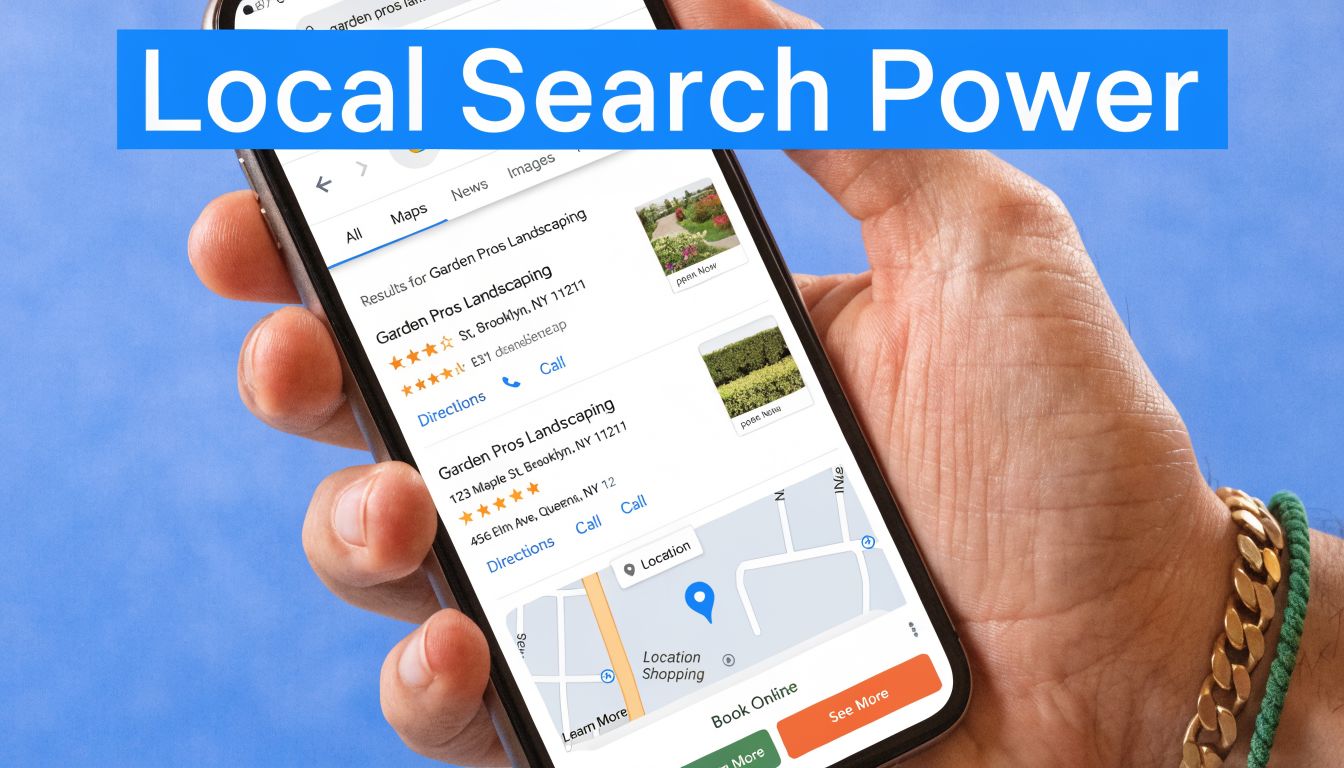
For local businesses, the money is usually in Google Maps, your Google Business Profile, and your website pages targeting buyer-ready searches. Facebook helps reinforce those assets.
An active page gives people another trusted place to verify who you are. They can see your branding, service area, recent activity, customer interactions, and proof that a real company is behind the listing. That matters when someone is comparing three contractors, two dentists, or several pest control companies in the same city.
A strong page also gives you more branded content that can be crawled, referenced, and associated with your business across the web. That supports entity consistency, trust, and local relevance.
If you need a deeper view of how social fits into a larger system, Mastering Social Media Marketing offers a useful broader perspective on making social channels serve actual business growth instead of vanity reporting.
Why this matters for map pack visibility
Google Business Profile is still the core asset. Your Facebook Page is not a replacement for that. It’s a supporting authority signal.
That’s why businesses that want map visibility need to understand what a Google Business Profile is and then build supporting profiles around it with matching business details and clear service messaging.
Practical rule: If your Facebook Page can’t help a customer verify your legitimacy in under a minute, it’s not helping your local SEO.
The businesses that get value from Facebook don’t use it as a random social feed. They use it as a credibility layer tied to local search, branded search, retargeting, and lead capture. This is the primary role of a facebook page for business when your priority is getting found by people ready to buy.
Building Your Page Foundation for Local SEO
A Facebook Page is easy to create. A Facebook Page that strengthens local search visibility takes more discipline.
Facebook Pages for business launched on November 6, 2007, and by Q4 2024 Facebook had surpassed 3 billion monthly active users, giving local businesses massive visibility potential even though average engagement remains limited (Sprout Social’s Facebook stats for marketers). That scale is useful, but only if your page is built correctly from the start.
Match your core business identity everywhere
The first rule is simple. Your Facebook Page needs to match your main business records.
That means your business name, address, phone number, website, and hours should align with your Google Business Profile and website footer. If your GBP says “Smith Plumbing LLC” and your Facebook Page says “Smith Plumbing Pros,” you create unnecessary inconsistency.
Use this checklist:
- Business name: Enter your real operating name, not a slogan-heavy variation.
- Address: If you show an address publicly, format it the same way you use it on your main citations.
- Phone number: Use your primary local number, not a random tracking number that appears nowhere else.
- Website URL: Send traffic to the correct service site, not a generic homepage if a better landing page exists.
- Hours: Keep them current. Wrong hours damage trust fast.
Pick the closest category to what you actually sell
Most businesses get sloppy here. They choose something broad because it feels safer.
That weakens relevance.
If you’re a roofer, say roofer. If you’re an orthodontist, say orthodontist. If you’re an emergency plumber, don’t hide inside a vague category that tells neither customers nor platforms what you do.
Your page category helps frame your business identity. That identity needs to line up with your website content, Google Business Profile categories, and the transactional terms you want to rank for.
For service companies working to win “near me” searches, that alignment matters more than clever branding language. A clean, well-matched local presence works better than a creative but muddy one. That’s also why businesses investing in local SEO for home services usually see stronger results when every profile says the same thing in the same way.
Secure a clean vanity URL and username
A messy page URL looks neglected. It also makes citations and sharing more awkward than they need to be.
Use a username that matches your real brand as closely as possible. If your main business name is available, take it. If not, use a clean variant with your city or primary service.
Good examples are straightforward:
- Brand name
- Brand name plus city
- Brand name plus core service
Bad examples usually include extra punctuation, filler words, or outdated phrases from a previous rebrand.
Fill in the overlooked fields
A lot of pages go live half-finished. That’s a mistake.
Complete your service area, description, messaging settings, appointment details, and contact options. Even if some of these fields don’t directly drive rankings, they reduce friction and increase trust.
An incomplete local profile doesn’t look small. It looks unreliable.
Foundation choices that help versus choices that hurt
| Page setup choice | Better approach | Weak approach |
|---|---|---|
| Business identity | Exact match with website and GBP | Variations across platforms |
| Category | Specific service category | Broad generic category |
| URL | Clean branded username | Random auto-generated handle |
| Contact details | Fully completed and current | Missing or outdated info |
| Purpose | Built to support local search | Built only to “post sometimes” |
A facebook page for business works best when it behaves like part of a local search system, not an isolated social profile. Build the foundation that way and every later post, review, click, and engagement signal has a stronger place to land.
Optimizing Your Profile to Convert Local Customers
A complete profile is not the goal. A conversion-ready profile is the goal.
Most local businesses stop too early. They upload a logo, add a short sentence, maybe include a phone number, and assume the page is finished. It isn’t. A page like that might exist, but it won’t persuade a customer to call when they’re comparing options.
Pages that optimize engagement intentionally perform better over time. Businesses are advised to track Private Engagement Rate, aim for the 0.15% benchmark, and top-performing service pages exceed 0.5% by testing content and removing weak posts. Pages that actively optimize see 25-40% follower growth and 15% higher lead conversions (Social Status on Facebook metrics).
Your visuals should confirm trust fast
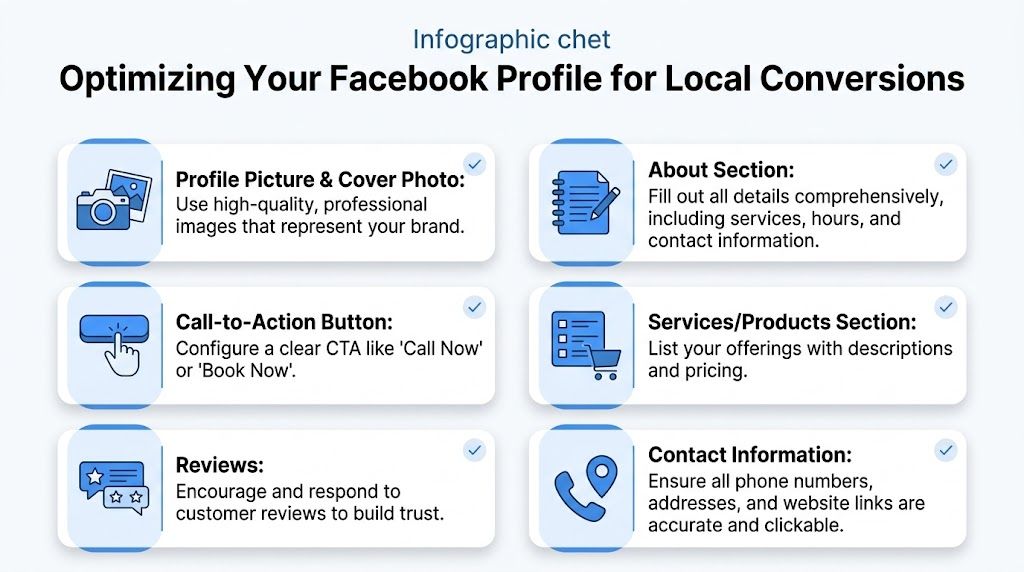
Profile photos and cover photos do real work. They aren’t decorative.
Your profile image should usually be your logo. If your brand is heavily vehicle-based or locally recognized by wraps and uniforms, a branded service van can also work. The key is recognition. A customer should know they’ve found the right business.
Your cover photo should support a buying decision. Good options include:
- Team photo: Best when trust and professionalism matter, such as dental, chiropractic, and med spa.
- Vehicle fleet or jobsite image: Strong for plumbing, HVAC, roofing, and pest control.
- Call-to-action design: Good if it includes your core service and contact path.
- Proof-based creative: Awards, certifications, or a strong before-and-after image.
Avoid stock photos that could belong to anyone in any city. They weaken local trust.
Your About section needs buying language
The About section should not read like a generic mission statement. It should describe what you do, where you do it, and how a customer can take action.
A weak About section says you are “committed to excellence.” That phrase doesn’t help the buyer and doesn’t clarify your service relevance.
A stronger one includes your primary services, service areas, and customer intent. Think in terms like emergency repairs, same-day appointments, cosmetic treatments, inspections, installations, or consultations. Write for the customer who is searching with urgency.
Use plain language. Mention your city and nearby service areas naturally. Keep the wording aligned with your website and Google Business Profile.
The services section deserves more attention than it gets
For local businesses, the Services section is one of the most underused parts of a facebook page for business.
The goal is to translate broad branding into specific buyer intent. Don’t just list “home services” or “dental care.” Break out real offerings that match what people search for.
For example:
- AC repair
- Furnace installation
- Drain cleaning
- Root canal treatment
- Invisalign consultations
- Mosquito control
- Roof leak repair
That structure helps customers self-identify quickly. It also creates a cleaner topical footprint around your page.
If a buyer lands on your page and can’t immediately find the exact service they need, you’ve created extra friction right when intent is highest.
Reviews, buttons, and contact settings close the gap
A profile can look polished and still fail to convert if its action path is weak.
Three areas matter most:
CTA button
Choose the action that best matches your sales process. “Call Now” works well for urgent service categories. “Book Now” fits appointment-driven businesses. “Get Quote” often works for roofing, remodeling, and larger-ticket services.
Clickable contact details
Your phone number, website link, and location details should be visible and functional on mobile. That sounds basic, but many pages still send visitors into dead ends.
Review management
If reviews are enabled, monitor them. Respond clearly and professionally. A stale review section sends the message that no one is paying attention.
What most pages get wrong
| Element | What works | What fails |
|---|---|---|
| Profile branding | Recognizable logo or branded real-world image | Low-quality, generic art |
| About copy | Service-specific and local | Broad and corporate |
| Services tab | Individual offerings tied to buyer intent | One vague category |
| CTA | Direct next step | No action path |
| Contact info | Clickable and current | Hidden, missing, or outdated |
A good profile doesn’t just represent your business. It moves a local customer toward the next action. That’s the difference between a page that collects passive visitors and one that helps produce revenue.
A Content Strategy That Drives Calls Not Just Clicks
Most local businesses publish the wrong kind of content because they copy what other businesses are doing. That usually means holiday posts, generic quotes, community memes, and random promotions.
Those posts might keep the page from looking abandoned. They rarely help you win buyer-ready attention.
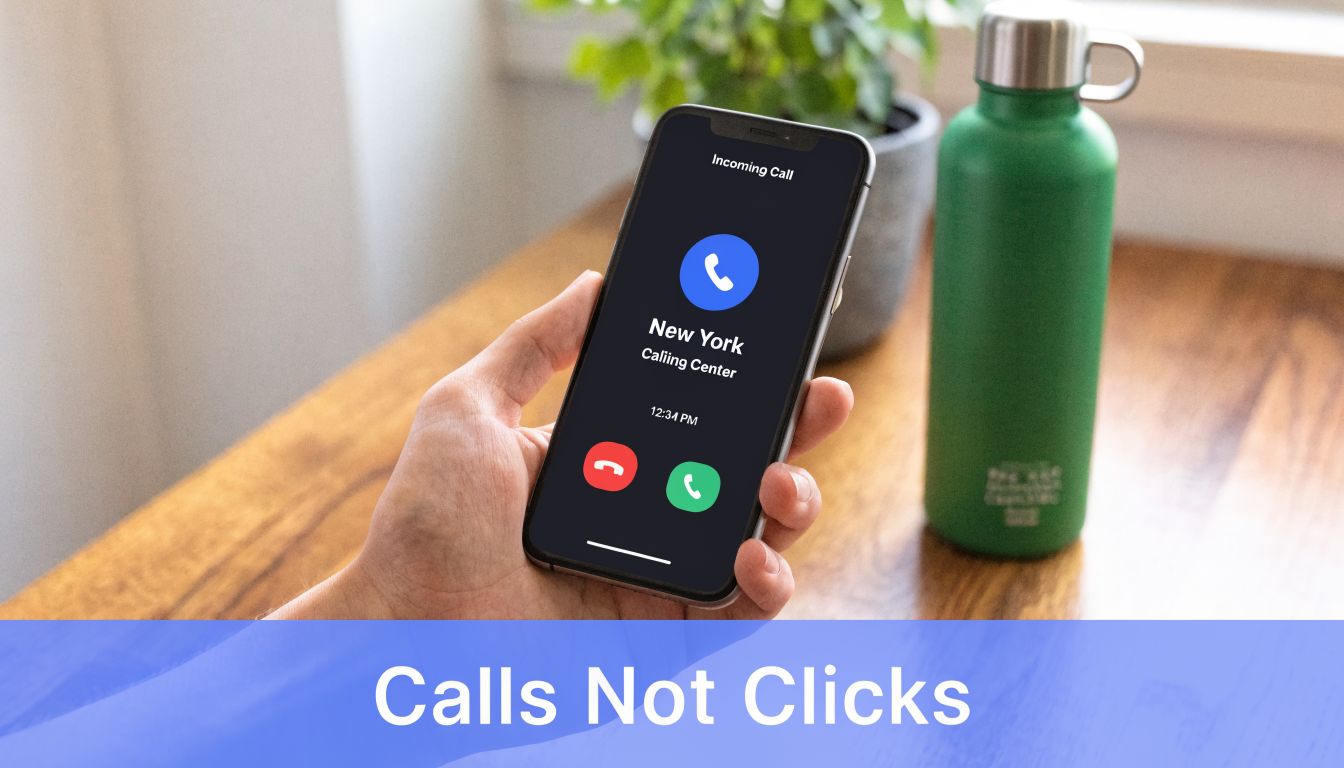
A better strategy is to publish content that answers the question a local customer is already asking. Can this company solve my problem, and can I trust them to do it?
Content that proves you can do the job
For service businesses, strong content usually falls into a few categories.
- Before and after work: A roof replacement, whitening result, crawlspace cleanup, or repaired electrical panel gives visible proof.
- Short educational posts: Explain a symptom, a warning sign, or a common mistake. This works well for AC issues, pest activity, oral health concerns, and treatment options.
- Team spotlights: Put a technician, provider, or office manager on camera. Trust rises when the business feels real.
- Testimonials and client stories: Use them to show outcomes, not just praise.
- Local service updates: Show work in actual neighborhoods or cities you serve.
This type of content does two jobs at once. It helps people on Facebook evaluate your business, and it creates reusable topic coverage that can support your broader local content ecosystem.
That matters for AI visibility too. Large language models and AI-generated search experiences are more likely to surface businesses that consistently publish useful, specific, entity-rich content across the web. If your content regularly addresses practical customer questions, it becomes easier for AI systems to connect your brand with those topics.
For businesses working on a stronger publishing system, content marketing for local businesses is where that effort usually becomes much more effective.
Reels are the format many service businesses still ignore
Facebook Reels can reach non-followers through interesting or useful short-form video, which gives them a strong discovery advantage for local service brands that need more than follower-only visibility (YouTube discussion of Facebook Reels for lead generation).
That matters because a lot of your future customers don’t follow you yet. Reels let you get in front of them anyway.
Good Reel concepts for local service businesses include:
- Show the fix: A technician explains what caused a common issue and what solved it.
- Show the transformation: Before-and-after visuals work well for roofing, med spa, dental, and pest control.
- Show the expertise: Quick myth-busting clips build authority.
- Show the person: A familiar face lowers hesitation.
Reels shouldn’t be random entertainment. They should still support trust and local relevance. Add clear captions, mention the service area naturally, and tie the topic back to a real customer problem.
The best service Reels don’t chase trends. They demonstrate competence in a format people will actually watch.
A useful example of video-driven local communication appears below.
What to stop posting
A strong content plan also requires restraint.
Here’s what usually underperforms for local lead generation:
- Generic holiday graphics: They fill space but rarely build buying confidence.
- Overly polished brand slogans: They sound like ads, not proof.
- Irrelevant viral content: It may attract attention from the wrong audience.
- Service posts with no visual evidence: If you do physical work, show it.
- Long blocks of promotional text: People scroll past them.
A practical weekly mix
Not every business needs a massive content machine. A lean mix works if it is consistent and tied to customer intent.
| Content type | Why it works |
|---|---|
| Before and after post | Gives visible evidence of results |
| Short expert tip video | Builds authority and helps AI topic association |
| Testimonial post | Reduces buyer hesitation |
| Team or behind-the-scenes post | Humanizes the brand |
| Reel tied to a common problem | Reaches new local audiences |
A facebook page for business starts producing better outcomes when the content is designed to answer buyer objections, support local trust, and give both search engines and AI systems more evidence about what your business does.
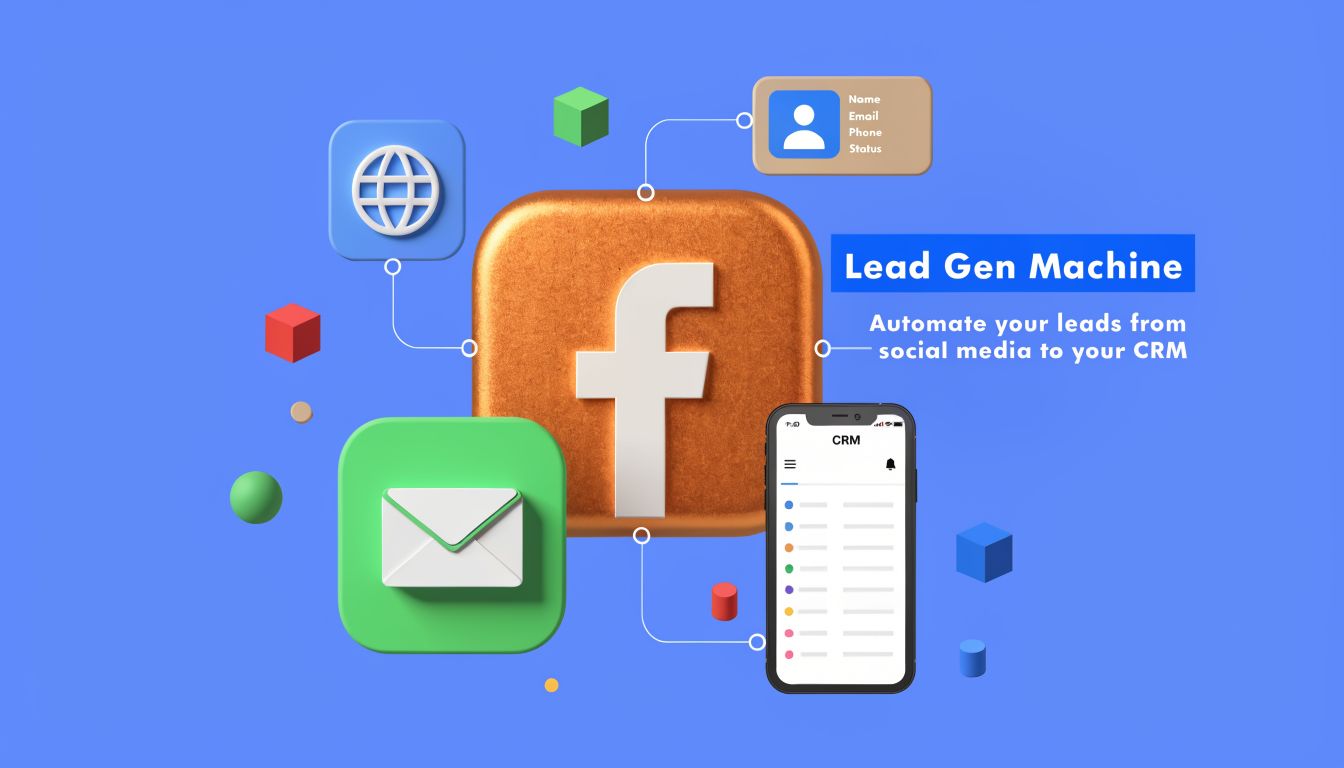
Integrate Facebook into Your Lead Generation Machine
A Facebook Page shouldn’t sit off to the side while your website and Google Business Profile do all the heavy lifting. It should plug into the same lead flow.
That means every important action on the page should move a motivated prospect closer to a call, form fill, booking request, or message.
Set the page up for direct response
Your first integration point is the CTA button.
Choose the action that matches how customers buy from you. If you depend on urgent calls, use a call-focused CTA. If you qualify larger jobs through forms, use a quote path. If you run appointments, connect the page to scheduling.
Then make sure the destination is right. Don’t send paid or high-intent traffic to a weak homepage if a better landing page exists.
A useful test is simple. Click your own button on mobile and ask whether it feels fast and obvious. If not, fix that before spending time on content or ads.
A lead capture offer can help too, especially for non-emergency services. If you want a model for that, this lead magnet example shows how a simple offer can move a visitor from curiosity to action.
Use Messenger carefully
Messenger can work well for local service businesses because some prospects would rather ask a quick question than make a call immediately.
That said, Messenger only helps if someone is watching it. If messages sit unanswered, the feature becomes a liability.
Use Messenger when:
- Your team can respond promptly
- You have common pre-sales questions
- You want a lower-friction first contact option
Skip aggressive automation if it creates more confusion than clarity. For local service businesses, a simple message path usually beats a complicated chatbot.
Run ads with local intent, not broad awareness
Facebook Ads offer a 7.72% average conversion rate, and local service campaigns can use $0.50-$2.00 CPC benchmarks with lookalike audiences built from Google Business Profile query intent to push toward ROAS over 4x in some local verticals (Sprinklr’s Facebook metrics overview).
Those benchmarks matter because they frame Facebook as a practical support channel, not just a branding platform.
For local businesses, ad strategy should stay tight:
- Geo-target your actual service area: Don’t waste spend outside the radius you serve.
- Match ad creative to the service: Emergency plumbing and cosmetic dentistry need different messages.
- Retarget engaged visitors: People who watched videos, visited your site, or interacted with your page are warmer than cold audiences.
- Use proof assets: Reviews, before-and-after visuals, and team credibility usually outperform vague branding.
If you’re comparing lead sources, Thumbtack vs. Facebook Marketplace is a worthwhile read because it highlights an issue many owners miss. Not all lead channels produce the same lead quality, even when volume looks attractive.
Paid Facebook works best when it supports an existing local search strategy. It performs worse when businesses expect it to replace trust, reviews, or a weak website.
Connect Facebook with your other local assets
The strongest setup usually includes these connections:
| Asset | How Facebook should support it |
|---|---|
| Website | Send visitors to service or booking pages |
| Google Business Profile | Reinforce brand trust and consistency |
| Reviews | Echo social proof already helping conversion |
| CRM or intake process | Route messages and leads quickly |
| Retargeting audiences | Bring interested visitors back |
A facebook page for business becomes much more valuable when it is wired into your sales process. Without that integration, it’s another profile to maintain. With it, the page becomes part of a real lead generation machine.
Conclusion Your Blueprint for Transactional Dominance
A facebook page for business is not just a social profile. For a local service company, it can be a support asset that strengthens trust, improves discoverability, and helps convert high-intent prospects who are already looking for someone to hire.
The key is using it with the right objective.
If your page is built with consistent business information, optimized around specific services, filled with proof-based visuals, and connected to your lead capture process, it stops being a vanity channel. It becomes part of your local search footprint.
That’s where most businesses get this wrong. They judge Facebook by likes, casual reach, or whether one random post performed well. The better question is whether the page helps you win more transactional searches, support stronger Google Maps visibility, and give prospects a cleaner path to becoming customers.
That is the standard that matters.
When someone searches “roofer near me,” “emergency plumber,” “dentist near me,” or any other buyer-ready phrase, every digital asset around your business should reinforce the same message. You are active. You are credible. You serve this area. You solve this exact problem.
Use Facebook that way and it starts doing real business work.
Frequently Asked Questions
How much time should I spend on my Facebook Page each week
Most local businesses don’t need to live inside Facebook all day. What they need is consistency.
A practical rhythm is to create a few strong posts each week, respond to comments and messages, and review page performance in Meta Business Suite. A smaller amount of focused effort beats constant low-quality posting.
Is Facebook more important than my Google Business Profile
No. Your Google Business Profile is more important for local transactional visibility.
Facebook is a supporting asset. It adds trust, gives prospects another place to verify your business, and strengthens your wider digital presence. If your GBP is weak, Facebook won’t save it. If your GBP is strong, Facebook can help reinforce it.
Can a Facebook Page help me rank for searches like roofer near me
Indirectly, yes.
A well-optimized page can support local SEO by reinforcing business consistency, publishing relevant local content, and giving customers another trust signal when they research your company. It won’t replace the need for Google Maps optimization, strong reviews, location relevance, and service-area pages, but it can strengthen the overall picture Google sees around your business.
If you want help turning your Facebook Page, Google Business Profile, website content, and map rankings into one system focused on buyer-ready searches, Transactional LLC helps local service businesses rank for transactional terms that lead to real calls, booked jobs, and new patients.