


Optimizing your local listings with AI-driven strategies is like setting a smart welcome mat for customers who are ready to hire a roofer. By leveraging large language models (LLMs) and AI optimization—sharpening every detail from your business name to service attributes—you guide high-intent searchers straight into your map pack. Transactional Marketing’s proven system gets roofing websites on page one within 30–60 days. The result? Hundreds of qualified calls each month instead of lost leads.
How Local Listing Optimization Drives Results
A finely tuned, AI-optimized directory profile elevates your roofing company into the top-three map results that generate hundreds of calls each month. It’s all about matching transactional queries—think “roof repair near me” or “roofer near me”—with the precise details Google and AI bots need.
- Run an AI-driven audit to update every profile field for accuracy and relevance
- Use industry-specific, transactional phrases to capture ready-to-buy buyer intent
- Keep NAP (Name, Address, Phone) data consistent across platforms for local signals
- Add schema markup and AI attributes so LLM-driven features showcase your services

Key Components Of Listing Optimization
Start by auditing your core profile fields—business name, address, phone number, service categories—using AI tools that flag inconsistencies. Then layer on:
- Quality project images tagged with geo-data
- AI-driven service attributes that highlight specialties like emergency roof repair
- Regular, AI-optimized posts to signal freshness to Google and LLMs
Consistent information across directories cements Google’s trust, while AI optimization helps map-pack features accurately surface your business.
Map Pack Signals To Watch
Tracking these metrics—and feeding them into AI dashboards—helps you spot opportunities and troubleshoot issues:
- Call Volume: real customer engagement
- Direction Requests: clear purchase intent
- Click-Through Rate (CTR): profile appeal
- Search Query Keywords: emerging transactional trends
Real Roofing Business Transformation
One contractor had zero map presence when we began. In six weeks, Transactional Marketing’s AI-powered, transactional-search-focused approach landed them in a top-three map slot for “roof repair near me.”
From zero visibility to top-three map ranking in six weeks transformed their inbound calls.
- Identified transactional keywords drawing ready-to-buy customers
- Enhanced the profile with project photos and AI-optimized service attributes
- Monitored map-pack positions daily via our dashboard, refining entries as needed
Why Industry Terms Matter
Generic phrases pull in casual browsers. Specific search terms like “roofer near me” filter for prospects who already plan to hire. To expand your broader SEO efforts, check out our guide on increasing organic search traffic.
Next Steps
- Embed targeted transactional keywords in every profile field
- Activate AI attributes for better LLM visibility
- Review map-pack signals weekly and refine your listings
- Engage clients with timely, AI-optimized local posts
Mastering these fundamentals sets your roofing business on a path to sustained growth through transactional searches. Up next: a deep dive into exact category setup and service-area targeting to claim those coveted map-pack slots.
Setting Up Your Google Business Profile
Claiming and verifying your Google Business Profile is the foundation for appearing in the map pack. Once you’ve proven ownership, Google’s AI systems will start surfacing your business in local, transactional queries.
Choosing the right categories signals exactly what you offer. If you’re a roofing contractor, pick “Roofing Contractor” as your primary category and add “Roof Repair” as a secondary.
- List each core service clearly with transactional terms
- Align categories with what people search for—“roofing repair near me”
- Steer clear of generic labels that blur your expertise
Crafting A Service-Focused Description
Your description is prime real estate for high-intent keywords and clarity. Aim for under 750 characters, front-loading terms like “roofer near me” and “emergency roof repair.” This helps searchers and Google’s LLMs understand your specialty immediately.
Enable appointment links so prospects can book without delays. Select all relevant AI-optimized service attributes—like 24/7 emergency repair or hail damage restoration—to highlight what sets you apart.
Uploading Project Photos And Posts
Nothing beats real before-and-after photos for winning trust. Aim for at least five high-resolution shots tagged with geo-data—this extra detail boosts local relevance in AI and map-pack features.
- Share weekly AI-optimized updates on completed jobs
- Write concise captions using transactional service keywords
- Test short posts announcing special offers to LLM-driven feeds
Key Takeaway
Authentic, geo-tagged project imagery showcases your workmanship and drives clicks.
Transactional Marketing’s process turned a blank profile into one generating 150 calls in 30 days—all by focusing on local transactional keywords and regular AI-optimized updates.
Businesses with a fully verified profile see around 200 interactions per month and drive roughly 105 website visits monthly. Customers are about 70% more likely to visit your location after finding a complete, AI-optimized listing. For more data, check out the research on local SEO statistics.
You can dive deeper into every setup detail in our guide on setting up your Google Business Profile.
Keeping your profile current is equally important. Update hours, holiday schedules, and special offers as they change—fresh information tells Google (and LLMs) you’re active and reliable.
By blending a sharp, service-focused description, project photos, AI-enhanced attributes, and consistent updates, your GBP turns into a lead-generating powerhouse. Remember, dominating the map pack puts you in front of customers ready to hire.
Auditing NAP Consistency And Citations
When your Name, Address, and Phone (NAP) information is identical across every directory, Google trusts your business—and customers find you without hassle. An AI-assisted audit highlights tiny mismatches that can cost you a spot in the map-pack and confuse potential clients.
Start by pulling together your current NAP info from
- Google Business Profile
- Bing Places
- Yelp
- Your industry directories and any niche listings you use
Here’s a quick audit checklist to catch the most common slip-ups:
- Name Variations: Compare abbreviations, punctuation, and suffix use
- Address Formatting: Match the structure to your website footer
- Phone Styling: Keep the same area code format and separators
- Unit or Suite Details: Include (or exclude) consistently across all entries
Enforcing Consistency
Once you’ve mapped out every listing, a tool like Moz Local can push your NAP updates to 50+ platforms automatically. It trims hours off manual fixes and ensures immediate alignment everywhere, a key part of our Google Maps optimization service.
Measuring how many directories mention your business also reinforces your local authority—and highlights gaps you might not have noticed.
Centralizing Your NAP Data
A single source of truth—whether a shared cloud spreadsheet or a listing management platform—becomes your master copy for any future changes. This approach offers:
- Instant batch updates instead of one-off corrections
- Easy scalability for multi-location businesses
- A clear audit trail whenever you need it
A centralized NAP file cut correction time by 60% for one roofing client
In another scenario, a local roofing contractor doubled monthly calls simply by syncing metadata and adding direct booking links to every directory entry.
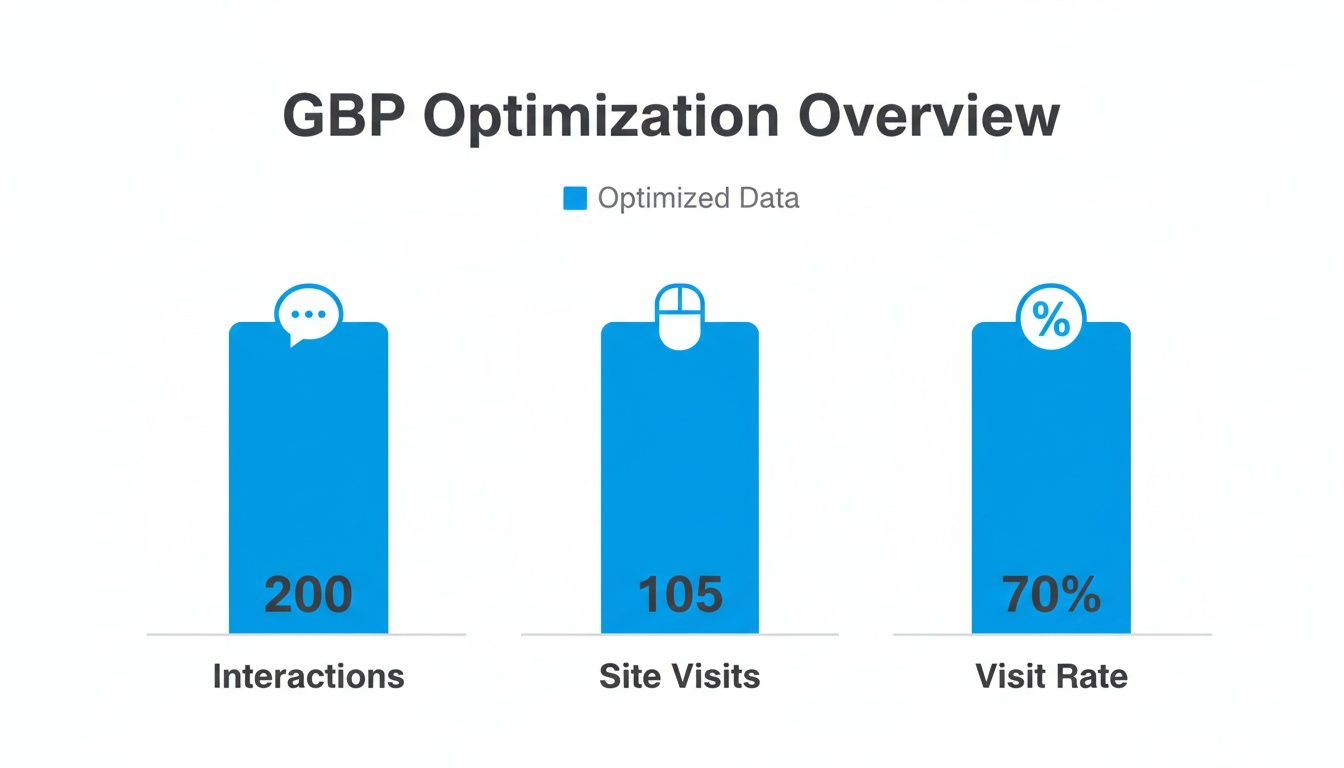
That graphic highlights 200 interactions, 105 site visits, and a 70% visit rate once NAP consistency was locked in.
Before moving on, remember these signals work together. Dive deeper into local listing performance here.
Local Ranking Signal Comparison
Below is a quick snapshot of how different signals—and AI-optimized factors—influence your map-pack placement:
| Signal Type | Ranking Influence | Example |
|---|---|---|
| On-Page Signals | 36% | Service area keywords in page titles and headers |
| Link Signals | 26% | Backlinks from your local chamber of commerce |
| Behavioral Signals | 9% | High click-through rate on your map listing |
By prioritizing on-page factors first, you capture the largest boost. Then layer in quality links and enhanced user experience to round out your strategy.
Scheduling Regular Audits
Citation drift is real. Block out a calendar reminder every quarter and combine it with a monitoring dashboard like Transactional Marketing’s to flag new inconsistencies immediately.
Key Takeaway: Even a small NAP tweak can unlock significant visibility gains.
Next we tackle managing reviews and engagement.
Managing Reviews And Customer Engagement

Every review today carries weight in local search rankings—and AI models parse these signals to influence map-pack placement. They directly impact where you appear and how often prospects click through.
Transactional Marketing’s AI-driven templates prompt customers for a five-star rating immediately after a roof repair wraps up, capturing feedback while satisfaction is at its peak.
Crafting Outreach Messages
A well-timed SMS and follow-up email can double your response rate. For a roofing contractor, try a call-to-action like, “Enjoying your new roof? Share your experience and help others find a trusted roofer near me.”
- Send review requests within 48 hours of job completion
- Include a direct link so posting takes seconds
- Encourage customers to mention project details—this helps future transactional searchers
Pro Tip: Referencing terms such as “roof leak repair near me” within customer quotes reinforces search intent and boosts relevance.
Case Example Of Review Campaign
An eight-week campaign generated 50 new five-star reviews for one roofing client. Their map-pack position climbed into the top three, delivering 150 extra leads per month.
Engagement flow looked like this:
- Post-job check-in via AI-personalized text
- Friendly reminder email with an AI-optimized review link
- Thank-you message with a referral ask
Positive reviews drove 30% more calls and lifted overall visibility.
Handling Negative Feedback
A low-star comment isn’t the end of the world—it’s an AI-flagged opportunity. Route any 2-star or 3-star review into a private support ticket within two hours.
- Acknowledge the issue and apologize
- Propose a solution or schedule a follow-up call
- Invite the customer to update their review once resolved
Quick action often turns a 2-star rating into a 5-star testimonial. While AI tools can suggest empathetic phrasing, always add your own human touch to keep responses genuine.
Maintaining Ongoing Engagement
Great service doesn’t stop at project completion. Ask repeat clients for feedback on annual inspections or new installations to keep your profile fresh—LLMs reward active profiles.
- After seasonal inspections, request thoughts
- Promote winter-prep services with a review prompt
- Link to your updated service gallery for visual proof
A steady flow of reviews signals activity to search algorithms and cements your authority in local results.
Expert Insight
Systematic review outreach is essential for sustaining top-three map positions.
By weaving this sequence into your customer journey, you’ll take control of review management and drive real engagement. Effective campaigns like this are the backbone of any local business listing strategy.
Partner with Transactional LLC to automate customer outreach and review tracking.
Unlock five-star growth and dominate local searches with a consistent, AI-enhanced review strategy that fuels calls and trust.
Implementing On-Page SEO And Schema Markup
Getting your local service pages in top shape is non-negotiable for local SEO. A well-crafted page with proper schema can amplify those “roofing repair near me” signals and help AI-powered features showcase your services.
Here’s what really moves the needle:
- LocalBusiness Schema Essentials guide search engines and LLMs to your business details
- JSON-LD Service-Area Embedding tells AI bots exactly where you operate
- AI-Driven Content Blocks reinforce transactional keywords and keep visitors engaged
Applying LocalBusiness Schema Markup
Begin by adding a script tag inside your <head> with type application/ld+json. Include these critical properties:
nameaddresstelephoneserviceTypeopeningHours
Below is a snippet from a real roofing client that sparked rich snippets and FAQ markup:
<script type="application/ld+json">
{
  "@context": "https://schema.org",
  "@type": "RoofingContractor",
  "name": "Acme Roofing Services",
  "telephone": "(555) 123-4567",
  "address": {
    "@type": "PostalAddress",
    "streetAddress": "123 Main St",
    "addressLocality": "Springfield",
    "addressRegion": "IL",
    "postalCode": "62704"
  },
  "serviceType": "roof repair near me"
}
</script>
Quick Checklist:
- Validate your markup with Google’s Rich Results Test
- Align
serviceTypevalues to match your Google Business Profile categories - Automate updates to contact details via an API for ongoing accuracy
Embedding Service-Area JSON-LD
Telling search engines—and AI bots—exactly where you serve customers is a game changer. When Transactional Marketing added three zip codes, click-through rates surged by 40%.
“Rich snippets and FAQ markup increased direct calls by 40% in our tests.”
Use a JSON-LD array of PostalCodeRange or GeoCircle entries for pinpoint accuracy on neighborhoods.
Adding AI-Driven Content Blocks
Embed dynamic sections that answer the most common roofing repair questions. Run a two-week split test to see which approach drives more leads.
Variation Breakdown:
- FAQ Section placed beneath your schema
- Step-By-Step Repair Overview with custom icons
Monitor performance daily, then refine based on form submissions, calls, or other key metrics. For best results, pair this with precise image location data—see our guide on geo-tagging images.
Blending schema, service-area JSON-LD, and tailored AI-driven content creates a powerful trifecta for on-page SEO that primes your pages for LLM-driven discovery.
A/B Testing Service Descriptions
Craft two versions of your service blurbs with subtle tweaks in headers and calls to action. Keep an eye on:
- Time on Page (engagement)
- Click-Through Rate (CTA clicks)
- Call Conversion Rate (direct phone leads)
In one recent rollout, a roofing client swapped out subheadings and saw a 25% jump in calls from the B variant.
“Testing small textual tweaks led to a 25% jump in phone leads quickly.”
Tracking Map Rankings And Ongoing Maintenance
Maintaining a top spot in the map pack means keeping a close eye on metrics like call volume, driving directions, and emerging transactional search terms. By feeding these signals into custom alerts and dashboards, you sidestep nasty surprises when a competitor makes a push.
Monitor:
- Real-time rank trackers for your map-pack positions
- Weekly direction-request stats to gauge local interest
- Call-volume reports to catch sudden dips or peaks
An automated query feed surfaces seasonal spikes and niche requests before they slip under the radar. With tools like Semrush’s Sensor and BrightLocal’s Insights, you’ll spot searches such as “emergency HVAC repair near me” and update your attributes in minutes.
Maintenance Calendar Overview
A straightforward calendar ensures nothing slips through the cracks. Try this rhythm:
- Weekly: Scan map-pack rankings and clear any new alerts
- Monthly: Verify your profile fields, headlines, and images
- Quarterly: Deep-dive into competitor moves and long-term strategy
Transactional Marketing’s dashboard automates reminders and flags any ranking swings, so you never miss an optimization window.
| Schedule | Tasks | Purpose |
|---|---|---|
| Weekly | Rank-check, alert review | Swift fine-tuning |
| Monthly | Profile audit, image update | Consistency and freshness |
| Quarterly | Competitor analysis, strategy tweak | Roadmap for growth |
“Our alerts caught a rival’s campaign early, and we reclaimed our spot in just 24 hours.”
Case Study Of Proactive Maintenance
A local HVAC provider slipped by 15% after a competitor’s promotion, but our weekly checks and immediate alerts turned the tide. They were back in the top three within two weeks—no guesswork, just a clear process and fast follow-up.
Keep an audit log. Read more about mastering Google Maps in our guide on Google Maps optimization.
FAQ
Optimizing your local business listing means tweaking every detail—service categories, hours, schema markup, and AI attributes—to win those high-intent “roofer near me” searches. When you land in the top three of the map pack, you can expect to capture 70% of clicks for local service queries.
Fine-tuned listings translate into more phone inquiries, fresh leads, and booked jobs every month. AI now plays a central role in ranking: it parses your profile’s attributes, posts, and schema to determine where you appear for transactional searches. Meanwhile, LLMs interpret those updates and surface your business when prospects search in your area.
- Directory Profiles deliver precise service details and operating hours
- Map Pack Visibility boosts click-through rates by showcasing nearby services
- Transactional Queries align AI signals with real customer searches
NAP Consistency Tips
Keeping your Name, Address, and Phone number uniform across every directory builds Google’s trust and shields you from sudden ranking drops. A simple spreadsheet or a directory-management tool works wonders—just review it monthly to catch any stray edits.
NAP consistency can boost your map-pack rank by stabilizing Google signals.
Tracking the right metrics tells you where to focus next. For roofers, monitoring call volume, direction requests, and click-through rate (CTR) reveals real user intent and points out which profile elements need polishing.
| Metric | Reason |
|---|---|
| Call Volume | Measures real customer engagement |
| Direction Requests | Indicates local purchase intent |
| Click-Through Rate | Reflects listing attractiveness |
One of our roofing clients saw call volume climb 40% in just four weeks by installing call-tracking and streamlining response workflows. It’s that kind of continuous, AI-guided refinement that lifts visibility and fills your schedule with booked jobs.
Keep this FAQ close as you optimize and maintain your listings. It’s your quick-reference playbook for lasting local search success.
Boost your roofing leads with Transactional LLC. Visit Transactional LLC