


Most service businesses don't have a traffic problem. They have a visibility problem at the moment of purchase.
A homeowner searches "plumber near me" with water on the floor. A parent searches "dentist near me" after a broken tooth. An office manager searches "pest control near me" because the problem can't wait. Those are transactional search terms. The person searching is ready to call, book, or request service now. Local maps seo matters because Google puts those buyers in front of the map results first, and the businesses in that top cluster get the first shot at the lead.
Generic SEO advice misses that point. Rankings for broad informational keywords can help awareness, but service businesses win when they show up for searches tied to immediate demand. That's why the entire system has to revolve around Google Maps, Google Business Profile signals, local authority, and website alignment that supports "near me" intent. The work isn't theoretical. It affects calls, direction requests, and booked jobs.
Why the Google Map Pack Is the Only Place That Matters
When someone needs service fast, they don't scroll like a researcher. They scan the map, compare a few listings, and act.
That's why the Google Map Pack is the center of local maps seo. According to local search click data from RankMax, 42% of searchers click on Google Map Pack results for local queries, and businesses ranked in the Local Pack receive 126% more traffic and 93% more calls, website clicks, and direction requests than businesses ranked in positions 4 to 10. If you're not in that top group, you're competing for leftovers.

Transactional searches decide who gets paid
"Near me" searches aren't casual. They're usually tied to a real problem, a location, and a need to hire someone quickly. For a roofer, chiropractor, med spa, or HVAC company, those searches are where the revenue sits.
A lot of businesses still spend most of their effort chasing broad organic rankings while their competitors capture the map clicks. That's backwards. The map pack owns the highest-intent real estate on the page, especially for local service terms.
Practical rule: If your market lives on emergency, urgent, or appointment-based demand, your Google Maps visibility matters more than vanity ranking reports.
What actually changes when you move into the top three
The shift isn't just visual. It changes buyer behavior.
- More direct actions: Searchers can call, click, or request directions from the listing itself.
- Less friction: They don't need to open multiple sites to decide who looks legitimate.
- Higher purchase intent: The search term, location, and business profile all line up in one view.
That combination is why map rankings are so valuable for transactional terms. The business owner usually feels the impact before they ever read a ranking report. The phone starts ringing from better searches.
For a deeper breakdown of the signals behind those placements, review these Google Maps ranking factors. The main point is simple. In local maps seo, the top three positions aren't a branding win. They're the place where buyers choose who to contact.
Building Your Foundational Google Business Profile
A Google Business Profile isn't a directory listing you set once and forget. It's the operating system for your map visibility.
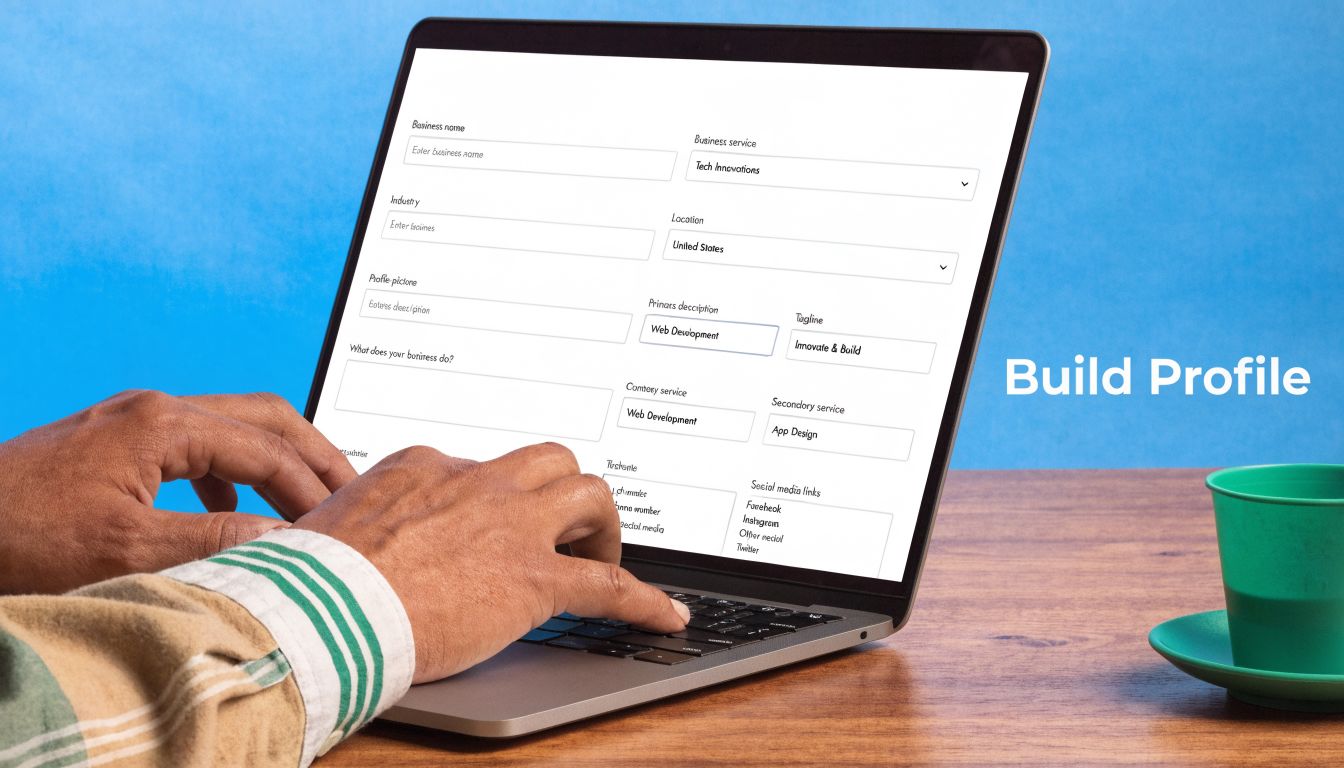
The first job is getting the profile complete, accurate, and compliant. According to local SEO statistics compiled by SEOPROFY, customers are 2.7 times more likely to trust a business with a complete local listing, and businesses with fully completed GBP profiles rank in the Local Pack 63% more often. That's why incomplete profiles underperform even when the business itself is solid.
The fields that can't be sloppy
Most ranking problems start with bad setup. Not advanced strategy. Basic setup.
Use this checklist:
- Business name: Use your legal business name. Don't stuff city names, service keywords, or taglines into it.
- Primary category: Pick the category that most closely matches the core money service. A roofing company shouldn't choose a broad category when a more accurate one exists.
- Secondary categories: Add supporting categories only when they reflect actual services.
- Phone and address data: Keep your NAP exactly consistent with your website and citations.
- Hours and attributes: Fill them out fully, including special hours where relevant.
- Services: List real service lines clearly, using the same language customers use.
- Photos: Add genuine location, team, vehicle, and work photos. Stock-looking assets weaken trust.
Many owners want to move straight to backlinks or aggressive content. That's too early if the profile itself sends mixed signals.
A weak GBP forces Google to guess. A complete GBP tells Google exactly what the business does, where it operates, and why it belongs in the local pack.
A basic explainer on what Google Business Profile is helps if you're still sorting out ownership, verification, or profile structure.
Common mistakes that hurt rankings
The most common issue is trying to outsmart the platform with shortcuts. Keyword-stuffed names, vague categories, inconsistent phone numbers, and half-finished service menus still show up constantly.
Another mistake is treating service areas casually. If you travel to customers, define those service areas cleanly and make sure the rest of your online presence supports them. Don't use conflicting city references across your site and listings.
For teams that want another practical reference on setup details, this guide on mastering Google Business Profile is a useful companion.
A walkthrough can also help if you're training staff or rebuilding a listing from scratch.
The businesses that dominate local maps seo rarely do anything flashy at this stage. They just remove ambiguity. Google rewards that.
Actively Targeting Keywords with GBP Features
A static profile fades into the background. An active profile keeps sending relevance signals.
Businesses start using GBP features to target transactional search terms instead of just maintaining a listing. Google Posts, service updates, photos, products, and Q&A all help reinforce what the business wants to rank for. If your core lead term is "air conditioning repair near me," the profile should keep reflecting that service through current content and supporting details.
Posts that support buyer intent
Google Posts work best when they're tied to real services and real buyer decisions.
An HVAC company can post about emergency AC repair, same-day diagnostics, seasonal tune-ups, or financing options. A dental office can post about same-day crowns, dental implant consults, or urgent dental visits. A pest control company can post about termite inspections or active wasp removal. The point isn't to publish for the sake of activity. The point is to reinforce the exact services tied to immediate demand.
A strong post usually includes:
- A clear service focus: One service per post is easier for Google and users to understand.
- A local cue: Mention the city or service area naturally when relevant.
- A buyer action: Call now, book online, request an estimate, or schedule a visit.
- A real image: Trucks, crews, treatment work, operatories, or finished jobs perform better than generic graphics.
The Q and A feature most businesses ignore
Q&A is one of the easiest ways to strengthen relevance for "near me" searches because it mirrors how people ask questions.
Seed the profile with common pre-sales questions. Keep them honest and specific.
| Customer question | Better angle for local maps seo |
|---|---|
| Do you offer emergency service? | Clarifies urgency-based intent |
| Do you serve my city? | Reinforces service-area relevance |
| Do you handle same-day appointments? | Supports fast-conversion searches |
| What types of repairs do you do? | Expands service coverage naturally |
Don't write robotic keyword blocks. Write answers the front desk would give.
Good GBP activity doesn't look like SEO writing. It looks like a business clearly describing what it does for ready-to-buy customers.
This is also where AI-assisted workflows can help. Teams can draft post ideas, review common call questions, and turn those patterns into GBP content that stays aligned with real search behavior. Used well, AI doesn't replace judgment. It speeds up the process of covering the transactional terms that matter.
Your Automated Review Acquisition and Response Engine
Reviews influence two things at once. They affect trust with buyers, and they shape prominence signals in local maps seo.
Most businesses understand they need more reviews. Fewer build a reliable system to get them consistently, and even fewer respond well at scale. That gap matters. According to Map Ranks reporting on emerging 2025 to 2026 trends, AI-driven review response automation improves Map rankings by 25% via higher response rates, 92% versus 45% manual, and authentic reviews generated through systematic processes are 3x more effective. The warning in that same source matters too. Automation can create risk if it isn't handled in an E-E-A-T-compliant way.
What works and what gets businesses in trouble
The right system is simple. Ask real customers for feedback after real service events. Send the request while the experience is fresh. Make the process easy. Then respond quickly with useful, human-sounding replies.
The wrong system is also common:
- Review gating: Asking only happy customers to leave public reviews.
- Fake velocity: Flooding the profile with unnatural bursts from low-quality sources.
- Template spam: Posting the same response under every review.
- Ignoring negatives: Leaving complaint reviews unanswered for weeks.
Google has become stricter about authenticity. Businesses that try to manipulate reviews usually create a footprint that looks unnatural over time.
A review engine built for speed and compliance
A strong workflow usually looks like this:
- Trigger the ask after service completion. Tie it to your CRM, invoicing tool, or job-close process.
- Use a short message. Don't overexplain. Ask for honest feedback.
- Route reviews into a response queue. Fast responses show activity and care.
- Use AI as a draft layer, not an autopilot. Review responses should reflect the service, location, and issue raised.
- Escalate sensitive reviews to a human. Billing disputes, safety concerns, and complaint narratives need judgment.
If you need a framework for the acquisition side, this resource on getting more reviews is a practical place to start.
Fast review responses help. Honest review acquisition matters more.
One useful middle ground is to let AI draft responses based on sentiment and service type, then require a human approval step for anything nuanced. That keeps speed high without turning the profile into canned brand language. It also protects the tone of the business, which is important when the next prospect reads ten reviews in a row before calling.
Building Local Authority with Citations and Links
Some businesses have a decent profile and still stall outside the strongest map positions. That usually points to weak authority.
Google needs outside confirmation that the business is real, established, and locally relevant. That confirmation comes from citations and links. They do different jobs. Citations validate core business information. Local links reinforce prominence and community relevance.
Citation consistency is trust infrastructure
Citations aren't glamorous, but they matter because they reduce contradiction across the web.
If your business name, phone number, or address format changes from site to site, Google has to reconcile those differences. That confusion weakens trust. For service businesses with older listings, rebrands, call tracking history, or multiple technicians, citation cleanup often uncovers a mess.
Focus first on:
- Core platforms: Major directories, mapping platforms, and important business listings
- Industry listings: Sites specific to dentistry, home services, pest control, or medical categories
- Local references: Chamber directories, association pages, and city business listings
A structured process for citation building for local SEO helps because cleanup usually matters before expansion.
Local links carry more weight than generic junk
Not all backlinks help local maps seo equally. A random low-quality link from an unrelated site isn't impressive. A mention from a chamber of commerce, local charity page, neighborhood publication, youth sports sponsor page, or city event partner can be far more useful.
Here's the trade-off:
| Link type | Likely value |
|---|---|
| Local chamber or association link | High local trust |
| City news or community mention | Strong prominence signal |
| Industry-specific local directory | Useful relevance and citation value |
| Generic paid link on unrelated blog | Weak and often risky |
This is also where network effects matter. Some providers build cross-promotional ecosystems across related service businesses, local partnerships, and supporting citation opportunities. Transactional LLC operates in that category by building industry-specific networks and local SEO support systems for service businesses. Used correctly, a network model can speed up authority building without relying on spam.
The key is relevance. If a link or listing wouldn't make sense to a real local customer, it probably won't help much in the long run.
Aligning Your Website for Hyperlocal Dominance
Your website and GBP need to confirm the same story. If the profile says one thing and the site says another, rankings usually flatten.
The technicality of local maps seo begins. According to E2M's local SEO playbook, Google Business Profile optimization represents approximately 32% of total local pack ranking weight, and that impact is strengthened by implementing LocalBusiness Schema markup with accurate NAP data on location pages using clean URL structures like /locations/city-state/. In practice, that means the website has to validate the profile with clean local architecture and consistent entity data.
Build pages for service plus city intent
A service business that targets multiple cities shouldn't force every local query into one generic services page.
Create dedicated pages around the combination of service and location. Keep them useful. A page for air conditioning repair in one city shouldn't be a copy of the page for the next city with the place name swapped. The content should reflect actual service coverage, buyer concerns, and local details that make sense.
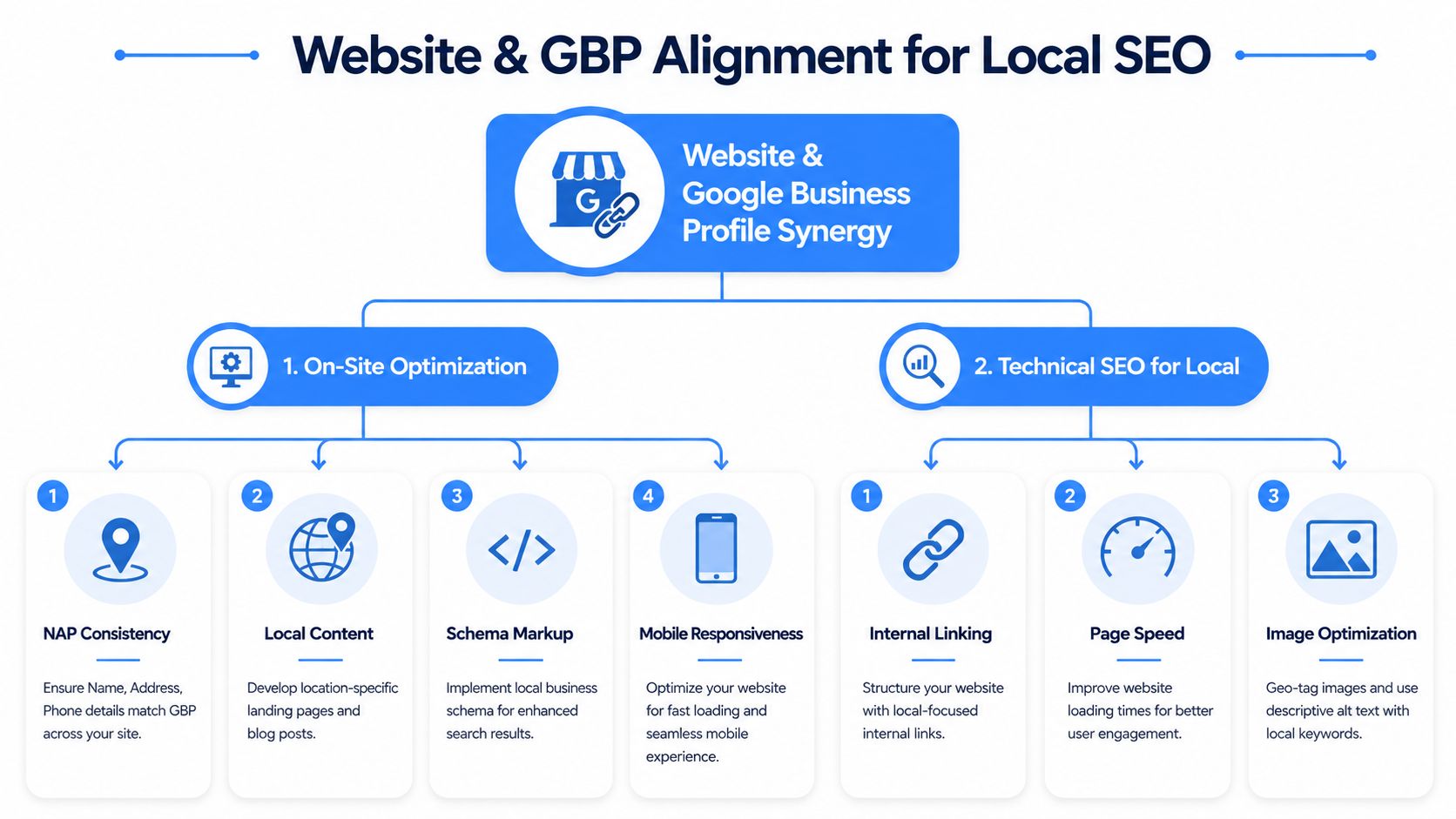
A solid local page usually includes:
- A precise headline: Service plus city or service area
- Matching NAP data: Consistent with GBP and citations
- Unique service context: Not spun boilerplate
- Clear conversion paths: Call buttons, quote forms, appointment actions
- Internal links: Connect service pages, city pages, and supporting articles logically
Schema is small code with outsized impact
LocalBusiness schema helps search engines understand the entity behind the site. It supports your business name, address, phone, hours, and service context in a machine-readable format.
That matters for maps, traditional search, and AI-driven discovery. LLMs and search engines both work better when the site is explicit about who the business is, where it operates, and what it offers. Clean structure improves extraction.
Schema doesn't replace content quality. It makes your content and business data easier for search systems to trust.
For businesses looking at how local pages influence lead flow, this example on Phone Staffer home service lead generation is useful because it shows how service-area intent and page specificity connect to conversion behavior.
The broader point is simple. If you want to dominate transactional searches, your GBP can't stand alone. The website has to back it up with matching local signals.
Tracking Rankings and Expanding Your Service Radius
Good local maps seo is measured on a map, not just in a spreadsheet.
A business can rank well near its office and disappear a few neighborhoods away. That's why grid-based heatmaps are the standard. According to Merchynt's guide to Google Maps SEO, Google's local algorithm operates on proximity, relevance, and prominence, and local SEO heatmap tools reveal blind spots across geographic grids so you can quantify the radius that needs improvement.
What to track every month
Use tools like Local Falcon, BrightLocal, or Local Viking to test your main transactional terms across a service grid.

Watch for:
- Green zones close to the address: Usually a sign proximity is helping
- Yellow or red zones in nearby neighborhoods: Usually a relevance or prominence problem
- Pattern gaps by city edge or suburb: Often tied to weak local pages, low review coverage, or thin citation support
How radius expansion actually happens
You can't control where the searcher stands. You can improve the signals that help the business compete farther out.
That usually means refining categories, strengthening city-specific pages, tightening citations, building more local authority, and keeping reviews active. Then you rerun the heatmap and compare movement across the grid. Over time, the goal is to convert isolated pockets of visibility into wider coverage for the exact "near me" searches that produce calls and booked work.
If your business depends on high-intent local searches, Transactional LLC offers Google Maps optimization, GBP management, reporting dashboards, and AI-supported local SEO systems built around transactional terms such as "roofer near me," "dentist near me," and other service searches tied to immediate buying intent.