

Most contractors do not have a lead problem. They have a targeting problem.
They spend money on broad marketing, generic social posts, weak websites, and agencies obsessed with impressions. Then the phone rings with price shoppers, tire-kickers, and people outside the service area. That is not growth. That is wasted time dressed up as activity.
Marketing for contractor businesses should do one job first. It should put your company in front of people searching with intent to hire right now. If someone types “roof repair near me,” “plumber near me,” or “AC repair near me,” that person is not browsing for entertainment. They are looking to spend.
Stop Chasing Bad Leads and Start Owning Transactional Searches
Bad marketing usually looks busy. You get clicks, a few form fills, maybe some social engagement. But booked jobs stay inconsistent.
That happens because most contractors market to everybody instead of capturing transactional searches. A transactional search is a search made by someone ready to act. “Emergency electrician near me” is transactional. “Best roof color trends” is not.

This is why I push a hard line on local search. Every month, approximately 1.7 million people in the U.S. search online for independent contractors. This aligns with data showing that 93% of online experiences begin with a search engine and 46% of all searches have local modifiers like “near me” (Amra & Elma contractor marketing statistics). If you are not visible in those searches, you are invisible where it matters most.
What transactional marketing means
This is simple.
You do not need more “awareness” if your schedule has open slots next week. You need to rank for terms tied to immediate demand in the exact cities you serve.
That means building your marketing around searches like:
- High urgency: AC repair near me, emergency plumber near me, same-day electrician
- High value: roof replacement in [city], kitchen remodel contractor [city]
- Service plus location: water heater installation [city], pest control company [city]
Broad branding campaigns can help giant companies. Most local contractors are not giant companies. They need booked work, not applause.
Focus your budget where buyers show intent. If the keyword does not suggest a real buying action, it should not be your priority.
Stop guessing and start tracking intent
A lot of contractors also have a measurement problem. They cannot tell which channel drove the call, which page created the lead, or which city is profitable.
That is why clean analytics matter. If you need a practical reference on setup, this guide to GA4 integration is useful because it helps connect traffic behavior to real business actions instead of vanity reports.
The true test is brutal and simple. Did the keyword bring in a qualified lead? Did that lead turn into an estimate? Did the estimate turn into revenue?
If you want a deeper breakdown of what quality lead flow should look like for this industry, review this resource on https://transactional.net/best-lead-generation-for-contractors/.
The Foundation Laser-Focusing Your Services and Service Area
Most contractor marketing fails before the first page is built or the first ad is launched.
The failure starts with poor focus. Contractors try to market every service, every suburb, every type of customer, and every season at the same time. That spreads budget thin and turns your message into mush.
Audit your services like an owner, not a technician
You need a profitability filter.
Not every job deserves equal marketing attention. Some jobs keep your team busy but kill margin. Others are easier to sell, easier to fulfill, and easier to repeat. Those are your core transactional services.
Ask these questions service by service:
Which jobs have clear search intent
People search directly for drain cleaning, panel upgrades, roof leak repair, AC replacement, and similar services. Those deserve dedicated targeting.Which jobs produce healthy revenue
If a service creates constant scheduling chaos and weak margins, stop pushing it as a front-end offer.Which jobs lead to larger work
A repair visit that often turns into replacement work is more valuable than a one-off low-ticket task.Which jobs can you deliver fast
Search visibility only matters if your team can answer, quote, and close.
A good marketing for contractor strategy starts with a short list, not a giant one. Pick the services that combine demand, margin, and operational strength.
Define a service area you can win
A lot of contractors talk about serving an entire metro. That does not mean Google believes them, and it does not mean prospects trust them.
Your goal is not to be vaguely present everywhere. Your goal is to become the obvious local option in a tight group of service areas.
Use this filter:
| Question | Good target area | Bad target area |
|---|---|---|
| Drive time | Easy for your crews to cover | Too far to serve reliably |
| Job value | Strong average ticket or repeat work | Low-value calls with long travel |
| Competition | Winnable local market | Saturated area with no plan |
| Operational fit | Fits current staffing and scheduling | Creates service delays |
Start narrow. Own a cluster of cities or neighborhoods where you can answer fast, show up fast, and collect reviews fast.
Build your core targeting grid
Once you have your short list of services and cities, create a simple matrix.
- Service: Water heater installation
- Primary city: Springfield
- Secondary city: Riverton
- Intent level: High
- Sales value: Strong
- Operational fit: Strong
Then repeat that across your best combinations.
This becomes your roadmap for:
- service pages
- city pages
- Google Business Profile service areas
- ad groups
- review requests
- content topics
Tight focus wins local search. The contractor who targets ten strong service-city combinations usually beats the contractor who vaguely targets fifty.
Cut what does not belong
You do not need to publish pages for every random service variation. You do not need to chase every surrounding town. You do not need to promote weak jobs just because competitors do.
Marketing gets stronger when you remove clutter. If a service is low value, hard to fulfill, or rarely searched with buying intent, demote it.
That discipline is what separates a lead machine from a messy website nobody trusts.
Dominate the Map Your Google Business Profile Playbook
For most contractors, the fastest path to better lead flow is not a prettier homepage. It is a stronger Google Business Profile.
When someone searches for a local service, the map pack often gets the first real attention. If your profile is weak, incomplete, or inconsistent, you are handing work to a competitor before a prospect even sees your website.
Get the basics exactly right
Contractors lose rankings on simple mistakes.
Start with the core setup:
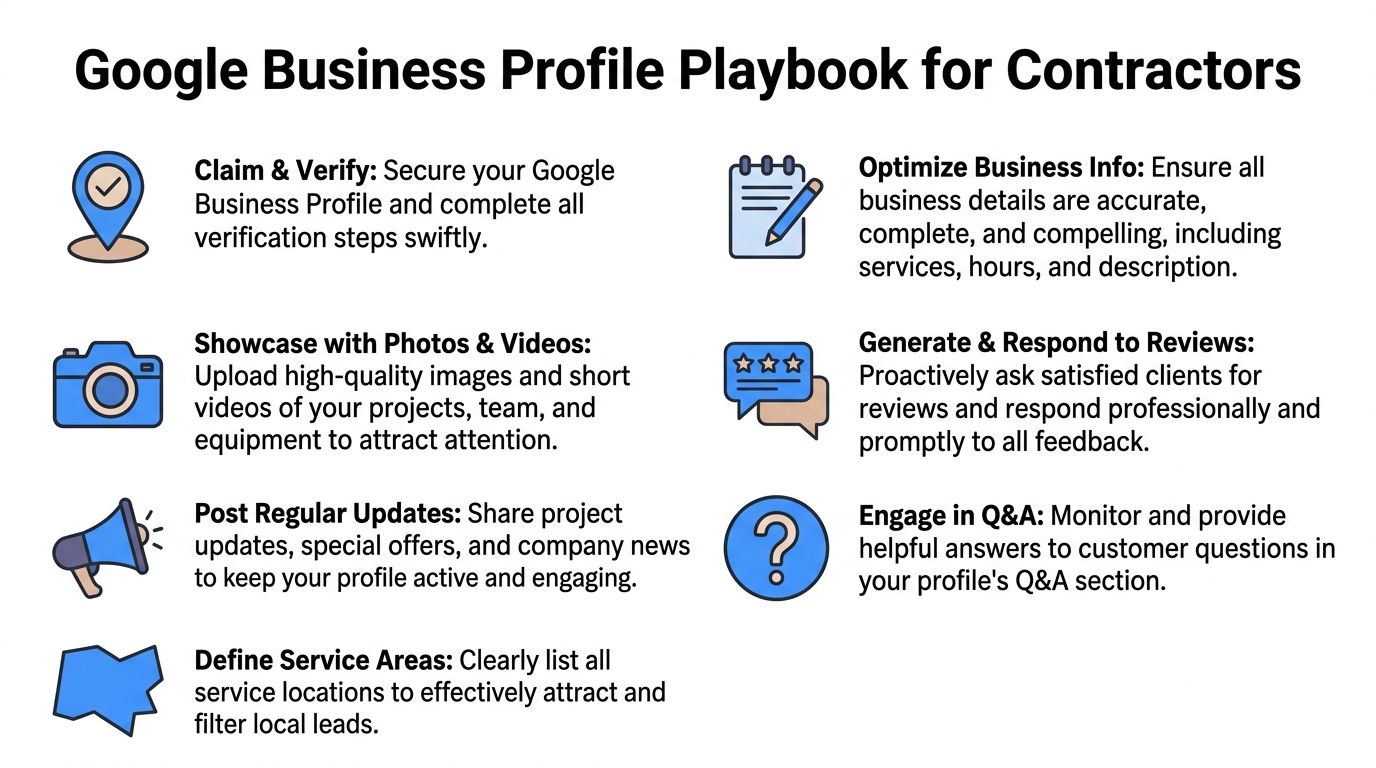
- Claim and verify the profile: Do not leave ownership unclear or shared across old staff and vendors.
- Use the official business name: No keyword stuffing.
- Choose the best primary category: Be precise. The main category shapes relevance.
- Add supporting categories carefully: Only use categories tied to real services.
- Complete every field: Hours, phone, website, services, service area, business description.
Incomplete profiles look weak to users and to Google.
Build a profile that proves you are active
A dead profile does not inspire trust.
Google wants signs that your business is real, current, and engaged. Contractors should keep the profile moving with:
- Fresh photos: jobsites, trucks, team, equipment, finished work
- Short videos: walkthroughs, before-and-after clips, maintenance tips
- Google Posts: project updates, seasonal reminders, service highlights
- Q&A monitoring: answer customer questions before bad information sits there
Do not upload random stock photos. Use actual field images. They create trust and give prospects proof that your team does real work in real places.
Reviews are not optional
Reviews do two jobs. They influence rankings, and they influence conversion.
You need a repeatable system, not occasional luck. Ask every satisfied customer. Ask fast, while the result is fresh. Send the link directly. Make the request short and easy.
Use reviews to reinforce the services and areas you want to rank for. If a customer naturally mentions “new furnace installation” or the city name, that helps.
Then respond to every review. Thank the customer, reference the work clearly, and keep it professional. Prospects read responses. Google does too.
A neglected review section tells prospects your company is hard to reach. A managed review section tells them you pay attention.
Service areas and seasonality matter more than most contractors realize
A good map strategy is also a demand-stabilizing strategy.
Contractors often face 30-50% revenue drops in off-seasons, but data shows that seasonal marketing ROI improves by 40% with hyperlocal Google Maps optimization and content focused on maintenance queries, sustaining year-round leads (Smart Blondes Marketing on seasonal demand challenges).
That matters because most contractors treat Google Maps like a static listing. It is not. Your profile should reflect the seasonal services people search for in your market.
An HVAC company should not wait for emergency summer calls alone. It should also support maintenance, tune-up, and system check demand. A roofing company should reinforce inspection and leak-related intent before storm peaks. A pest control company should stay visible before seasonal infestations hit.
Use this working checklist
Profile optimization checklist
- Primary category first: Get the main category right before adding secondary ones.
- Service menu cleanup: List real services, not vague labels.
- Business description: Write for clarity and local relevance.
- Photo cadence: Upload real project and team photos routinely.
- Review system: Ask, follow up, respond.
- Posts: Publish useful local updates instead of empty promotions.
- Service area alignment: Match your true operating footprint.
What to avoid
- Keyword-stuffed business names: Short-term thinking, long-term risk.
- Fake service locations: They create trust issues and weak lead quality.
- Dormant profiles: No updates, no photos, no engagement.
- Slow response habits: A missed call from Maps is lost money.
If you want a practical companion piece on setup and improvement, this guide on https://transactional.net/how-to-optimize-google-business-profile/ is worth reviewing.
Build Your AI-Powered Content and Conversion Website
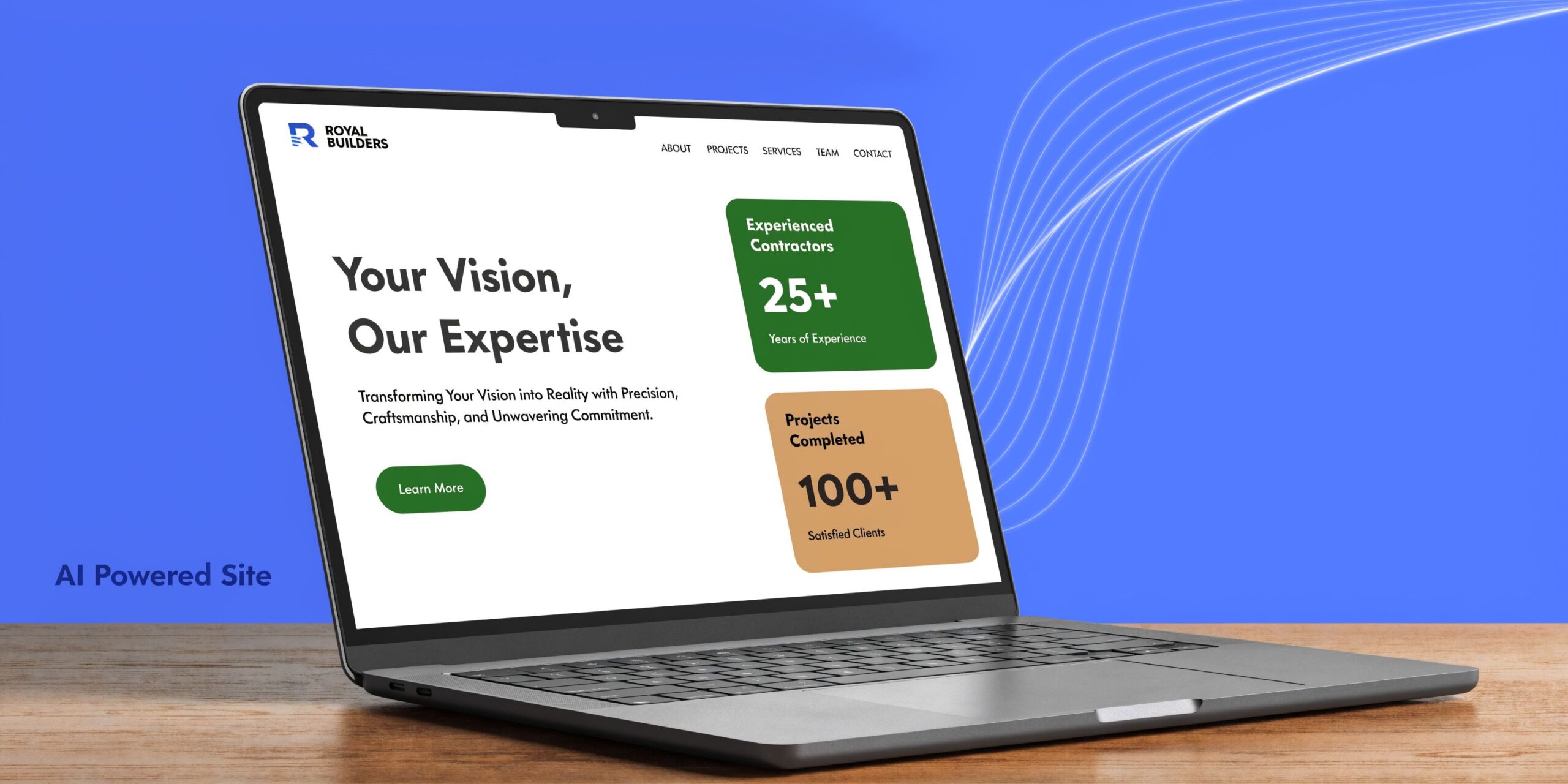
Your website should not act like a digital brochure. It should act like a sales system.
Most contractor sites fail for two reasons. They target broad terms instead of transactional searches, and they are written in a way that neither search engines nor AI answer engines can use well.
Build pages around service and city pairs
A serious contractor website does not hide all services on one generic page.
If you offer roofing, your structure should separate roof repair, roof replacement, storm damage work, and inspections. If you serve multiple cities, each important service should have a page built for each target location.
Examples:
- roof repair in Franklin
- roof replacement in Franklin
- storm damage roofing in Oak Ridge
- emergency roof tarp service in Oak Ridge
This is the content silo model. It works because it mirrors how buyers search and how Google understands local relevance.
Each page should include:
- a clear headline tied to the service
- local context for the city served
- proof elements such as photos, reviews, and job examples
- a tight call to action
- FAQs tied to real buyer objections
- internal links to related services
Write for classic search and AI answers at the same time
Search is changing. Your content has to be readable by humans, crawlable by search engines, and extractable by AI systems.
Generative Search and AI Answer Engine Optimization (GEO/AEO) can boost visibility by 2.5x by structuring content for featured snippets in AI. Post-2025 algorithm updates, AI-optimized sites have seen 45% lead growth in niches like dental practices (YouTube discussion on GEO and AEO).
For contractors, that means formatting matters.
Format pages so AI can quote and summarize them
Use:
- Clear headings: service, city, problem, solution
- Direct answers: short responses under common questions
- Structured FAQs: installation timeframes, service area questions, financing, maintenance
- Schema markup: help systems understand services, locations, and business details
- Consistent entities: same business name, service area, phone, and service terminology across pages
AI engines pull from content that is easy to parse. Long-winded fluff loses.
Do not let AI-written copy make your site sound fake
A lot of contractors are now publishing machine-written pages that read like they were assembled by a bored intern. That hurts trust.
Use AI for speed, outlines, and content planning. Then edit with field language your buyers use. If you want a practical checklist for cleaning up robotic copy, this guide on how to humanize AI text is a solid reference.
Your pages should sound like a professional company that does the work every day. Not like a generic marketing template.
Conversion fixes matter as much as rankings
Traffic without action is useless.
A contractor site should make the next step obvious within seconds. That means:
- Sticky call button on mobile
- Quote form above the fold
- Trust signals near the form
- Service area clarity
- Fast page load
- Before-and-after visuals
- Simple navigation
A visitor should never wonder what you do, where you work, or how to contact you.
If a prospect has to hunt for your phone number, your site is leaking revenue.
Use video to increase trust fast
Written content ranks. Video closes trust gaps.
A short service explainer, project walkthrough, or owner introduction helps buyers decide that your company is legitimate before they ever call.
Here is a useful example format for embedded media on a service-driven website:
Keep videos short and practical. Show the crew. Show the work. Explain the problem. Explain what happens next.
A simple page architecture that works
Core pages
- Homepage: broad credibility and primary service categories
- Main service pages: one page per major service
- City pages: only for real service areas
- About page: ownership, team, process, trust
- Review page: social proof in one place
Support content
- FAQ articles: answer buying questions clearly
- Maintenance content: capture lower-funnel informational searches
- Project write-ups: before-and-after proof with local relevance
If you are rebuilding or maintaining that system over time, this resource on https://transactional.net/business-website-management/ covers the operational side well.
Paid Ads and Quick Wins That Fuel Immediate Growth
SEO and map rankings build momentum. Paid ads fill the gap while that work compounds.
A contractor who needs booked work now should use paid channels, but only with transactional discipline. Do not buy traffic for broad curiosity searches. Buy visibility for terms tied to immediate service demand.
Local Service Ads versus standard Google Ads
These two tools are not the same.
| Channel | Best use case | Strength | Limitation |
|---|---|---|---|
| Local Service Ads | High-intent local lead capture | Strong local trust and direct lead flow | Less control over search query detail |
| Google Ads | Precise keyword targeting | Tight control over services, cities, and landing pages | Requires tighter campaign management |
Use Local Service Ads if you want direct local lead flow and you have the operational discipline to answer quickly.
Use Google Ads when you need tighter control over keyword intent, landing page alignment, and service-specific messaging.
The mistake is running either one with lazy targeting.
Keep paid search brutally narrow
A small campaign can work if the targeting is sharp.
Start with:
- Exact service terms: “water heater installation,” “emergency electrician,” “roof leak repair”
- Tight geography: the cities you want
- Dedicated landing pages: no homepage dumping
- Call-focused extensions: make contact immediate
- Negative keyword cleanup: block low-intent junk
Then watch lead quality, not just click volume.
If you need a practical primer on what paid search spend can involve, review https://transactional.net/google-paid-search-cost/.
Trust messaging improves paid performance
Contractor sales often involve more than one decision-maker, especially on larger projects. That is why your follow-up should not sound like nonstop sales pressure.
Successful marketing to multiple stakeholders requires a trust-based methodology. The 1:1 messaging rule applies: for every one sales message, send one value-delivery message to build trust and maintain engagement during longer decision cycles (Gushwork on construction marketing strategies).
That applies directly to ads and follow-up sequences.
Quick wins you can use this week
Review request text
“Thanks again for choosing us for your project. If the work met your expectations, would you mind leaving a quick Google review? It helps other local homeowners feel confident hiring us.”
Value-first follow-up
“Checking in to make sure everything is working the way it should. If you want, I can also send a quick maintenance checklist so you can avoid common issues.”
Estimate follow-up
“Wanted to see if you had any questions about the quote. If timing, scope, or options need to be adjusted, I can help you compare the best next step.”
Weekly marketing pulse
- Check call handling: missed calls kill paid ROI
- Review search terms: cut weak intent
- Audit landing pages: match offer to keyword
- Request reviews: keep trust proof growing
- Send one value message: maintenance tip, project advice, or FAQ
Paid ads should not feel separate from your organic strategy. They should reinforce the exact same transactional services and cities you already decided to own.
Measure What Matters The Transactional Marketing Dashboard
Most marketing reports are built to impress the agency, not inform the contractor.
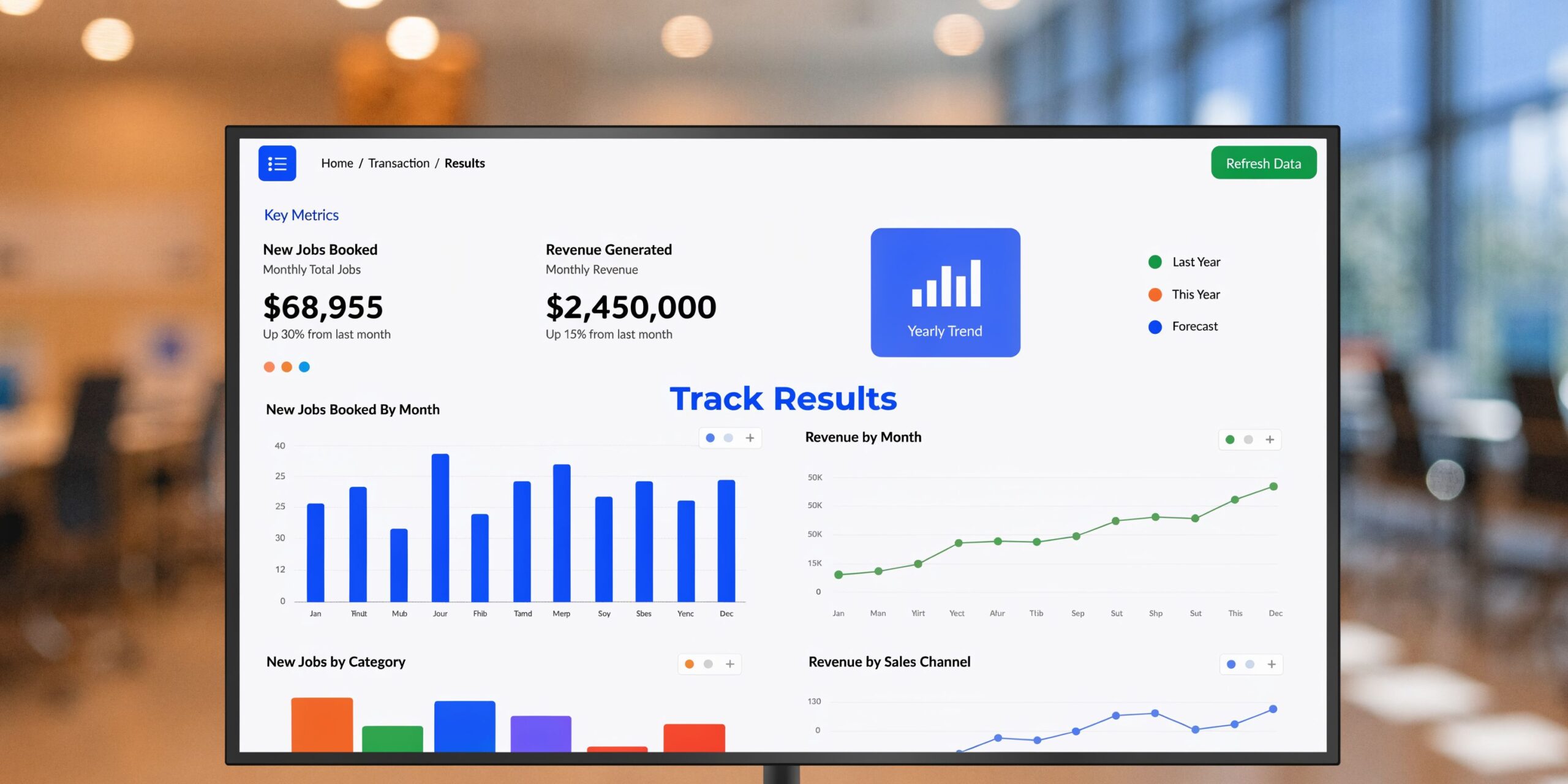
You do not need a dashboard full of vanity charts. You need a dashboard that tells you whether your marketing created qualified leads and booked jobs.
The right question is not “How much traffic did we get”
The right question is “Which search terms, pages, maps placements, and campaigns produced real opportunities?”
A useful dashboard for marketing for contractor companies should connect four things:
- Lead source
- Conversion rate
- Customer acquisition cost
- Lifetime value
That tracking model matters because disconnected tools create fake confidence. Contractors often know they got leads, but not which channel produced qualified ones.
A documented case makes the point clearly. One contractor generated 540 leads in one year through local ads while using analytics to increase Google responsiveness from 75% to 96%, achieving a 48% close rate (Company 119 on contractor analytics). That is what happens when lead tracking and response management are tied together.
What your dashboard should include
Lead flow metrics
Track:
- Phone calls from Google Business Profile
- Website form submissions
- Calls from paid ads
- Direction requests and profile actions
- Booked estimate counts
This shows whether visibility is turning into contact.
Keyword and location visibility
Your reporting should also show:
- Ranking progress for target service-city keywords
- Google Maps heat map movement by service area
- Search Console queries tied to real intent
- Landing page performance by city and service
That tells you whether the right searches are improving, not just whether generic traffic exists.
Sales quality indicators
A lead is not automatically a win.
Track:
- Qualified versus unqualified leads
- Estimate issued
- Close outcome
- Job type
- Referral or repeat status
If a campaign creates noise but not revenue, cut it.
Good reporting does not just count leads. It exposes which marketing inputs produce the jobs you want.
A simple dashboard layout
| Dashboard section | What to review | Why it matters |
|---|---|---|
| Search visibility | target keywords, city rankings, map presence | Shows whether demand capture is improving |
| Lead generation | calls, forms, messages, booked estimates | Measures action, not attention |
| Sales outcomes | close status, service type, job value tier | Connects marketing to business quality |
| Response performance | speed to lead, missed calls, follow-up status | Protects lead value after acquisition |
What most contractors should stop reporting
Cut these from the top of your report:
- Raw impressions
- Social likes
- Broad traffic totals without intent breakdown
- Keyword lists with no lead connection
Those numbers are not useless, but they are secondary. If your phone is not ringing with the right work, they should not be the headline.
Build one source of truth
Use one CRM or central log for every inbound lead. Every call, form, ad lead, referral, and repeat customer should land in one system with source tagging.
That lets you answer basic but important questions:
- Which city is producing the best opportunities?
- Which service page creates booked work?
- Which ad campaign is attracting weak leads?
- Which map visibility gains convert?
Without that, you are making budget decisions from guesswork.
If you want a contract-free partner focused on one thing, getting your business found for high-intent local searches that turn into calls and booked jobs, talk to Transactional LLC. They help service businesses build local SEO, Google Maps visibility, AI-optimized content, paid campaigns, and transparent reporting around the only searches that matter most, the transactional ones.