

Every day, people in your city search with money in hand. They type things like “plumber near me,” “emergency AC repair,” and “dentist near me.” Those are transactional searches, and they’re where local service businesses make or lose revenue.
Most owners still treat ads like a design project. That’s a mistake. Nielsen found that creative accounted for 65% of a brand’s sales lift from advertising in Project Apollo, while later analysis showed media’s contribution to sales rose to 36% from 15% over the past 11 years, with creative still leading the pack among key ad factors including reach, recency, and targeting in Nielsen’s advertising effectiveness analysis. If your headline, visuals, offer, and call-to-action are weak, better targeting won’t save the campaign.
That matters even more for local service companies chasing transactional search terms. In this space, the best ads don’t win because they sound clever. They win because they match intent, build trust fast, and make it easy to call now. That applies on Google Ads, Google Maps, landing pages, Local Services Ads, and even AI-powered search experiences that summarize local businesses before a click ever happens.
At Transactional Marketing, the focus is narrow on purpose. We go after the searches that lead to booked jobs and new patients. We care about terms like “air conditioning repair near me,” not vanity traffic. We care about getting a business into the Google Maps 3-pack and onto page one for service-city combinations that convert.
If you want to create a Google Ad that converts, start with the core elements of advertisements and build each one around local buying intent.
1. Headline and Copy
Your headline does the heavy lifting first. For a plumbing company, “Fast Plumbing Help” is weak. “Emergency Plumber Serving North Dallas Today” is better because it matches what the buyer wants right now.
Most local ads fail because they talk about the company before they talk about the problem. Searchers don’t care that you’re family-owned until they know you solve the issue they typed into Google. Put the service and the location first. Then layer in the proof.
Write for the search, not for your brand deck
A good local headline usually includes three things:
- Service intent: AC repair, root canal, roof leak repair, termite treatment
- Geographic relevance: city, neighborhood, or service area
- A reason to act: same-day availability, emergency response, free estimate, financing, verified reviews
That’s why “AC Repair in Mesa With Same-Day Scheduling” usually beats “Trusted HVAC Experts Since 2004.” The second line can support trust. The first line has to win the click.
If you’re targeting transactional terms, your copy needs to follow the same logic. Match the words people use. If a homeowner searches “water heater replacement near me,” don’t send them to an ad that talks broadly about “residential plumbing solutions.”
Practical rule: If the search term is urgent, your first sentence should sound urgent. If the search term is price-sensitive, your first sentence should reduce cost anxiety. If the search term is trust-sensitive, your first sentence should establish credentials.
What works and what usually fails
What works:
- Direct local language: “Serving Chandler homeowners”
- Clear problem solving: “Fixing no-cool AC systems”
- Specific next step: “Call now to schedule service”
What fails:
- Generic puffery: “Quality you can trust”
- Broad category copy: “Complete home solutions”
- Cute headlines: they rarely match transactional intent
For service businesses, keyword alignment matters in both paid and organic. The same research discipline behind ad copy also powers local SEO and Maps visibility. If your team hasn’t tightened that up, start with these keyword research best practices.
Real example. A dental office shouldn’t lead with “Experience Modern Care.” It should lead with “Emergency Dentist Serving South Austin” or “New Patient Dental Cleaning in Austin.” Transactional searchers respond to relevance, not poetry.
2. Call-to-Action
A strong ad without a strong CTA leaks leads.
I see this all the time with service businesses. The ad says the right thing, the landing page looks decent, then the button says “Learn More.” That’s wasted intent. Someone searching “emergency electrician near me” doesn’t want to learn more. They want to call.
Match the CTA to the moment
The best CTAs match the buyer’s urgency level.
For high-intent home service searches:
- Call now
- Book service today
- Get emergency help
- Request a fast quote
For practices where the decision takes a little longer, like dental or med spa:
- Schedule consultation
- Book appointment
- Check availability
- Claim new patient offer
First-person button copy often works well because it feels like the user is taking ownership. “Book My Visit” or “Get My Quote” is usually stronger than passive phrasing.
A local HVAC example:
- Headline: “AC Repair Serving Gilbert”
- CTA: “Call Now for Same-Day Service”
A med spa example:
- Headline: “Botox Appointments in Scottsdale”
- CTA: “Book My Consultation”
Placement matters as much as wording
Your CTA has to be impossible to miss on mobile. That means a tap-friendly button, a click-to-call number, and a booking path that doesn’t ask for unnecessary information.
When ads are contextually relevant, buyers are more likely to respond. Integral Ad Science reported that 46% of mobile shoppers are likely or very likely to purchase from a relevant mobile ad aligned with the content they’re consuming in these digital advertising benchmarks. That’s the lesson for local businesses too. Relevance gets the click. A clear CTA gets the call.
Don’t make a buyer choose between five next steps. Give them one obvious action based on the intent of the search.
If you run a plumbing campaign for “burst pipe repair,” your primary CTA should be the phone call. If you run a cosmetic dentistry campaign for veneers, your primary CTA can be a consultation form. Same framework, different buying behavior.
Small changes in CTA language and placement can change how many leads you pull from the same budget. Tighten that path with these conversion ideas on how to improve website conversion rate.
3. Visual Elements and Imagery
People judge local businesses fast. Before they read your full copy, they decide whether you look legitimate.
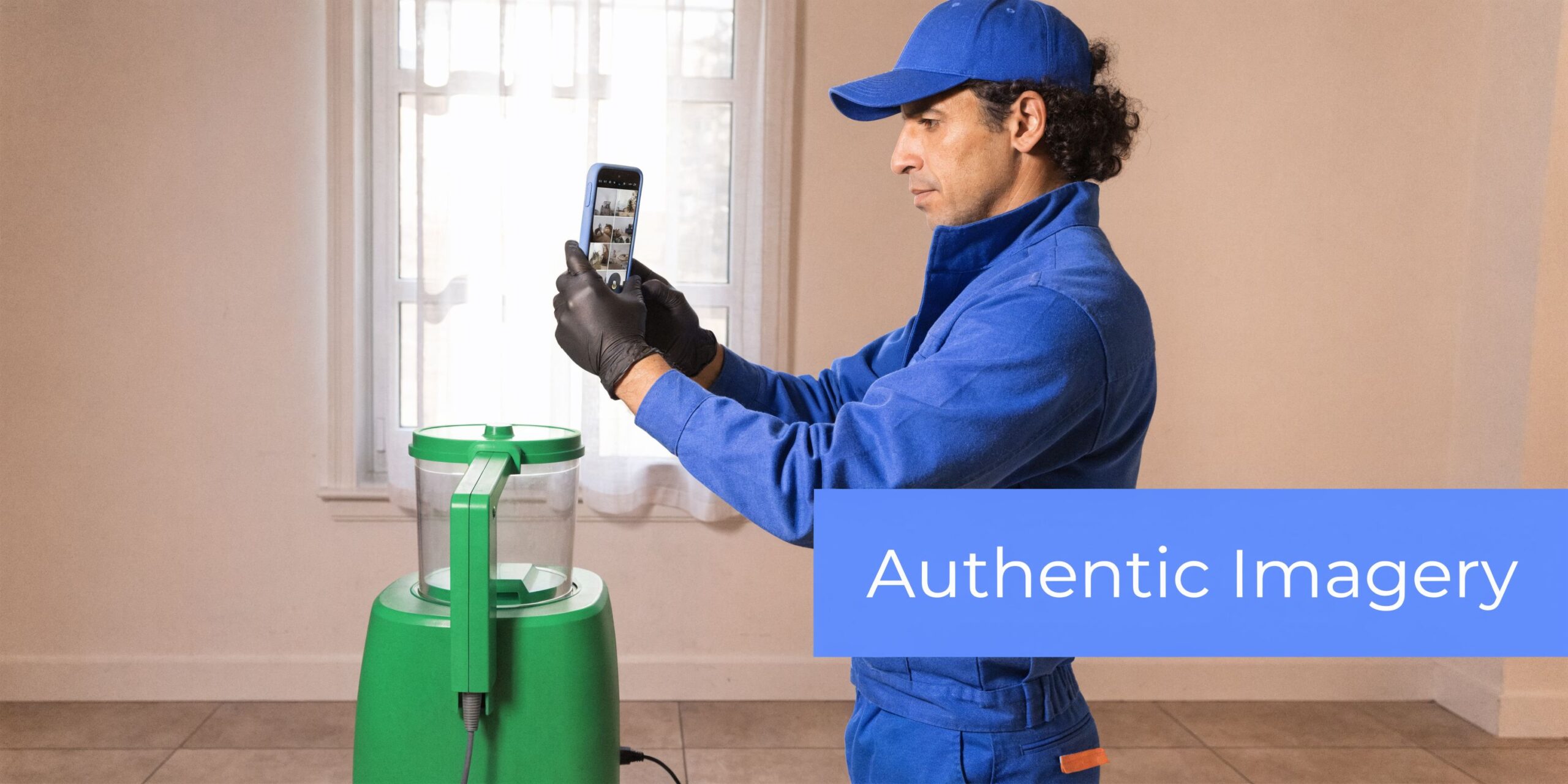
That’s why visual elements are one of the most overlooked elements of advertisements for service companies. A clean truck wrap, a technician in uniform, a real office photo, a treatment room, a dentist with staff, a roofer on-site. Those visuals do more trust work than most owners realize.

Use proof-based visuals
Stock photos hurt more than they help when they feel fake. A homeowner can spot a generic smiling model in two seconds.
Use visuals like:
- Technicians in the field: showing actual service delivery
- Before-and-after work: clogged drain cleared, roof section repaired, treatment room upgrade
- Branded vehicles: reinforces local recognition
- Team photos: especially useful for dental, chiropractic, and med spa
- Map and location imagery: for businesses competing in Google Maps and “near me” search behavior
Google’s ad benchmarks give useful context for why creative matters in digital channels. Average Google Ads CTR is 3.17% on search and 0.46% on display, while conversion rates are 3.75% for search and 0.77% for display, as noted in the Nielsen analysis cited earlier. You don’t need to quote those benchmarks in every meeting to understand the takeaway. Weak creative gets ignored. Strong creative earns attention and trust.
For local businesses, image naming and optimization also support your broader visibility. If your website images are still called IMG_2048.jpg, fix that. Use service-and-location naming conventions, then carry that consistency into your business profile and landing pages with this guide on naming pictures for SEO.
Show what the customer is buying
A pest control customer isn’t buying “premium service.” They’re buying relief from a problem in their house. A med spa client isn’t buying generalized beauty solutions.” They’re buying a credible experience in a clean, professional setting.
Video helps when it shows process, personality, and proof. A short walkthrough of your team, vehicles, office, or service call can do more than another block of copy.
A simple format works well:
- Introduce the service
- Show the team doing it
- Explain what happens next
- End with a direct booking prompt
Here’s a useful example format for service-business video creative:
When visuals and message match, recall improves. That’s why local ad imagery should never be an afterthought.
4. Social Proof and Testimonials
The fastest way to reduce skepticism is to let customers speak for you.
That matters even more in local service marketing because people are hiring strangers into their homes, trusting a clinician with care, or choosing a provider they may need urgently. In those moments, reviews and testimonials often decide who gets the call.
Put proof close to the action
A lot of businesses bury reviews on a separate page. That’s backwards. Social proof should sit next to the decision point.
Good placements include:
- under the main CTA on a landing page
- inside Google Business Profile posts and photo captions
- in ad extensions and callout copy
- near booking forms
- beside emergency service messaging
For a roofing company, a short customer quote about communication and cleanup can calm nerves. For a dental office, a review from a nervous patient can overcome fear better than any polished brand statement.
What to highlight in service-business proof
Not all testimonials are equal. The best ones mention:
- The original problem: no AC, tooth pain, recurring pests, roof leak
- The buying objection: fear of cost, worry about trust, urgency, timing
- The outcome: fixed quickly, explained clearly, easy to schedule, worth the money
That kind of proof feels specific. Specific proof converts.
A practical example for a plumber:
“They answered late at night, arrived when they said they would, and fixed the leak without pushing extra work.”
A practical example for a chiropractor:
“Booking was simple, the staff explained everything, and I didn’t feel rushed.”
You don’t need to overproduce this. Pull short review snippets, keep them readable, and connect them to the matching service page.
If you want more of these assets, build a repeatable review request system after every completed job or appointment. This resource on getting more reviews is a good place to tighten that process.
One more point. Testimonials don’t replace substance. They amplify substance. If your response time is poor or your booking process is clunky, more reviews won’t fix the core issue. But if your service is solid, social proof turns hesitation into action.
5. Offers and Promotions
Offers work best when they remove friction without cheapening the service.
That’s the trade-off many owners miss. A good promotion gives the buyer a reason to act now. A bad promotion trains the market to expect discounts and attracts low-quality leads who only care about price.
The right offer depends on the service
For urgent services, speed is often the offer.
A plumber doesn’t always need a discount. “Same-day appointment availability” can be more compelling than a coupon. An HVAC company in peak season may do better with priority scheduling or a diagnostic special than with a deep discount on labor.
For practices and elective services, a structured introductory offer can work well. A dental office might promote a new patient cleaning package. A med spa might offer a consultation-based entry point with a clear next step.
What usually works:
- Entry-point offers: helpful for first-time buyers
- Bundled services: useful when you want to raise average ticket
- Seasonal offers: strong for HVAC, pest control, and roofing
- Urgency offers: best when the need is immediate and time matters
What often fails:
- Permanent discounts: they erode trust and margins
- Vague promotions: “special savings available”
- Offers disconnected from intent: promoting a maintenance plan to someone searching for emergency repair
Use promotions to support transaction-ready searches
The ad should make sense for the keyword.
If someone searches “furnace tune-up near me,” an inspection special fits. If someone searches “emergency dentist,” the offer should focus on fast access, not cosmetic financing. That’s why transactional search strategy matters so much. The keyword, ad, offer, and landing page all need to line up.
Programmatic buying keeps pushing more ad inventory through automated systems. IBISWorld projects that programmatic ad buying will represent 91.3% of all digital display advertising in the US by 2024 in this analysis of digital advertising shifts. That means local businesses will increasingly compete in environments where the offer and message have to earn attention quickly.
A promotion should answer the buyer’s immediate question. “Why call this company now instead of the next one?”
A practical HVAC example:
- Search term: “AC tune-up near me”
- Offer: “Seasonal AC inspection with easy scheduling”
- CTA: “Book today”
A practical pest control example:
- Search term: “roach exterminator near me”
- Offer: “Fast inspection and treatment plan”
- CTA: “Call for same-day availability”
That’s disciplined ad building. It doesn’t rely on gimmicks.
6. Location-Based Targeting and Keywords
Here, most local campaigns either print money or burn it.
If your targeting is loose, your ad shows to the wrong people. If your keywords are broad, your clicks get expensive and your leads get messy. For local service businesses, one of the most important elements of advertisements is location precision.
Own the service-city combinations that convert
You don’t need to rank for every keyword in the state. You need to show up when buyers in your service area search with clear intent.
That usually means building campaigns around combinations like:
- AC repair + city
- emergency plumber + neighborhood
- dentist near me + zip code intent
- pest control + suburb
- roofing repair + service area
The copy, landing page, and map signals should all reinforce the same geography. If your ad says “serving Tempe,” but the landing page only talks about Phoenix, you weaken relevance.
This matters in AI search too. Large language model summaries pull from consistent entity signals. A business that repeatedly connects service, city, reviews, and map presence is easier for AI systems to understand and surface.
Relevance beats reach
NCSolutions research covered 863 cross-media campaigns and reinforced a simple point noted in the Nielsen material earlier. Reach matters, but there are diminishing returns after the right level of impressions. Only exposed consumers can be influenced. For local businesses, that translates into a practical rule. Don’t chase broad visibility if your best buyers come from tightly defined service areas.
Use “serving [city]” language where it’s honest. Build location pages that match real service zones. Tighten your radius, exclude weak areas, and make sure your Google Business Profile service areas are set correctly.
A roofing company might split campaigns by storm-prone city clusters. A dental office might target neighborhoods within realistic driving distance. A pest control company might separate urban and suburban service pages because the search behavior and objections differ.
If you want domination of transactional search terms like “roofer near me” or “air conditioning repair near me,” local keyword structure has to be deliberate. Random city stuffing won’t do it. Tight relevance across ads, Maps, landing pages, and supporting content does.
7. Trust Signals and Credentials
In many service categories, buyers decide in seconds whether you feel safe enough to hire.
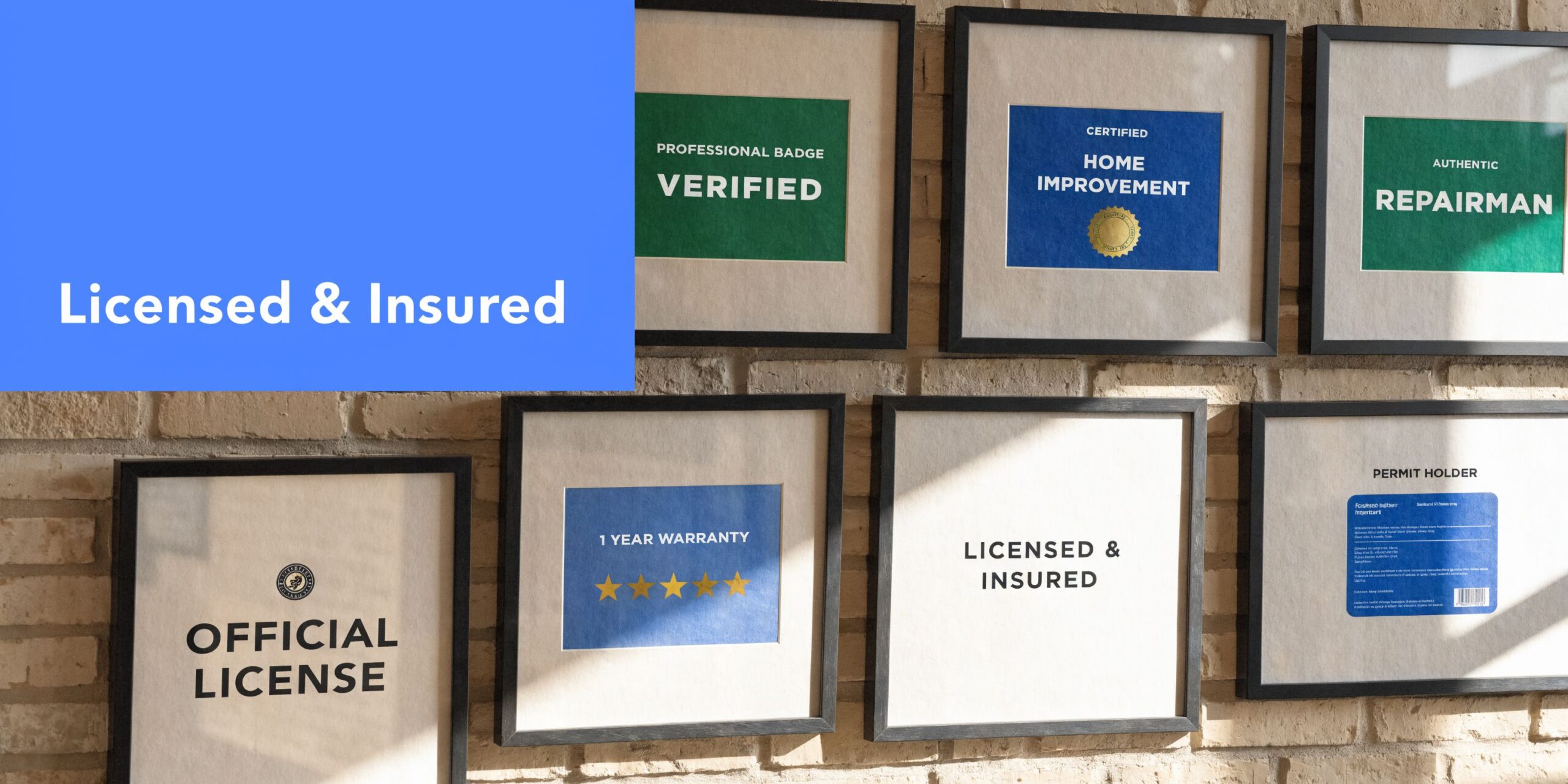
That’s where credentials earn their place. Licensing, insurance, certifications, background checks, memberships, and warranty language all reduce risk in the customer’s mind. They’re not decoration. They answer the silent question every prospect asks. “Can I trust this business in my home, with my family, or with my money?”
Lead with the trust signal that matters for your category
Different industries need different proof.
For HVAC and plumbing:
- licensed and insured
- manufacturer or technician certifications
- emergency service credibility
- financing or warranty clarity
For dental and chiropractic:
- licensure
- board or professional memberships
- patient comfort messaging
- office and staff professionalism
For pest control:
- state licensing
- treatment safety language
- inspection process clarity
- experience with common local infestations
Don’t stack every badge you’ve ever collected. Lead with the few that directly affect the decision. A homeowner needing electrical work cares more about licensure and insurance than a generic “award-winning service” badge.
Use credentials inside the ad, not just on the about page
A lot of businesses hide their trust signals in the footer. Put them where the buyer is deciding.
Examples:
- in ad copy
- in Google Business Profile description
- beside the booking form
- under the phone number
- inside service-page hero sections
That’s especially important as privacy changes reduce some forms of retargeting and audience tracking. The ad itself has to do more persuasive work upfront.
Improvado reports that 78% of marketers using advanced attribution models report 20-30% improvements in ROAS in its guide to advertising analytics. The big takeaway for local operators isn’t just analytics sophistication. It’s that measurement helps you see which trust signals move leads, not which ones you assumed mattered.
The right credential lowers friction. The wrong one is just clutter.
A practical example. “Licensed Master Plumber. Insured. Serving Fort Worth homeowners.” is useful. “Industry-leading excellence with superior customer commitment” is noise.
If your business competes on transactional terms, trust signals should show up before the click, after the click, and on your Maps presence. Consistency wins.
8. Responsive Design and Mobile Optimization
If your mobile experience is weak, the rest of your ad doesn’t matter much.
Most transactional searches happen when someone needs a solution now. They’re on a phone, often in a hurry, and they won’t fight your site to contact you. If the page loads slowly, the form is annoying, or the call button is buried, you lose the lead.
Build for the thumb
A mobile landing page for local services should do a few things immediately:
- Show the service and city clearly
- Display a tap-to-call option
- Place the main CTA above the fold
- Keep forms short
- Load cleanly without visual clutter
That applies to every vertical, but the details change. An emergency plumber page should prioritize the phone call. A dental new-patient page may support both a call and an appointment request. A med spa page can use a consultation CTA and strong visual proof, but it still has to be fast and easy to use.
Mobile relevance now shapes ad efficiency
Context and quality matter on mobile. As noted earlier from Integral Ad Science, contextually matched ads improve memory and perception, and consumers prefer ads that match the content they’re viewing. That same principle applies after the click. A mobile ad about “same-day AC repair” should land on a page that confirms same-day AC repair in the relevant city, not on a generic homepage.
Another key shift is automation. Mobile accounted for 70.6% of programmatic digital display purchases in 2023 according to the IBISWorld analysis cited earlier. Local businesses don’t need enterprise complexity to respond to that trend, but they do need mobile-first pages, clean tracking, and direct conversion paths.
A roofing company can win more calls with a simple mobile page that has:
- a service headline
- trust badges
- local review snippets
- a prominent call button
- a short request form
A chiropractor can use a similar structure with scheduling instead of emergency response. Different service, same principle.
The best mobile pages feel easy. That sounds basic, but it’s where many campaigns fail. Buyers searching transactional terms won’t reward a beautiful page that slows them down. They reward the business that makes action simple.
8-Point Ad Elements Comparison
| Element | Implementation Complexity | Resource Requirements | Expected Outcomes | Ideal Use Cases | Key Advantages |
|---|---|---|---|---|---|
| Headline and Copy | Medium, requires ongoing A/B testing | Copywriter, keyword research, testing tools | Improved CTR, conversions, and Google Ads Quality Score | Paid ads, landing pages, local listings | Precise messaging, highly customizable by location |
| Call-to-Action (CTA) | Low–Medium, design + alignment with funnel | UX/design, analytics, tracking implementation | Significant conversion lift when optimized | Booking flows, appointment scheduling, ads | Reduces friction, easy to measure and iterate |
| Visual Elements and Imagery | Medium–High, production and upkeep | Professional photography/video, designers, editing | Large engagement and trust gains; higher CTRs | Service galleries, social ads, GMB listings | Builds authenticity and perceived professionalism |
| Social Proof and Testimonials | Medium, systems for collection and management | Review request tools, content editing, video production | Increased trust, better local rankings and CTRs | Local businesses, conversion pages, ads | Strong credibility; heavily influences local search |
| Offers and Promotions | Low–Medium, strategic planning and tracking | Marketing manager, pricing analysis, creative assets | Short-term lead volume spike; faster decisions | New-customer acquisition, seasonal campaigns | Creates urgency and increases lead volume quickly |
| Location-Based Targeting & Keywords | Medium, ongoing research and scaling | Keyword tools, location pages, geo-targeting setup | Higher relevance, reduced wasted spend, better local visibility | Multi-location services, local search ads, Maps | Targets high-intent local customers; improves Quality Score |
| Trust Signals and Credentials | Medium, obtaining and maintaining credentials | Certification costs, documentation, trust-badge graphics | Higher conversion rates; supports premium pricing | Regulated trades (HVAC, medical, electrical) | Differentiates from competitors; reduces objections |
| Responsive Design & Mobile Optimization | High, technical work and testing | Developers, performance tools, mobile UX designers | Better mobile conversions, lower bounce, SEO gains | Mobile-heavy searches, click-to-call booking flows | Essential for mobile users; improves Quality Score and UX |
Dominate Your Local Market with Smarter Ads
Most ads fail for simple reasons. The headline doesn’t match the search. The CTA is vague. The visuals look generic. The offer doesn’t fit the buyer’s intent. The landing page asks for too much. The business talks about itself instead of the customer’s problem.
Fix those issues, and your advertising starts working like a system instead of a gamble.
That’s the core value of understanding the elements of advertisements through a local, transactional lens. You’re not building ads for passive browsers. You’re building them for people searching “dentist near me,” “emergency plumber near me,” “AC repair near me,” and other bottom-of-funnel terms where someone is ready to spend money now. Those are the searches that matter most to service businesses. Those are the searches that drive calls, booked jobs, and new patients.
Each element plays a specific role.
The headline and copy capture intent. The CTA converts that intent into action. Visuals build fast credibility. Social proof reduces doubt. Offers create a reason to move now. Local targeting keeps the message tied to the right geography. Trust signals remove fear. Mobile optimization makes the whole path easy on the device people turn to when they need help fast.
Miss one of those, and performance suffers.
Get them working together, and your ad becomes much more than an ad. It becomes a direct-response asset tied to transactional search behavior, Google Maps visibility, and increasingly, AI search discovery. That last part matters more every month. AI systems don’t reward vague local businesses with sloppy signals. They surface businesses with clear service pages, consistent location data, strong reviews, useful content, and conversion-focused messaging.
That’s why local marketing now has to connect paid ads, SEO, Google Business Profile optimization, and AI-ready content. If those pieces live in separate silos, you leave money on the table. If they reinforce one another, you create a stronger footprint across search, maps, and machine-generated answers.
At Transactional Marketing, that’s the entire point. We don’t chase empty traffic. We focus on transactional search terms because those searches come from people who need a service and are ready to buy. We work to get businesses found where that intent shows up, especially on Google page one and in the Maps results that drive local calls. We also build the supporting content structure that helps businesses stay visible as AI changes how people discover providers.
If you’re a roofer, dentist, chiropractor, plumber, HVAC company, pest control operator, or med spa owner, the opportunity is straightforward. Stop running ads that could apply to any business in any city. Start building ads around the exact searches your customers make when they need help now.
That’s how local companies stop blending in.
That’s how they win more high-intent clicks.
And that’s how they turn searches into service calls.
If you want help building a system that ranks for transactional search terms, strengthens your Google Maps visibility, and turns ad clicks into real calls, talk to Transactional LLC. They help service businesses dominate the searches that bring in ready-to-buy customers, with contract-free local SEO, Google Business Profile optimization, web support, paid ads, and AI-driven content built around the cities and services that convert.