

You own a local service business. Your phone should ring when someone searches “plumber near me,” “emergency dentist near me,” or “AC repair near me.” Instead, you're hearing nonstop buzzwords about AI, GEO, LLMs, AI Overviews, and automation.
Most of that talk is useless if it doesn't turn into booked jobs.
That's the standard that matters. Not impressions. Not vague “visibility.” Not a bloated report with colored arrows. Transactional search terms are what matter. Those are the searches where the customer already needs help, already has intent, and is close to making a decision.
That’s why ai seo agencies are getting so much attention. Some are using AI the right way, which means better local rankings, stronger Google Maps visibility, and more opportunities to capture high-intent searches. Others are just repackaging generic content production and calling it innovation.
In this situation, local business owners get burned.
Is AI the New Secret to Dominating Local Search
A roofer hears that “AI is changing search.” A dentist gets pitched on “AI content at scale.” A plumber gets an email saying his website needs “LLM optimization.” Most owners react the same way. They tune it out because none of it answers the essential question.
Will this get me more calls from people ready to hire?
That’s the only useful filter.
AI matters in local SEO because search behavior and search results are changing fast. The market itself is moving in that direction. The AI-powered SEO tools market is projected to grow from $1.3 billion in 2023 to $3.8 billion by 2028, and 86.07% of SEO professionals already use AI tools. For local service businesses, the more important detail is this: companies embracing AI in their SEO saw a 30% boost in search rankings in six months, according to this roundup of AI SEO statistics.
That doesn’t mean every agency using AI is good. It means ignoring AI is a mistake.
The right way to think about it is simple. AI is not the strategy. Getting found for transactional searches is the strategy. AI is the toolset that can help an agency move faster, find better opportunities, and adapt to how Google and answer engines now surface businesses.
Practical rule: If an agency talks more about AI than about calls, booked jobs, Maps rankings, and service-area visibility, they’re selling novelty instead of outcomes.
For local companies, this shift is bigger than content production. AI affects how your business shows up in traditional organic results, in Google Maps, and inside AI-generated search features. If your competitors adapt and you don't, they gain ground on the searches that pay the bills.
If you want a plain-English overview of where this is headed, AI powered search engine optimization strategies lays out why AI optimization is becoming part of local search, not a side topic.
The takeaway is blunt. AI isn't magic. But used correctly, it can help a local business dominate the searches that bring in customers with money in hand.
What Exactly Is an AI SEO Agency
A traditional SEO agency is like using a paper map. It can still get you somewhere. Slowly. You stop often, recalculate manually, and hope the road conditions haven’t changed.
An AI SEO agency should work more like Waze. It should spot patterns early, adjust routes fast, identify bottlenecks, and keep steering toward the shortest path to revenue.
That’s the difference.
It’s not just content with a chatbot
A lot of agencies call themselves “AI-powered” because they use ChatGPT to draft articles. That doesn’t make them advanced. It makes them efficient at producing drafts.
A real ai seo agency uses AI across the system:
- Search intent analysis to separate buyer terms from research terms
- Entity and topical mapping so pages make sense to search engines and LLMs
- Technical audits that catch renderability, structure, and crawl issues
- Content planning based on service lines, cities, and conversion intent
- SERP and Maps monitoring to respond when rankings shift
That’s a very different service than bulk blog writing.
GEO matters now
The newer term you’ll hear is Generative Engine Optimization, or GEO. It means optimizing your business so AI systems like Google AI Overviews, ChatGPT, and Perplexity can parse, understand, and cite your content accurately.
That includes structured data, semantic HTML, consistent entity signals, and pages built clearly enough for machine interpretation.
According to Mike Khorev’s overview of leading AI SEO agencies, agencies focused on GEO use structured data and semantic HTML to help LLMs parse content. Audits show 40-60% of enterprise sites fail these tests, which cuts AI citation rates by half, while optimized sites can appear in 20-30% more AI summaries.
Even if you run a local service company instead of an enterprise brand, the lesson still applies. If your site is hard for machines to interpret, you lose visibility where search is headed.
If you want a practical outside resource that explains the strategic side well, AI SEO Strategies to Dominate Search Rankings is worth reading because it connects AI-first optimization with modern search visibility in a straightforward way.
What a good agency should actually do
A serious ai seo agency should build around these five jobs:
Find the terms that convert
“Emergency plumber near me” matters more than broad vanity phrases.Structure the site for machines and humans
Pages need to be clear, local, fast, and easy to extract.Build topical authority around services and cities
One generic service page won't win competitive local search.Strengthen Google Business Profile signals
Website SEO and Maps SEO should work together, not as separate campaigns.Report on leads, not fluff
If they can’t tie effort to calls, forms, direction requests, and booked work, they’re guessing.
A modern agency should never ask you to trust the process blindly. It should show you which search terms it’s targeting, which areas it’s building, and how those efforts connect to revenue.
That’s the baseline. Anything less is old SEO with a new label.
How AI SEO Delivers More Transactional Customers
The best ai seo agencies don’t win because they write faster. They win because they get more precise. They identify what your buyers search, build pages around those searches, and tighten the technical parts of your site so Google and AI systems can trust what they find.
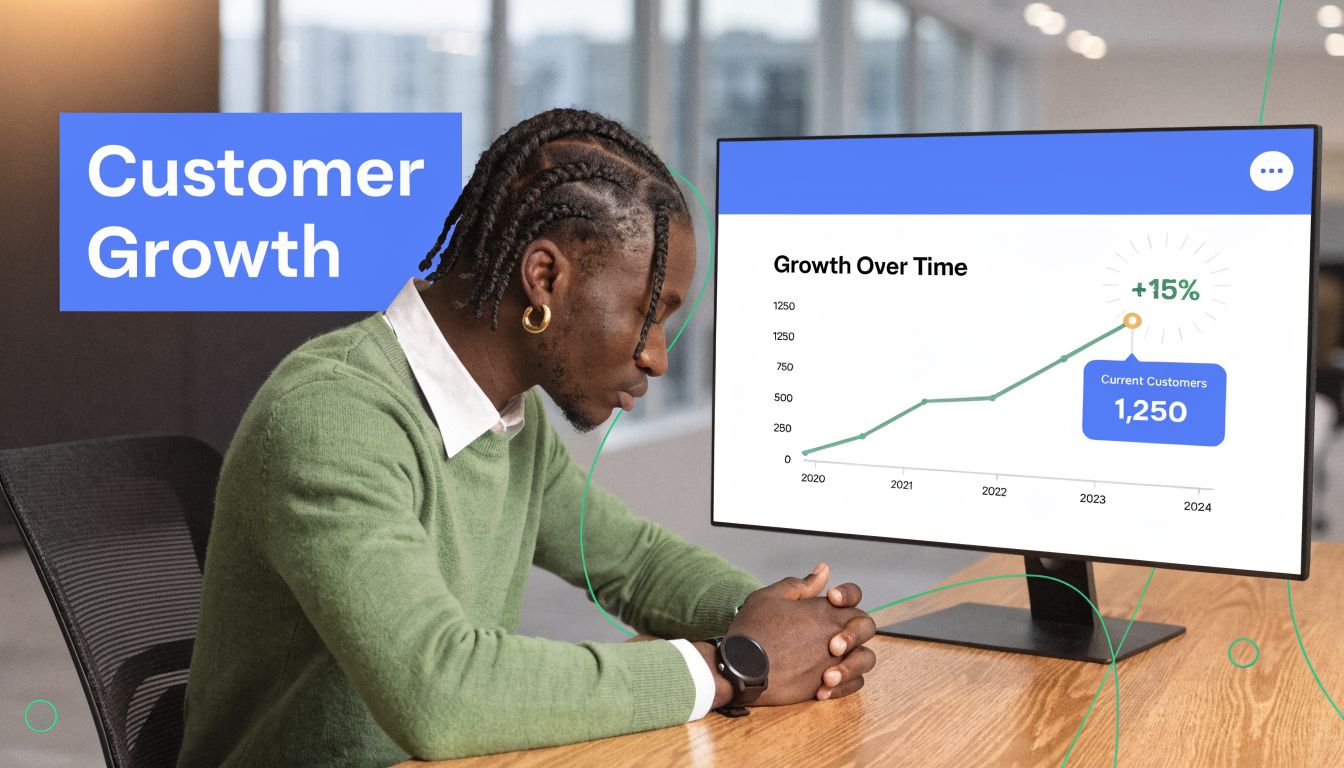
For a local service company, that means chasing the terms that produce action. Not just traffic. Action.
Hyper local keyword research that targets buyers
Most bad SEO campaigns start with broad keywords because they look impressive in a spreadsheet. That’s how businesses end up chasing terms that bring browsers, students, or people outside the service area.
A smart agency uses AI to sort keyword patterns by intent, geography, urgency, and service line. It doesn’t stop at “plumber” or “dentist.” It maps out actual purchase-driven searches such as drain cleaning in a specific city, same-day AC repair near a neighborhood, or emergency tooth extraction near a service radius.
That matters because local search is full of nuance. “Water heater repair” and “water heater replacement” are not the same customer. “Emergency electrician” and “electrical contractor” are not the same stage of buying. AI helps agencies classify that intent faster, but the strategy still has to be guided by a human who understands what leads are worth.
One of the strongest supporting shifts here is happening inside the search results themselves. Brands cited in Google’s AI Overviews get 35% more organic clicks, while the traditional #1 result sees a 34.5% lower click-through rate when an AI Overview is present, according to Ahrefs’ AI SEO statistics analysis. That changes the game. Ranking in blue links still matters, but being visible in AI-generated summaries now matters too.
Content strategy built around service and city combinations
AI should help an agency plan content clusters, not flood your site with robotic filler.
A strong local strategy usually needs:
- Core service pages for high-value services
- City or service-area pages tied to actual market demand
- Supporting FAQ pages that answer transactional objections
- Comparison and problem pages that align with how people phrase urgent needs
- Google Business Profile support content that reinforces relevance
Many agencies fall short in this area. They use AI to mass-produce generic articles like “Top 7 Plumbing Tips for Spring.” That might fill a calendar, but it won’t always move high-intent rankings.
The better approach is to build pages around the searches your best customers use when they’re ready to hire. That’s also how you lower waste in your marketing spend. If you're focused on efficiency as much as volume, this guide on reducing customer acquisition cost aligns with the same principle: less vanity, more conversion.
What to demand: Every page should have a job. If the agency can’t tell you what search intent a page targets and what lead behavior it’s supposed to influence, it shouldn’t be published.
Predictive tracking instead of reactive guessing
Traditional SEO reporting is often too slow. An agency publishes pages, waits, and then gives you a postmortem a month later.
AI changes that workflow by helping agencies detect patterns faster. It can cluster ranking shifts, compare search result layouts, watch competitor movements, and flag where certain page types are gaining traction. For local businesses, this is valuable because market conditions change by city, by service, and even by season.
That doesn’t mean AI can promise exact outcomes. It means the agency can make smarter adjustments before a campaign drifts.
A roofing company heading into storm season should not be waiting around while competitors take over urgent repair terms. A dental office trying to push implant-related searches should not rely on broad blog content when local treatment pages are what convert.
This is a useful overview if you want to see one practical explanation of modern AI search optimization in action:
Automated technical audits that remove hidden blockers
A site can have strong services, a good reputation, and decent content, then still underperform because of technical friction.
AI-assisted audits help agencies find problems faster, including:
- Weak internal linking that leaves important pages buried
- Broken schema implementation that confuses search engines
- Duplicate or thin local pages that dilute relevance
- Slow-loading service pages that hurt user experience
- Crawl and render issues that keep pages from being fully understood
Technical SEO sounds boring until it costs you leads. If Google can’t clearly connect your services, service areas, and authority signals, you won’t get the full value of your site.
AI should make local SEO sharper, not lazier
That’s the standard. The agency should use AI to become more accurate, more responsive, and more local. Not to cut corners.
For a service business, the winning formula is simple. Identify high-intent searches. Build the exact pages needed to rank for them. Make the site machine-readable. Support the effort with Maps optimization. Then measure whether the campaign increases calls and booked jobs.
That’s how AI SEO delivers transactional customers.
The Google Maps Advantage with AI Powered Optimization
For local service businesses, Google Maps is where a lot of the money is. If someone searches “roofer near me,” “pest control near me,” or “dentist near me,” the map pack is often the first serious decision point.
If you’re not in that top group, you’re not just losing visibility. You’re losing buyers who were ready to call.
Why Maps beats broad traffic for local service companies
A visitor reading a blog post may convert later. A person searching on Maps for a nearby provider often wants service now.
That’s why smart agencies don’t treat Google Business Profile as a side task. They treat it as a lead engine.
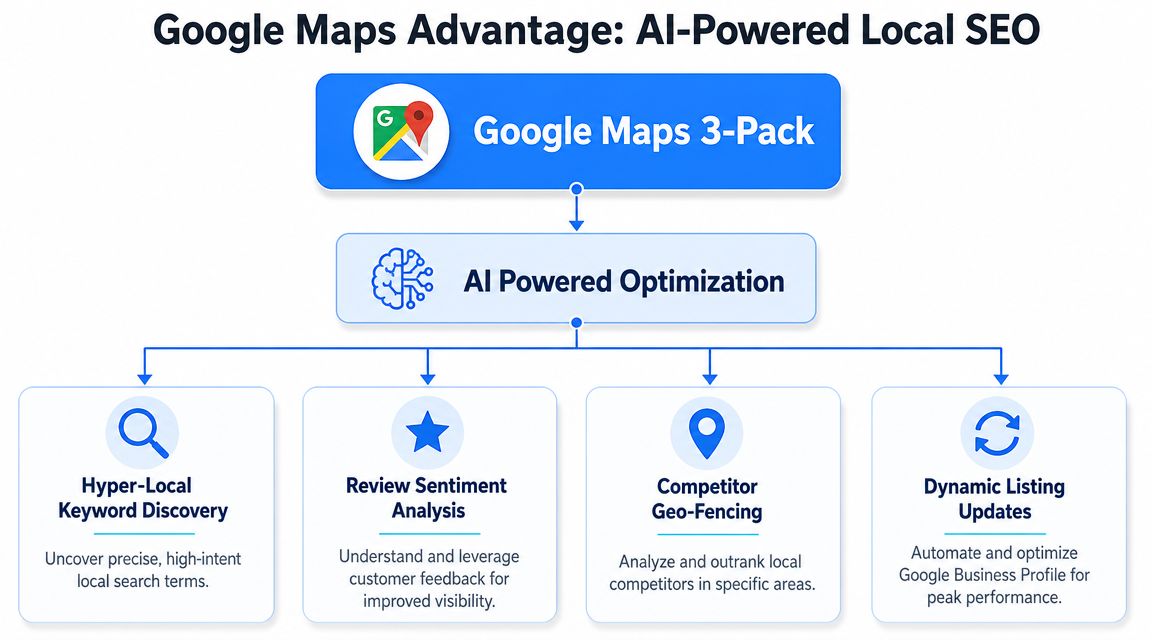
The work usually includes category alignment, service refinement, review strategy, local landing page support, Q&A optimization, photo and update cadence, and competitive analysis by geography. AI helps because it can process local patterns faster than manual review.
For owners who want a broader primer on the local search side of this, Google Maps Marketing gives a helpful overview of why nearby visibility is so important for customer acquisition.
Where AI gives Maps campaigns an edge
The advantage is speed and pattern recognition.
An agency using AI well can evaluate competitor profiles across service areas, identify missing categories or weak review themes, detect gaps in location relevance, and uncover search phrasing that should influence your business profile content and supporting pages.
That leads to better decisions in areas like:
Review keyword mining
Agencies can study how customers naturally describe your services and use those patterns to reinforce local relevance.Geo-specific competitor analysis
Rankings differ by street, neighborhood, and suburb. AI helps agencies compare visibility across the service area instead of relying on one ZIP code snapshot.Dynamic listing support
Google Business Profile performance improves when the supporting website, service pages, and local signals all align. AI can surface those mismatches quickly.
If your SEO agency barely talks about your Google Business Profile, it doesn’t understand local buyer behavior.
Maps and website SEO must work together
Some owners make the mistake of hiring one vendor for website SEO and another for Google Maps. That split usually creates inconsistency.
The website says one thing. The business profile says another. Service areas don’t line up. Categories are weak. Pages don’t reinforce local relevance. Reviews mention services that don’t have dedicated supporting pages.
That fragmentation costs rankings.
A serious local strategy ties all of it together. Service pages support map relevance. Reviews reinforce those services. Q&As match actual buyer questions. Nearby-city pages support wider service area reach without turning into spam.
If your main goal is getting into stronger local map positions, ways to rank higher on Google Maps is the kind of framework an agency should already be executing, not discovering for the first time on your account.
The point is straightforward. Transactional searches are won in Maps and in the high-intent local results around Maps. AI gives agencies a sharper way to spot what’s missing, prioritize what matters, and tighten local relevance where it produces calls.
Risks and Limitations What Most Agencies Wont Tell You
AI can help local SEO. It can also wreck your brand if the agency uses it lazily.
That’s the part a lot of ai seo agencies avoid because it ruins the sales pitch.

Generic content kills trust
Local service businesses sell trust before they sell service. A homeowner hires the plumber who sounds competent. A patient chooses the dentist who sounds credible. A med spa gets selected when the brand feels professional and human.
That’s why over-automated content is dangerous.
According to this analysis of AI content and the growing trust recession, the web is facing a “trust recession” from generic AI content, and 90% of AI-generated agency output is described as having structural flaws and shallow coverage. That should concern any local business owner.
A flood of bland pages can make your company sound like everyone else. Worse, it can make your expertise look fake.
AI still needs adult supervision
AI can draft, cluster, summarize, and organize. It cannot reliably replace local market judgment.
It doesn’t know which services carry the best margins. It doesn’t know whether your best leads come from affluent neighborhoods, emergency work, insurance-related jobs, or high-value elective treatments. It doesn’t know whether your office manager is overloaded with low-quality calls and needs more selective lead volume instead of more traffic.
A good agency uses AI like a power tool. A bad agency lets the tool run the shop.
That’s how businesses end up with pages that technically exist but don’t persuade real customers.
Bad AI SEO sounds polished, ranks unevenly, and converts poorly.
Reporting can become a black box
This is the other ugly truth. Some agencies hide behind complexity.
They’ll talk about automations, prompts, content velocity, answer engines, and entity graphs, then fail to answer a simple question: Did this campaign produce more calls and booked jobs from the right areas?
If they can’t connect the work to lead outcomes, the technology doesn’t matter.
The safest position is balanced execution
You want speed, but not automation without control. You want scale, but not filler. You want AI support, but not at the expense of local credibility.
The right agency should sound like a sharp operator, not a software demo. It should use AI to tighten strategy, speed up analysis, and improve execution, while keeping experienced humans in charge of messaging, prioritization, and local conversion thinking.
That balance is where key gains happen. Not in mass-produced noise.
How to Evaluate and Hire the Right AI SEO Agency
Most business owners don’t have trouble finding ai seo agencies. They have trouble separating legitimate operators from agencies hiding behind trendy language.
That confusion makes sense. Many local service business owners face a “no real source of truth” problem when trying to judge agency performance. Agencies often fail to provide standardized dashboards for local metrics like GMB heat maps or service-city keyword timelines, which leaves owners without a clean way to measure ROI, as explained in this breakdown of AI SEO measurement challenges.
That’s why you need a hard filter.
Use this checklist before you sign anything
| Evaluation Criteria | Why It Matters | Yes / No |
|---|---|---|
| Do they focus on transactional search terms? | You need buyers, not random traffic. | |
| Do they show a plan for Google Maps and website SEO together? | Local leads come from both working in sync. | |
| Do they explain how they’ll target service plus city searches? | Local intent lives in those combinations. | |
| Do they provide reporting on calls, leads, and booked-job indicators? | Rankings alone don’t pay payroll. | |
| Do they track service-area visibility instead of one generic ranking snapshot? | Local performance changes by geography. | |
| Do they have a human review process for AI-generated content? | Your brand voice and trust depend on it. | |
| Do they discuss structured data, page clarity, and machine readability? | AI-driven search systems need clean signals. | |
| Do they ask about your best services, margins, and target areas? | Strategy should follow revenue, not vanity. | |
| Do they show how they’ll support Google Business Profile optimization? | Maps is central for high-intent local searches. | |
| Do they report clearly and consistently? | If you can’t understand the campaign, you can’t manage it. |
Ask direct questions and listen for direct answers
A good interview with an agency should feel specific. If it feels slippery, walk away.
Ask these:
“Show me how you’d help me rank for a transactional phrase in one of my service areas.”
If they answer with generic blogging talk, they’re not local-search focused.“How do you connect SEO work to calls and booked jobs?”
They should mention call tracking, lead attribution, local ranking timelines, and conversion-focused reporting.“What role does Google Maps play in your strategy?”
If the answer is short, that’s a problem.“How do you use AI without making my brand sound generic?”
They should have a clear human editing and strategy process.“What will you build first?”
A real agency should talk about priority services, high-intent pages, local gaps, and profile improvements.“What should I expect in the first phase?”
They should describe concrete work, not abstract momentum.
Hiring rule: If an agency can’t explain its plan in plain English, it probably can’t execute it cleanly either.
Watch for the red flags
Some warning signs show up fast:
They promise volume but not intent
More traffic sounds good until you realize it’s not converting.They sell AI as the product
AI is the method. Leads are the product.They avoid Maps detail
For local service businesses, that’s disqualifying.They report vanity metrics only
“Visibility” without lead context is decoration.They don’t ask about your service radius or best job types
Then they don’t understand local economics.
What a serious agency relationship looks like
You should know what’s being targeted, what’s being built, how local visibility is changing, and whether lead quality is improving.
You should also know who’s accountable.
If you’re comparing providers and want to benchmark what a focused local SEO partner should offer, reviewing a dedicated SEO company for service businesses can help you spot the difference between a generic agency package and an ROI-driven local search operation.
The right agency won’t just talk about rankings. It will talk about which rankings matter, where they matter, and how they turn into revenue.
Conclusion Your Blueprint for Winning with AI SEO
AI is changing search, but the core objective hasn't changed at all. Your business needs to show up when someone is ready to buy.
That means transactional search terms. It means dominating the places where local buyers make decisions. It means treating Google Maps as a core growth channel, not an afterthought. And it means refusing to pay for SEO that can't connect activity to calls, leads, and booked jobs.
That’s the lens you should use when you evaluate ai seo agencies.
The right agency will use AI to sharpen keyword targeting, improve local content planning, strengthen technical SEO, support AI visibility, and tighten Google Business Profile performance. The wrong agency will use AI to generate more noise faster.
Pick the one that understands local intent.
If an agency can’t explain how it will help you win searches like “emergency electrician near me,” “dental implants near me,” or “AC repair near me,” then it’s not built for a service business. If it can’t show transparent reporting on local rankings and lead outcomes, it isn’t ready to manage your growth.
Winning with AI SEO is not about chasing every new feature. It’s about using the best tools available to capture the highest-value searches in your market and turn them into real customers.
That’s the blueprint. Tight targeting. Maps dominance. Clean local pages. Human-guided AI execution. Clear reporting. Relentless focus on booked work.
Frequently Asked Questions about AI SEO Agencies
How long does AI SEO take to show results
It depends on your market, your website, your Google Business Profile, and how weak or strong your current local presence is.
In practical terms, early movement often comes from fixing obvious local SEO issues, tightening service pages, improving Google Business Profile relevance, and targeting clearer transactional terms. Bigger gains usually require consistent execution across content, Maps, technical SEO, and review strategy.
The key point is this: fast activity is easy. Useful movement on transactional searches is what matters.
Can I just use AI tools myself
You can use the tools yourself. That doesn’t mean you’ll build a winning local search strategy.
Tools can help with drafting, clustering ideas, outlining pages, and spotting patterns. They do not replace deep understanding of service-area targeting, page structure, conversion intent, Google Maps optimization, internal linking, or local buyer psychology.
That’s the difference between having a toolbox and knowing how to build the house.
Is AI SEO replacing traditional local SEO
No. It’s changing how strong agencies execute it.
Local SEO still depends on the basics: relevant service pages, trustworthy content, strong Google Business Profile signals, local authority, technical health, and a site built to convert. AI improves the workflow and expands how businesses can be discovered in modern search environments.
The fundamentals still matter. The execution layer is evolving.
Should I choose SEO or Google Ads
For most local service businesses, that’s the wrong question.
Google Ads can help you capture immediate demand. SEO and Maps optimization help you build durable visibility for the same high-intent searches. The strongest strategy usually combines both, especially when paid search data helps identify which services and locations produce the best leads.
What should an agency report every month
At minimum, you should see progress tied to local rankings, service-area visibility, calls or leads, and what work was completed.
If the report is heavy on buzzwords and light on business outcomes, it’s not a useful report.
If you want a partner that stays focused on transactional search terms, Google Maps visibility, and real lead generation for service businesses, talk to Transactional LLC. They help local brands target the searches that bring in customers ready to book, support those rankings with AI-driven content and Maps optimization, and back the work with transparent reporting instead of long contracts and vague promises.