

You're probably in one of two situations right now.
Your business does good work, customers seem happy, and yet a competitor with a weaker reputation keeps showing up above you for the searches that matter most. Or you've got reviews, but they aren't doing much because there's no system behind them, no consistency, and no connection to the transactional terms that turn into calls.
That's the mistake most local businesses make. They treat reviews like reputation fluff. They chase stars, celebrate a few kind comments, and move on.
Smart operators do the opposite. They treat reviews local business strategy as a revenue system. Reviews help you rank in Google Maps, convert people searching with money in hand, and now influence whether AI tools recommend your company when someone asks for the best plumber, dentist, roofer, or pest control company nearby.
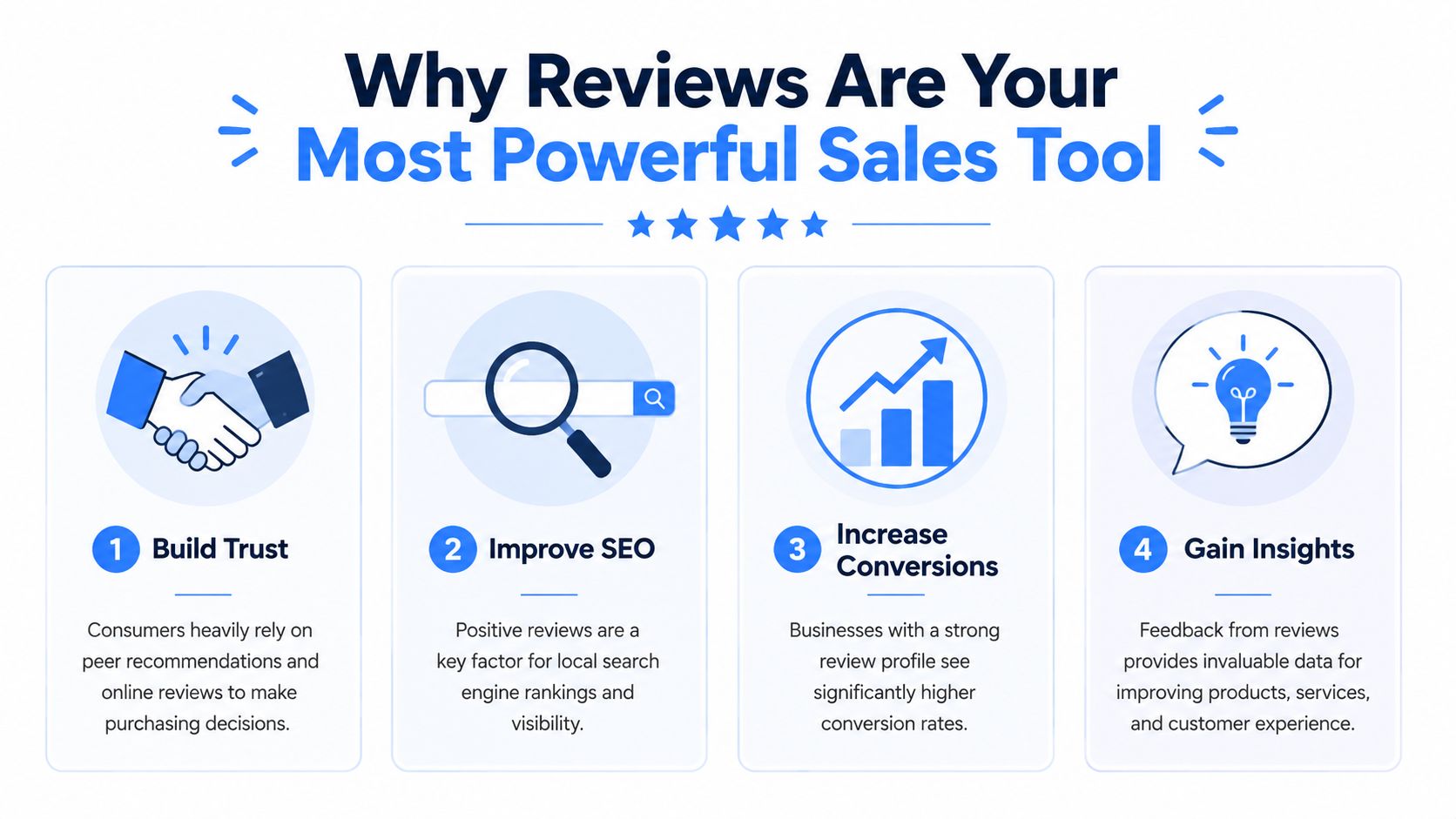
Why Reviews Are Your Most Powerful Sales Tool
If your goal is to win transactional search terms like “dentist near me,” “AC repair near me,” or “pest control near me,” reviews are not optional. They are one of the clearest trust signals attached to your Google Business Profile, and trust is what converts local searchers into booked jobs and new patients.
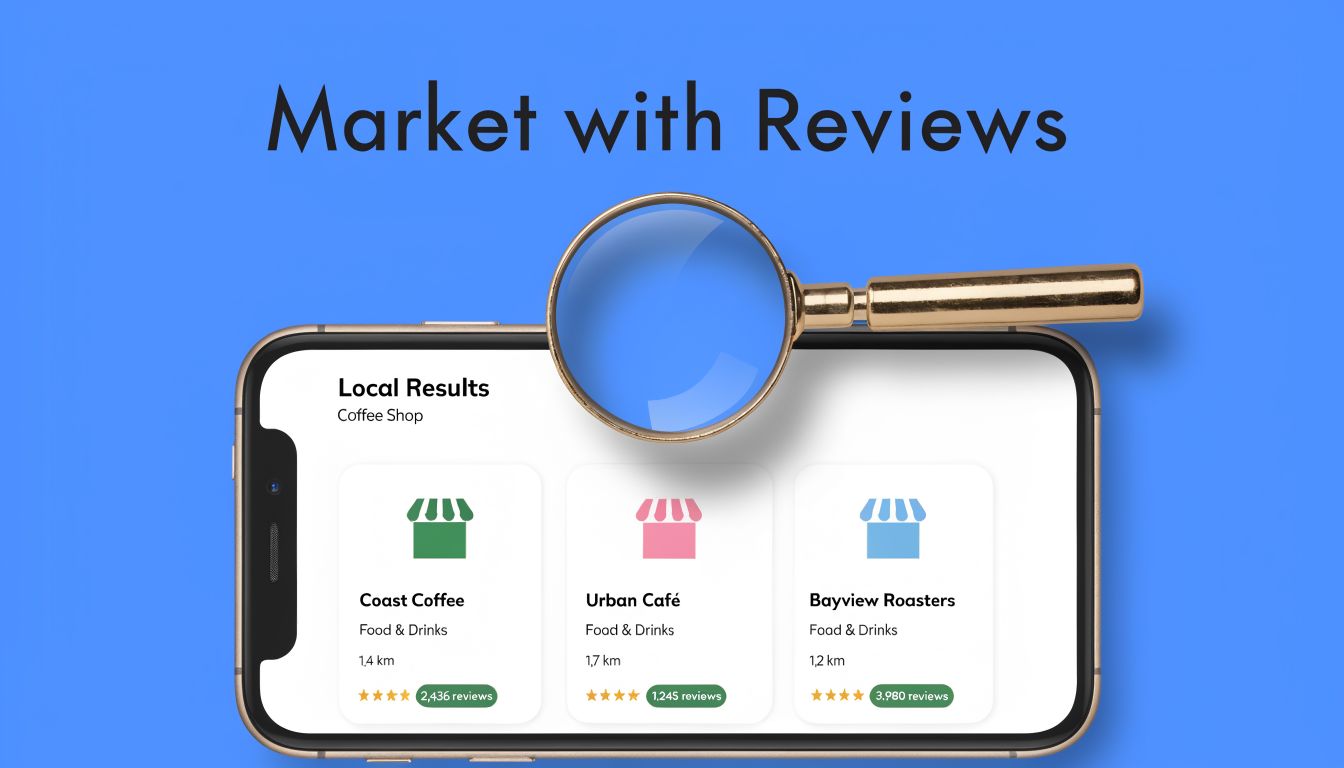
Most business owners still think their website is the first impression. It usually isn't. In local search, your first impression is often your map listing, your star rating, your review count, and the actual words customers use to describe working with you.
That matters because 87% of customers read online reviews for local businesses before deciding to spend money, and 75% read at least four reviews before making a decision, according to Map Labs' 2025 local search statistics roundup. If you want to show up for people who are ready to buy, your reviews have to do selling before your office staff even answers the phone.
Reviews do three jobs at once
First, they increase trust. A homeowner with an urgent plumbing issue doesn't want a clever slogan. They want proof that real people hired you, got the problem fixed, and didn't regret it.
Second, they support local visibility. Google wants to rank businesses that look active, credible, and relevant to the search. Reviews provide all three.
Third, they improve conversion. When someone compares three map listings, the business with stronger review content usually gets the click and the call.
Practical rule: If your reviews don't clearly explain what service you performed, where you performed it, and why the customer was happy, they're not working hard enough.
What a strong review profile actually looks like
A strong profile isn't just a high average rating. It includes:
- Detailed service language that mentions real jobs like drain cleaning, emergency furnace repair, dental implants, or mosquito treatment
- Steady review flow so your listing looks active instead of neglected
- Recent feedback that tells searchers your business is operating at a high standard right now
- Responses from the business that show professionalism and follow-through
If you need a cleaner process to collect customer testimonials, use tools that reduce friction and make it easy to gather customer language you can also repurpose on service pages and landing pages.
Reviews support your map position
If you want to win the top three map spots, your profile can't look abandoned. Google Business Profile optimization depends on strong business information, category alignment, service coverage, and review activity working together. If you need the foundation first, this guide on what a Google Business Profile is is worth reviewing before you touch anything else.
The point is simple. Reviews local business growth isn't a branding side project. It's a sales asset tied directly to Google Maps visibility and transactional search performance.
Building Your 5-Star Review Generation Machine
Most companies don't have a review problem. They have a process problem.
They ask inconsistently, they ask too late, or they leave it up to technicians who forget. Then they wonder why reviews come in bursts instead of steadily. A review machine fixes that by turning every completed job into a structured request.
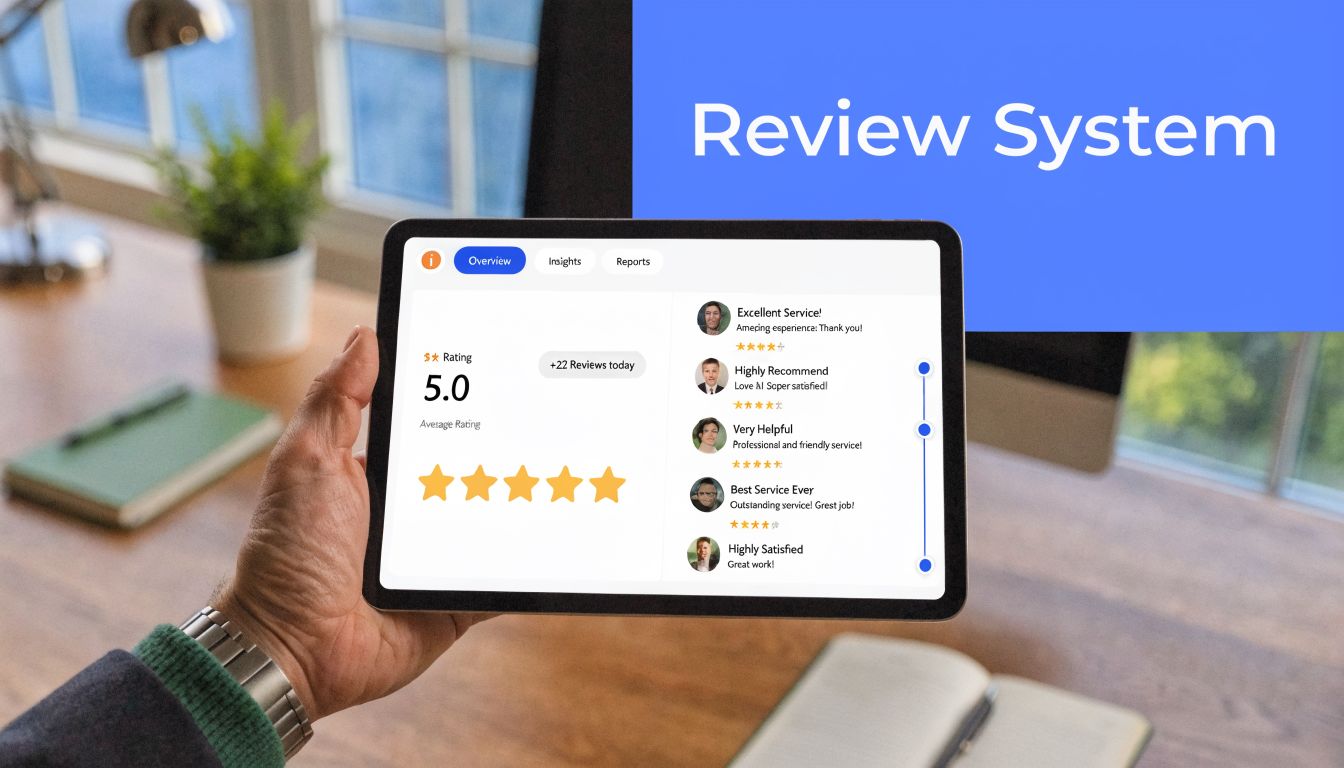
According to Digital Applied's local SEO data points, review acquisition stalling for 60+ days can cause Google's algorithm to deprioritize a listing, and review requests sent 7+ days after service see a 40% lower response rate than same-day requests. That tells you exactly what to do. Ask fast, ask every time, and stop delaying.
The right trigger is job completion
The best review request doesn't happen when your office remembers. It happens when the job reaches a clear operational milestone.
Use a trigger such as:
- Invoice paid for home services
- Appointment completed for dental and med spa practices
- Service marked done in your field service software
- Technician check-out from the job site
That trigger should launch an SMS first. Email can follow, but text usually creates less friction because the customer can act immediately from their phone.
The workflow that actually works
Use this sequence:
Technician sets the stage on-site
Before leaving, they say: “If everything looks good, we'll text you a quick review link. It really helps.”SMS goes out the same day
Keep it short. One link. No long explanation.Office follows up once if needed
If no response, send one reminder. Don't nag.Manager monitors weekly
Check volume, recency, and quality. If requests are going out but reviews aren't coming back, your script or timing is wrong.
Ask while the customer still remembers the relief of having the problem solved. That emotional window is short.
Copy-and-send templates
HVAC tune-up
“Thanks for choosing us for your HVAC service today. If the visit went well, would you leave a quick Google review? Your feedback helps other local homeowners find us: [review link]”
Emergency plumbing repair
“We're glad we could get that plumbing issue handled for you today. If you have a minute, please share your experience here: [review link]”
Dental appointment
“Thank you for visiting our office today. If you felt well cared for, we'd appreciate a quick review on Google: [review link]”
Pest control service
“Thanks for trusting us with your pest control service. Would you mind leaving a quick review about your experience? Here's the link: [review link]”
What to automate and what to keep human
Use software for delivery, reminders, and reporting. Keep the ask itself human by having the technician or front desk set expectations first. That combination works because customers respond better when the request feels earned.
A practical setup can include your CRM, your field service platform, and a review workflow provider. If you want a focused walkthrough, this resource on getting more reviews covers the mechanics in more depth.
Don't overcomplicate it. Same-day request, one-click path, every completed job. That's the machine.
How to Respond to Every Review and Win More Business
A business that ignores reviews looks careless. A business that responds well looks organized, accountable, and safe to hire.
That matters to humans, and it now matters to recommendation systems. Review responses are public proof of how you handle praise, complaints, and messy situations. Prospects read them to decide whether they'll trust you when something goes wrong.

Positive reviews need more than “Thanks”
A lazy response wastes a chance to reinforce service quality. A strong response adds detail, confirms the service, and invites the next action.
Use this framework:
| Review type | Weak response | Better response |
|---|---|---|
| Positive | “Thanks for your review!” | “Thanks, Sarah. We're glad our technician could get your AC running again quickly. We appreciate you trusting us with your home.” |
| Neutral | “Thank you for the feedback.” | “Thanks for the feedback, James. We appreciate the note on scheduling and we're working to make that process smoother.” |
| Negative | “Call us.” | “We're sorry to hear this. That's not the experience we want anyone to have. We'd like to look into it and make this right.” |
Use these response templates
For a strong positive review
“Thank you, [Name]. We appreciate you taking the time to share your experience. We're glad we could help with [service]. If you ever need us again, our team is here.”
For a mixed review
“Thank you for the feedback, [Name]. We're glad you chose us and we appreciate the honest note about [issue]. We take that seriously and will use it to improve.”
For a negative review
“Hi [Name], we're sorry your experience didn't meet expectations. We take concerns like this seriously. Please contact us at [phone/email] so we can review what happened and work toward a resolution.”
A thoughtful response to a negative review often sells better than a generic response to a positive one. People want to see how you behave under pressure.
Don't fight in public
Arguing with a customer in your review feed is one of the fastest ways to kill trust. Even when the customer is wrong, the public audience is judging your restraint, not your frustration.
When a review appears fake, abusive, or policy-violating, you should document it and dispute it properly rather than escalating in the comments. If you need help understanding the process, this guide on disputing a Google review is a useful starting point. For broader removal scenarios, ContentRemoval.com's guide to removing reviews is also worth bookmarking.
Response standards your team should follow
- Reply quickly so prospects see an active business
- Use names when available because it feels real
- Acknowledge specifics instead of pasting the same canned line
- Move disputes offline after the first public response
- Never reveal private details about the customer or the job
The goal isn't to win the argument. The goal is to win the next customer reading the review thread.
Leveraging Reviews to Dominate Transactional Searches
Most local businesses leave review value trapped on Google. That's lazy marketing.
If a customer writes a strong review about your emergency electrician service, dental implant consultation, or termite treatment, that language shouldn't sit in one profile and do nothing else. You should use it to strengthen every page built for transactional intent.
Put reviews where buying decisions happen
Your best review content belongs on:
- Service pages for terms like AC repair, root canal treatment, roof replacement, or rodent control
- City pages where local relevance matters
- Quote request pages where prospects hesitate
- Email follow-ups sent after estimates or missed calls
Don't dump random testimonials in a slider and call it strategy. Match the review to the service and to the local intent. If someone lands on your “emergency plumber” page, show a review from a customer who had an urgent leak solved fast.
Pull useful language from real customers
Customer reviews often contain the exact phrases prospects care about. They mention speed, cleanliness, professionalism, communication, pain relief, courtesy, and whether the final result felt worth the money.
That language helps in two ways. It supports conversion because it sounds authentic. It also reinforces topical relevance around the service being discussed.
Here's a simple deployment model:
| Asset | Best review use |
|---|---|
| Service page | Short testimonial tied to that exact service |
| City page | Review mentioning the city or nearby area |
| Quote form page | Trust-building snippet focused on reliability |
| Social post | Before-and-after result paired with customer feedback |
Use reviews to sharpen your offer
Reviews don't just market your strengths. They reveal what buyers notice most. If customers repeatedly mention same-day service, clean technicians, or painless visits, those points should show up in your page headlines, ad copy, and phone scripts.
This is also where reviews local business strategy becomes more than reputation management. It becomes message testing in the wild. Your customers tell you what matters. Your job is to reflect it across the channels that capture high-intent traffic.
A review sitting untouched in your profile is passive proof. A review embedded into your service pages, estimate flow, and local landing pages becomes a sales tool.
The AI Optimization Edge Getting Found in ChatGPT
If your local SEO strategy stops at Google, you're already behind.
People are now asking AI tools direct buying questions. They aren't just typing “chiropractor near me” into Google. They're asking who's best, who responds fast, who has the strongest reputation, and who they can trust. If your business isn't prepared for that shift, you'll lose recommendations to companies that are.
Nearly half of consumers, 45%, now use generative AI tools like ChatGPT for local business recommendations, and 89% of consumers are more likely to use a business that responds to all its reviews, according to BrightLocal's local SEO statistics. That's the opening. AI systems look for trust signals, and review response behavior is one of the clearest public signals available.
AI doesn't read your business the way Google does
Traditional local SEO still cares about categories, proximity, relevance, and review profile strength. AI recommendation systems add another layer. They evaluate whether your business appears credible, active, and accountable in natural language.
That means these patterns matter:
- Consistent review responses that show your business is paying attention
- Professional language that acknowledges issues and offers resolution
- Clear service descriptions in reviews and responses
- Current activity instead of a stale profile
A profile full of old reviews and no replies sends the wrong signal. So does a profile with robotic responses that read like they were pasted by someone who doesn't care.
What to change right now
Most local companies don't need a separate “AI strategy” first. They need better operational discipline on public-facing trust signals.
Start here:
- Respond to every review
- Reference the actual service provided
- Write like a human
- Keep your Google Business Profile active
- Make sure your service pages align with the same offers customers mention in reviews
AI visibility is a trust problem before it's a technical problem.
If you want a broader framework for this shift, this page on AI search engine optimization outlines how local businesses can prepare for recommendation-driven discovery.
A practical solution, Transactional LLC, works on local SEO, Google Maps optimization, and AI-focused content planning for service businesses, which fits companies trying to connect review signals to transactional keyword visibility rather than treating reputation as a standalone task.
The businesses that win this next phase won't be the ones with the slickest branding. They'll be the ones with the clearest evidence of trust, service quality, and responsiveness across public platforms.
Your Blueprint for Turning Reviews into Revenue
The businesses that dominate local search don't “get more reviews” by accident. They build a system and run it every week.
That system is straightforward. Ask immediately after service. Make the path simple. Respond to every review. Reuse strong review content on service and city pages. Keep everything aligned with the transactional searches that bring in buyers, not browsers.
The operating checklist
- Create a same-day review request trigger tied to job completion or appointment completion
- Train technicians and front desk staff to set up the ask before the text or email goes out
- Assign one person ownership for response management so nothing sits unanswered
- Use reviews in marketing assets instead of letting them sit only on third-party platforms
- Track quality themes so customer language improves your offer and sales message
Where most businesses go wrong
They treat review management like cleanup work. It isn't. It's pipeline work.
A good review profile helps you show up better, look safer to hire, and convert more high-intent traffic once people find you. It also strengthens your position as search behavior shifts toward AI recommendations and conversational discovery.
For teams trying to organize that process internally, this reputation management overview for ops leaders offers a useful operational perspective.
Your review system should be as repeatable as your invoicing system. If it depends on memory, it will fail.
If you want more calls from searches with buying intent, stop thinking about reviews as decoration. They are part of your local ranking system, part of your conversion system, and part of your AI visibility system. Businesses that understand that will keep taking market share from businesses that don't.
If you want help building a review system that supports Google Maps rankings, transactional search visibility, and AI discovery, talk to Transactional LLC. They work with service businesses that want more calls from the exact searches that lead to booked jobs and new patients.