

You've probably got one of those ideas sitting in a notebook, a spreadsheet, or the back of your mind right now. It feels promising, but it's still loose, which means it won't produce revenue until you give it structure, proof, and a clear path to the customer who is ready to buy.
That's the key difference between a clever idea and a profitable one. Fleshing out an idea means turning a sketch into something that can survive the market, serve a specific intent, and lead to booked jobs or patients. For local businesses, that usually means building around transactional search terms, because the buyer searching “roofer near me” or “dentist near me” is already in motion and already expects to spend.
Why Most Business Ideas Never Leave the Whiteboard
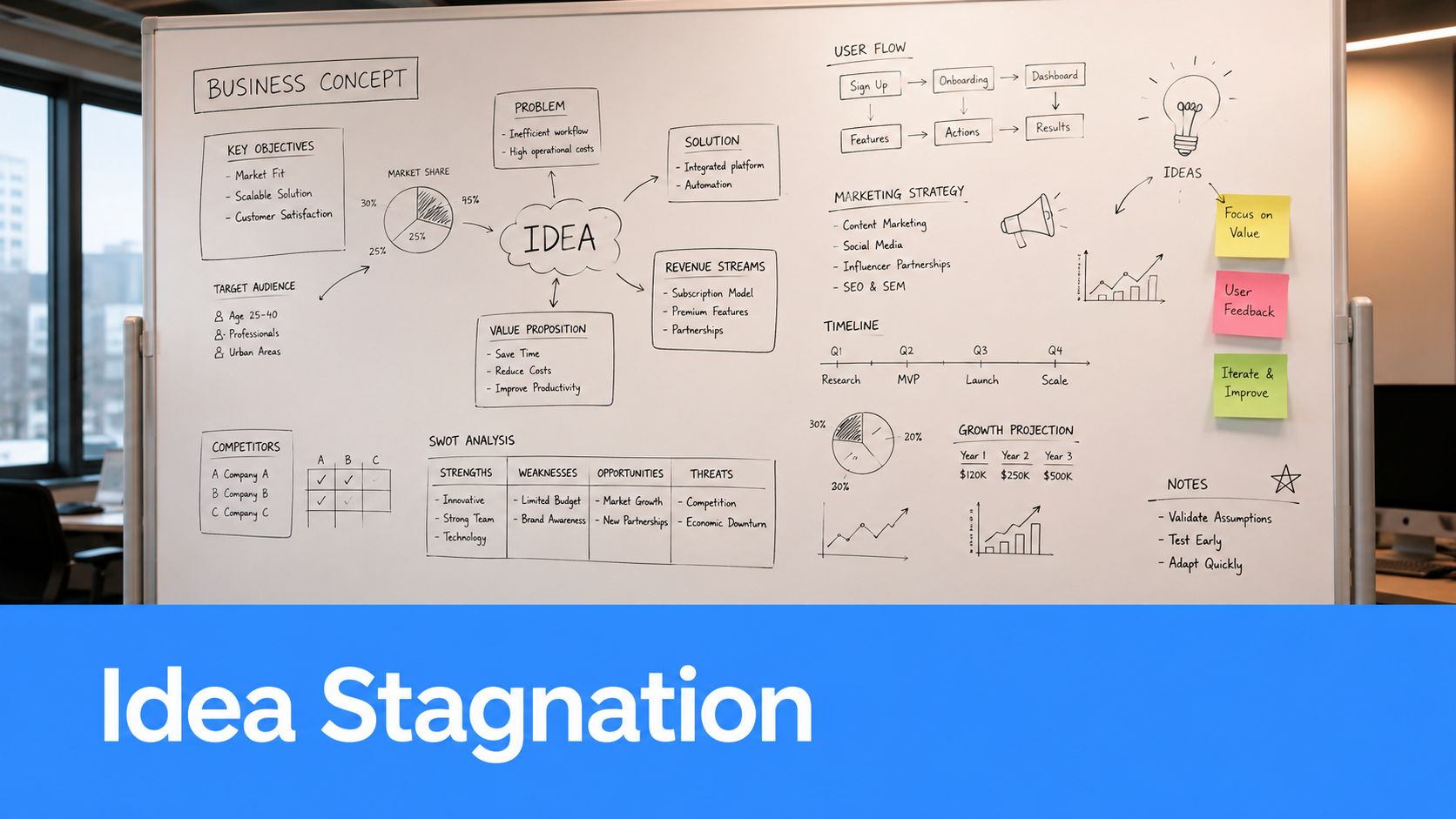
A lot of business owners confuse motion with progress. They talk through service ideas, toss around city names, and brainstorm keywords, but the idea never becomes a page, a map listing, or a sales asset that can win a searcher.
That's because most ideas die from vagueness, not from lack of ambition. A service company can't grow on “we should do more marketing” or “maybe we should target homeowners.” It needs a concrete offer, a clear local market, and a reason someone searching right now would choose that business over the rest.
The problem is usually structure
When you flesh out an idea, you're not just adding words. You're identifying what the idea does, who it serves, where it works, and why a buyer should care. That matches the long-standing drafting habit described in writing guides, where a rough skeleton gets built into something usable by filling gaps and adding function, not just length (Penstricken).
Practical rule: If you can't describe the service, the service area, and the buyer's urgent need in one clear sentence, the idea isn't ready.
Most generic advice stops at brainstorming and outlining. That's weak. A local business doesn't need a prettier notebook, it needs a concept that can become a service page, a Google Business Profile asset, and a search term people actually use.
For a deeper framework on shaping market direction before you spend money, see market research strategies for transactional searches. That kind of discipline matters because the wrong idea can look exciting and still fail to attract a single ready-to-buy customer.
The better mindset is simple. Treat the first idea as raw material, then force it through a profit filter. If it doesn't become clear, searchable, and locally relevant, it's not ready for execution.
The Ideation Framework That Filters for Profit
Start with the 5 W's and How. That sounds basic because it is basic, and basic is good when you're trying to avoid building the wrong thing.
Ask who the buyer is, what exact problem they're trying to solve, where the service should appear, when they need it, why they would choose you, and how the service gets delivered. For a roofer, “storm damage repair” is not enough. The stronger version answers whether the buyer is a homeowner, whether the damage came from hail or wind, whether the service area includes specific suburbs, and how fast the inspection and estimate happen.
Turn answers into decision points
Once the questions are answered, turn them into operational choices. If the idea is “emergency AC repair in Dallas,” then the page, the offer, and the map presence should all reinforce that exact service and location. If the idea stays broad, the market will treat it like noise.
Here's the order that keeps you honest:
- Define the buyer: Be specific about the type of customer, not just “local homeowners.”
- Name the urgent problem: Use the pain point the buyer would say out loud.
- Limit the geography: Pick the exact city or service area instead of chasing every nearby town.
- Clarify the outcome: State what changes after the service is completed.
- Check the fit: Ask whether the offer belongs on a service page, not just in a brainstorm.
The point is to stop expanding too early. A lot of businesses waste time building around the wrong angle because they never force the idea through a practical filter. A structured sales process helps here too, especially for teams that need repeatable movement from interest to booked work, which is why resources like for small business sales teams are worth studying when you're turning a concept into a sellable service.
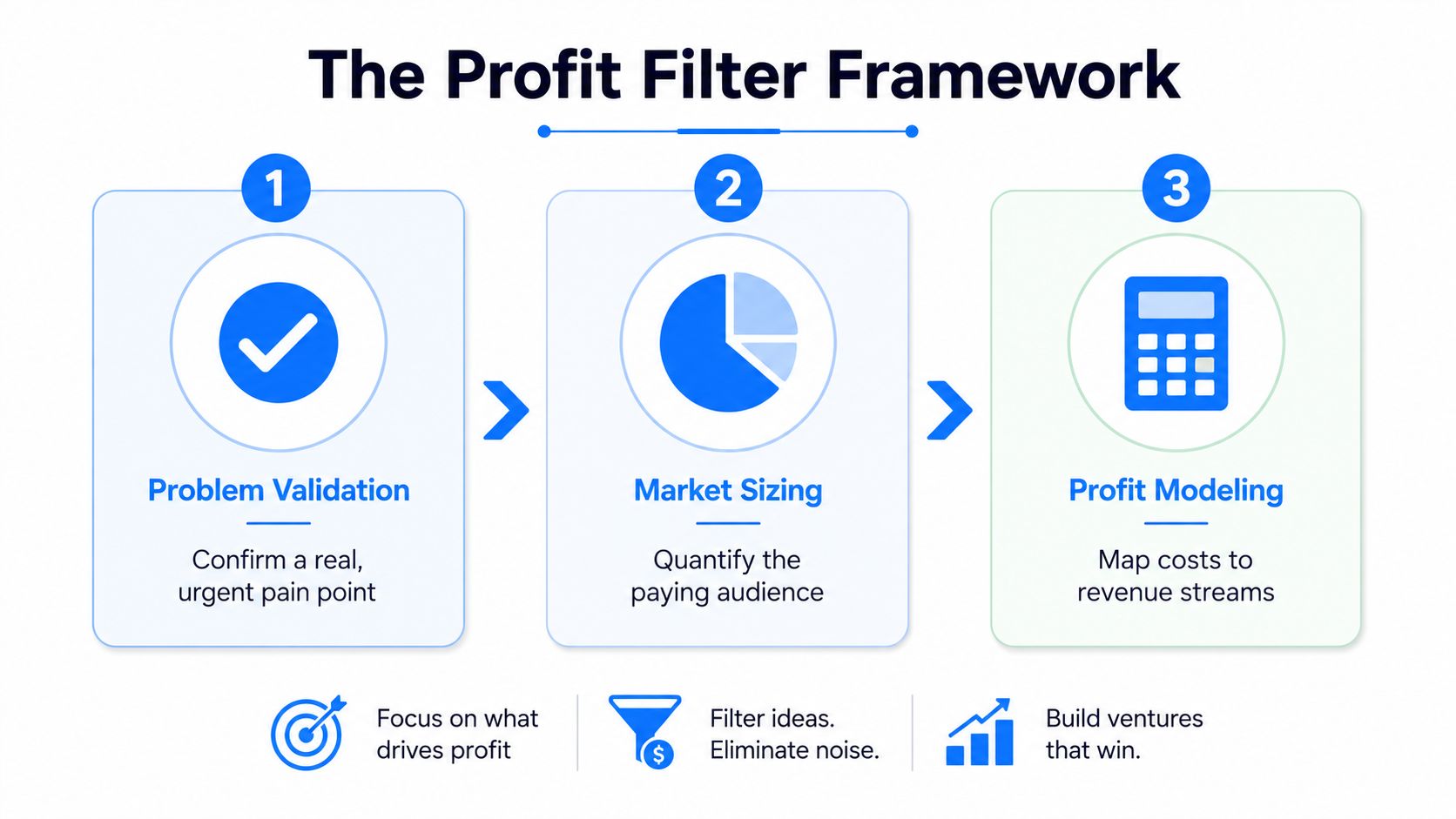
A clean framework keeps you from guessing. It also makes it easier to explain the idea to a marketing team, a salesperson, or a partner who needs to know whether the offer is worth building.
For persona clarity, the next smart move is to connect the idea to actual customer segments through user personas for local service marketing. That keeps the concept anchored to the buyer instead of drifting into generic service language.
Uncovering Transactional Intent Your Idea's Litmus Test
A strong idea can still be the wrong idea if it attracts the wrong searcher. That's why transactional intent is the test that matters most for local service businesses.
Google's Search Quality Rater Guidelines define transactional intent as a query where the user wants to buy something or complete an action, and Google also separates intent into Know, Do, Website, and Visit-in-person categories (Google intent guidance discussed here). In practical terms, that means a query like “roofer near me” sits much closer to action than “how does roof leak repair work.”
Stop building for passive researchers
There's a huge difference between an informational searcher and a buyer. Someone typing “how to fix a leaky faucet” wants knowledge. Someone typing “plumber near me” wants someone to handle the job.
That distinction changes the entire content strategy. Transactional pages should be built for service delivery, local relevance, and clear next steps. Educational content can support authority, but it shouldn't be the main asset when the goal is booked work.
Bottom line: If the searcher is ready to act, your page should help them act fast.
The search intent label is not academic. It tells you whether the idea belongs on a blog post, a service page, or a location page. It also tells you whether your messaging should highlight urgency, trust, and local availability instead of general education.
Use high-intent keyword strategy as the filter when the idea starts getting fuzzy. If the concept can't map to a searcher who is ready to buy, it's not ready to lead your content plan.
The best local businesses don't chase attention in the abstract. They show up where the buyer already has intent, money in hand, and a specific need that has to be solved now.
Validating Your Concept with Real-World Signals
Don't build the full offer first. Test it.
A good idea should survive contact with real-world signals before you spend heavily on content, design, or paid media. Start by looking at what competitors already sell, how they describe it, and whether they've invested in dedicated pages for that service. If they've built the page, they've probably seen enough demand to justify it.
Next, look for proof that the market cares. That can include local search behavior, frequent questions from customers, repeated complaints in reviews, or people asking for the same service in multiple neighborhoods. A concept that shows up again and again in those places is usually more real than one that only sounds good in a meeting.
Test before you scale
Validation should be quick and cheap. Run a small paid search test on one service concept, watch how people respond, and pay attention to whether the search term attracts clicks from actual prospects rather than curiosity clicks. Use the click data to judge interest, then refine the message before you spend more.
That same discipline shows up in practical operations too. Tools built for estimating and intake, like Exayard plumbing estimating software, are useful because they force a service offer into a clearer workflow instead of leaving it as a vague promise.
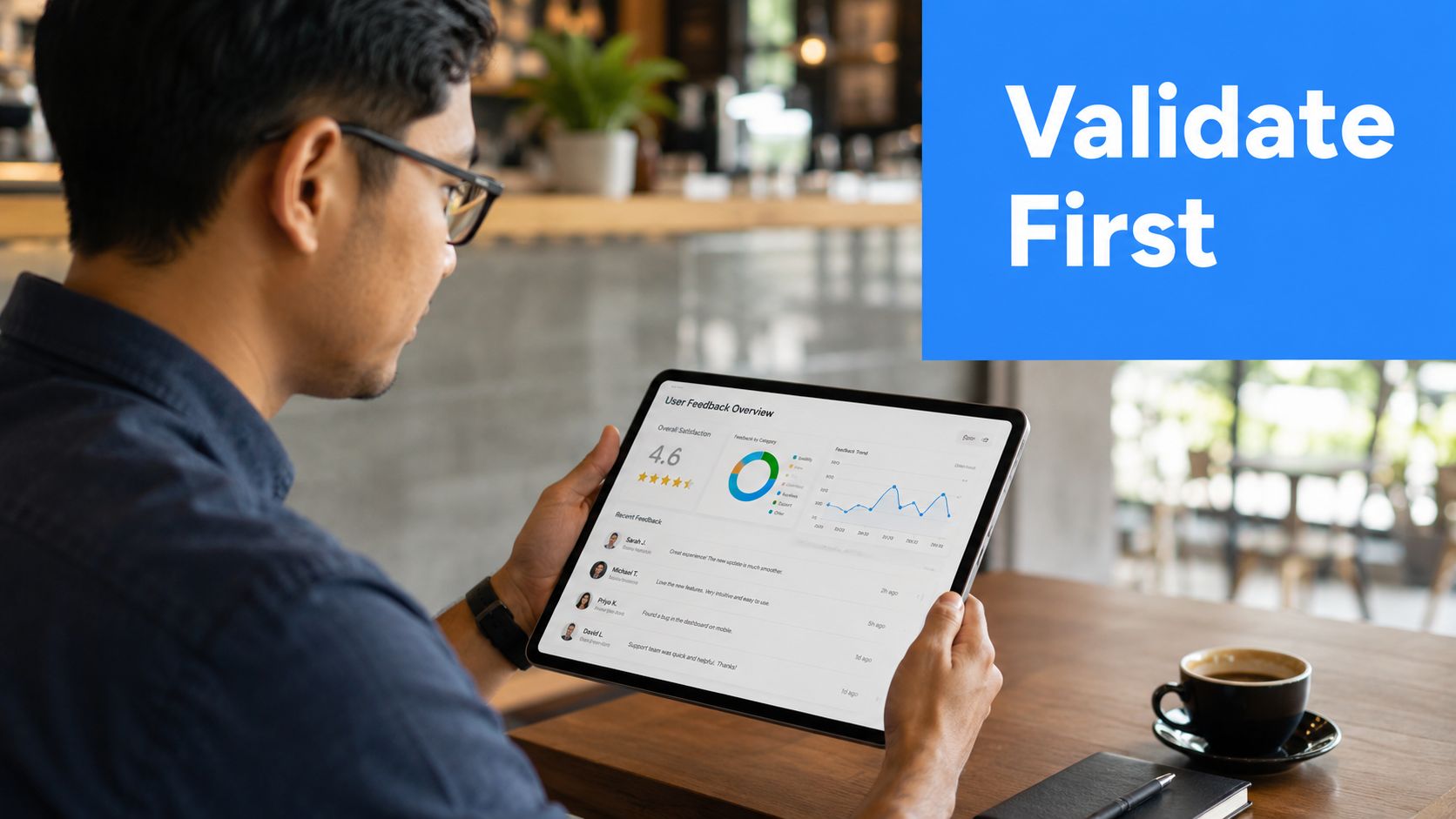
Use feedback to kill weak ideas early. The point of validation is not to prove yourself right. It's to stop wasting time on an offer nobody is asking for.
If the idea needs a lot of explaining, it's probably too soft. If buyers keep repeating the same pain point in calls, reviews, or local conversations, that's a stronger signal. The best concepts usually reveal themselves through repetition, not through enthusiasm inside your own team.
This is also where assumption testing matters. A disciplined feedback loop, the kind used in structured ideation and expert judgment workflows, keeps you from confusing internal preference with actual demand (Methods Blog). That's the whole point. You want evidence that a service idea deserves to live before you turn it into a campaign.
Building Your Local SEO and AI Optimization Blueprint
Once the concept passes validation, turn it into a search asset. A fleshed-out idea becomes the foundation for a dedicated service page, a strong Google Business Profile, and content that language models can understand and recommend.
That means one service, one audience, one geography, one page. If the concept is Emergency AC Repair in Dallas, the page should say exactly that and stay there. Mixing unrelated services makes the page harder for users to trust and harder for search engines and LLMs to classify.
Build for maps, pages, and AI systems
Google Maps optimization is not optional for local services. The map pack is often the first place a ready-to-buy customer looks, and a well-built business profile gives the business a better shot at appearing in the right service area. The service page and the map listing should reinforce the same positioning, not compete with each other.
AI optimization follows the same logic. Large Language Models respond better to structured, locally relevant content than to vague marketing copy. If the page clearly states the service, city, problem, and outcome, the model has a cleaner answer to work with when users ask conversational questions.
Use AI search engine optimization tactics as the organizing layer for that content. The future of discovery isn't just one keyword at a time, it's whether your business has enough structure for search systems and AI assistants to confidently surface it.
A strong blueprint usually includes these assets:
- A focused service page: One page for one offer in one location.
- A complete business profile: Accurate categories, service details, and local relevance.
- Supporting content: Pages and articles that reinforce the same service theme.
- Consistent proof: Reviews, photos, and service descriptions that match the page.
The idea becomes operational. A vague concept can't rank, can't convert, and can't feed AI-driven discovery. A precise local asset can do all three.
Conclusion From Idea to Booked Jobs and Patients
A business idea doesn't make money because it sounds good. It makes money when it's shaped around a real buyer, a real search term, and a real local market. That's what it means to flesh out an idea the right way.
The sequence is straightforward. Define the concept, filter it through transactional intent, validate it with market signals, then turn it into a service page and map presence that can win local demand. That's the difference between a whiteboard exercise and a revenue asset.
The most common mistake is spending time on content before the offer is ready. The smarter move is to make the offer sharp first, then build the digital footprint around it. If you want a practical tool for tightening the intake and order flow around that offer, improve static site order processing is a useful reference for thinking about cleaner conversion paths.
Transactional search wins come from focus. Not broad branding. Not generic advice. Not endless brainstorming. The businesses that dominate local results are the ones that commit to one service, one intent, and one market slice until the phones start ringing.
If you're sitting on a vague idea and you want it turned into booked jobs or patients, the next move is simple. Stop polishing the concept in isolation and build it around the search terms your buyers already use.
Transactional LLC helps service businesses turn vague ideas into transactional search assets that attract the right local buyers. If you're ready to build a service page, Google Maps presence, and AI-friendly content around the terms that matter, visit Transactional LLC and start turning search intent into revenue.