

The usual advice in home services is expensive and lazy. Buy more leads, call faster, bid harder, and accept thinner margins as the cost of growth. That model keeps Angi, Thumbtack, and similar platforms strong. It does not make your business stronger.
If you pay for every inquiry, compete on shared leads, and lose jobs to lower bids before you even get a real sales conversation, you are not building demand. You are renting access to it. The smarter question is not which company can send you leads this week. The key question is whether your marketing creates an asset you control six months from now.
That distinction matters because home service customers do not search with vague intent. They search to hire. Terms like "roofer near me," "water heater repair near me," and "emergency electrician" are transactional searches. Those clicks usually come from people who need work done now, not from someone casually researching options.
This is the core of Transactional Marketing. Go after high-intent local terms. Win Google Maps. Publish AI-assisted content built around the jobs people book. A home services lead generation strategy built on transactional search visibility compounds over time, while pay-per-lead platforms reset the meter every month.
There is still a place for marketplaces. They can fill gaps, test new service lines, or keep the phones moving in a slow season. Relying on them as your main growth channel is a mistake. You end up paying for the same ZIP codes, the same clicks, and often the same leads your competitors also received.
If you also care about tightening your estimating workflow after the lead comes in, Exayard plumbing estimating software is worth a look.
The seven providers below are not equal. Some sell access to demand they own. One is built around helping you own your customer pipeline instead. That is the strategic split that matters.
1. Transactional LLC
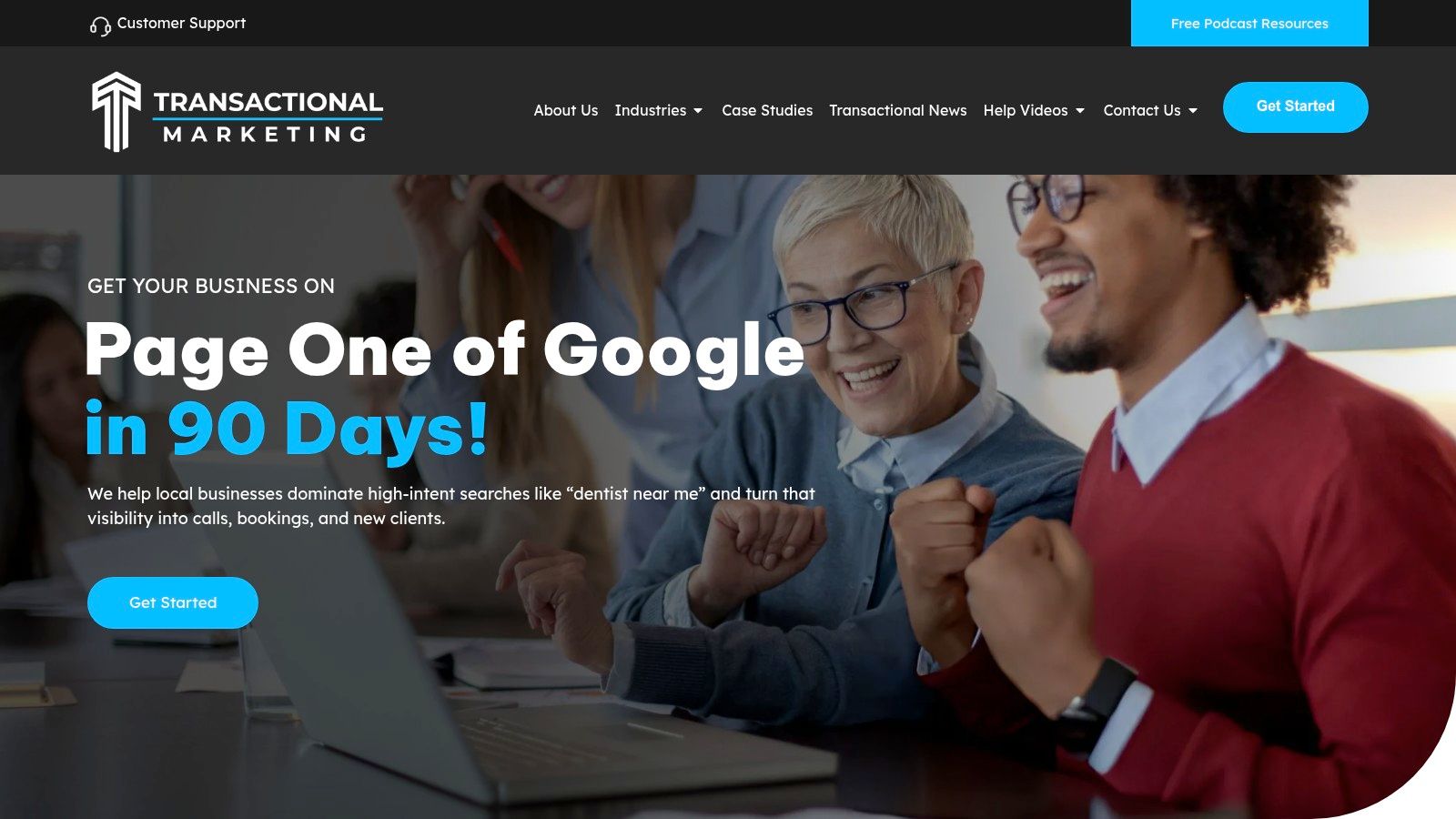
Transactional LLC is the best fit for home service businesses that are done renting leads and want to own search visibility in their service area. It isn't a generic agency. It focuses on local service companies and builds around transactional search terms, Google Maps rankings, and AI-driven content that helps businesses get found in both traditional search and LLM-driven discovery.
That's the key difference. Angi, Thumbtack, and similar platforms can send demand today, but they also keep you dependent. Transactional LLC builds an asset you keep. When your company shows up for "air conditioning repair near me," "roofer near me," or "dentist near me," you're reaching people with buying intent instead of paying to enter an auction.
For service businesses that want that model, Transactional's home services lead generation approach is built around local visibility you can measure.
Why Transactional LLC stands out
Transactional Marketing is built on a simple philosophy. Go after transactional search terms, not vanity traffic. A search like "dentist near me" or "air conditioning repair near me" isn't casual browsing. It's a buyer trying to hire someone.
That approach also aligns with how local search behavior works. Queries containing "near me" have grown by over 500% in the last two years, 60% of mobile users search for local information daily, and 50% of consumers who perform a local search visit a store within 24 hours (local search behavior data). If you're not building content and Maps visibility around those searches, you're missing the highest-intent demand in your market.
Practical rule: If your lead source disappears the moment you stop paying, you didn't build a pipeline. You borrowed one.
Transactional also leans hard into Google Business Profile and Maps optimization. That's important because local SEO packages with Google Business Profile optimization see a 2.5x higher click-through rate, and businesses in the top three Google Maps results capture 70% of local search clicks (Google Maps visibility benchmarks).
What you actually get
The service mix is built for local operators, not enterprise theory.
- Google Maps focus: GMB setup, optimization, and map-ranking work designed to push businesses into the top three results in their service areas.
- AI-driven content engine: Industry-specific content silos built around high-intent terms by city and service.
- Transparent reporting: Live dashboards, keyword timelines, heat maps, Search Console query visibility, traffic data, and call tracking.
- Full-funnel support: Website development, website management, and paid ad support when organic alone isn't enough.
- Contract-free structure: No long lock-ins, which matters if you've been burned by agencies before.
Transactional says it can get customer websites showing up on page one quickly and targets exact terms local buyers use. The stronger point isn't the speed claim. It's the targeting discipline. This company doesn't try to rank you for broad informational fluff when your phone rings from service-intent searches.
Bottom line: if you run HVAC, plumbing, roofing, pest control, dental, chiropractic, med spa, or another local service business, Transactional LLC is the one on this list built to create durable lead flow you own.
2. Angi Ads
Angi Ads is what contractors buy when they want leads this week. That can work. It can also trap you in a pay-to-play model where every month starts at zero again.
Angi has massive consumer reach and strong brand recognition with homeowners, which is why many contractors test it early or use it to add volume in competitive metros (Angi homeowner platform overview). The trade-off is simple. You are renting access to demand that Angi owns.
That distinction matters. If your long-term plan is to build a company with predictable inbound demand, marketing for contractor growth is the smarter path than relying on a marketplace to keep feeding you shared opportunities.
Where Angi works
Angi works best for established operators with fast phone coverage, tight dispatch, and someone in the office whose job is to work incoming leads immediately. If you can quote fast, follow up harder than competitors, and absorb wasted conversations, the platform can produce jobs.
It also fits better for higher-ticket categories. Roofing, remodeling, larger installs, and services with enough margin to cover lead fees plus admin time usually have more room for error. Small repair work does not.
Angi can keep the pipeline busy. It rarely builds durable demand for your own brand.
Where the model breaks down
The actual cost is not the posted lead price. The actual cost is competition, speed pressure, and lead quality. On marketplace platforms, contractors often report problems with shared leads, price shoppers, and contacts that never turn into qualified booked work. Angi itself notes that response speed affects results, which tells you exactly how the platform rewards behavior (Angi Ads business resources).
That is the core problem with rented leads. You pay for access, then you pay again in labor to chase, qualify, and recover margin.
If you are a small operator answering calls between jobs, Angi can become a distraction machine. If you run a larger shop with a real inside sales process, it can be a usable supplement. It should stay a supplement.
- Best for: Established home service companies with dedicated follow-up and enough margin to handle inconsistency.
- Less ideal for: Owner-operators and small teams that cannot respond instantly or waste time on mixed-quality inquiries.
- Biggest risk: Treating lead volume like profit while ignoring cost per qualified job and lifetime value.
Angi Ads is a rental channel. Transactional search is an ownership strategy. Smart contractors know the difference.
3. Thumbtack for Pros
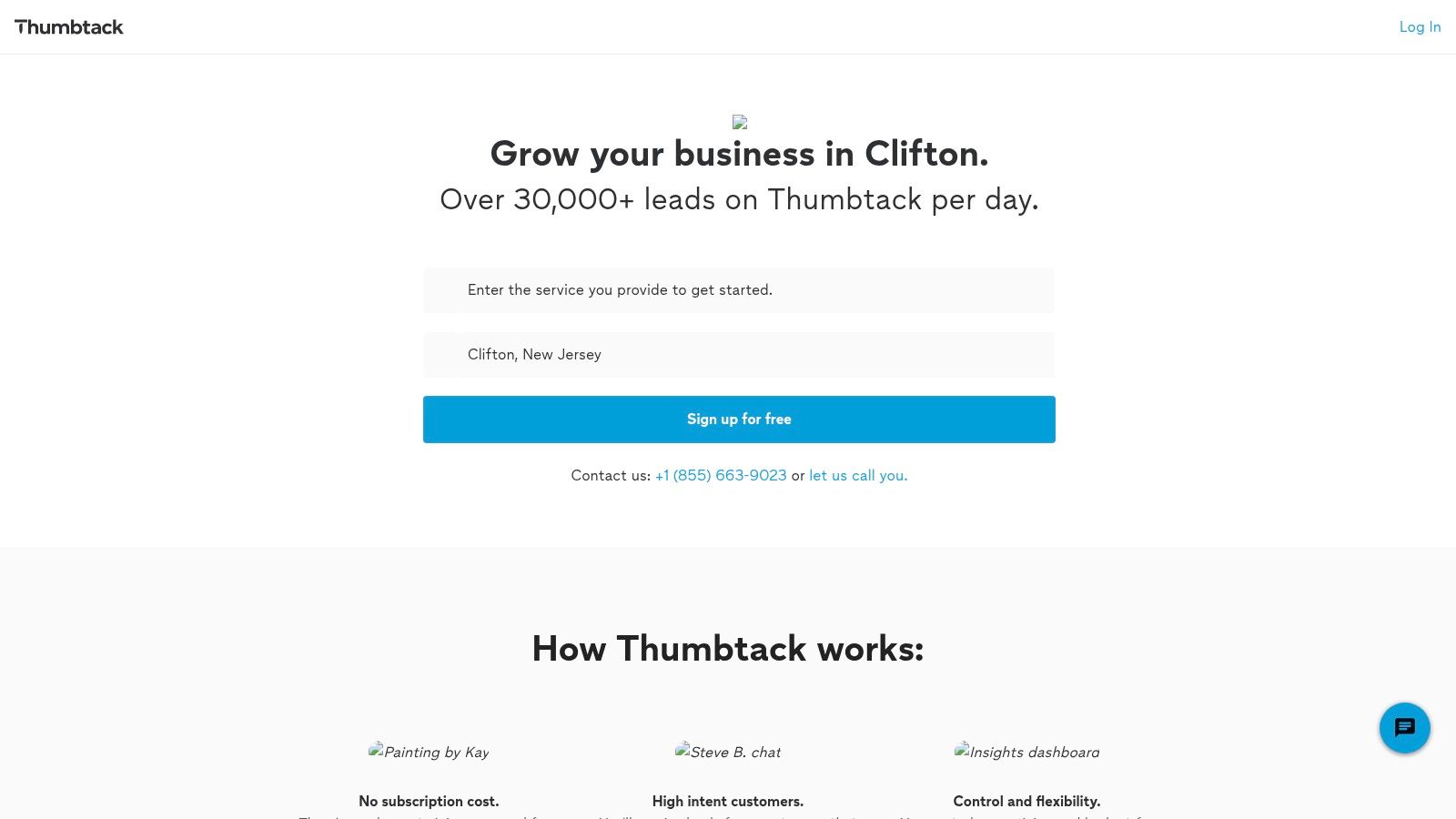
Thumbtack is one of the fastest ways for a contractor to get thrown into a bidding war.
That speed is the appeal. It puts you in front of active shoppers quickly, and Thumbtack's broad service coverage is a big reason smaller operators try it early (Thumbtack platform scale). You can launch a profile, turn on targeting, and start seeing quote requests without building much brand demand of your own.
That convenience has a cost. Thumbtack is built around comparison behavior. Buyers check profiles, collect prices, and make fast decisions. If your process is slow, your pricing is soft, or your reviews are thin, the platform exposes every weakness.
Contractors who want to stop renting demand and start building their own should study local lead generation strategies for owned search visibility and marketing for contractor growth. The long-term play is ranking for transactional searches in your market and owning Google Maps visibility for the jobs people are ready to book now.
Where Thumbtack works
Thumbtack can make sense for smaller-ticket services, odd jobs, seasonal work, and new businesses that need activity fast. The mobile workflow is easy to use, and the profile setup gives newer companies a chance to look credible before they have much brand recognition outside the platform.
Budget controls are another plus. You can cap spend, filter job types, and avoid letting one channel run wild while you test a service area or new offer.
Used with discipline, it can fill calendar gaps.
Where contractors get burned
The problem is not lead volume. The problem is margin.
Thumbtack tends to work best when the job is simple, the sales cycle is short, and one closed deal can cover several misses. It gets much harder when you sell higher-trust services that require site visits, longer follow-up, or detailed estimates. In those categories, every unqualified inquiry eats admin time, estimator time, and response bandwidth.
That is the split in this article. Marketplace leads are rented. Transactional SEO is owned. On Thumbtack, you are paying to enter somebody else's system and compete inside their rules. If you rank for “water heater replacement near me” or “emergency electrician in [city],” the customer starts with your brand, your reviews, and your phone number.
- Good fit: Handyman services, small repair tickets, newer contractors testing demand, and shops that can quote fast.
- Poor fit: High-consideration projects, margin-sensitive operators, and companies without tight intake and follow-up.
- Smart use: Treat Thumbtack as a short-term supplement while you build organic visibility for high-intent local searches.
Thumbtack can keep the phone from going quiet. It will not give you a durable lead asset. Owning transactional search does that.
4. Networx
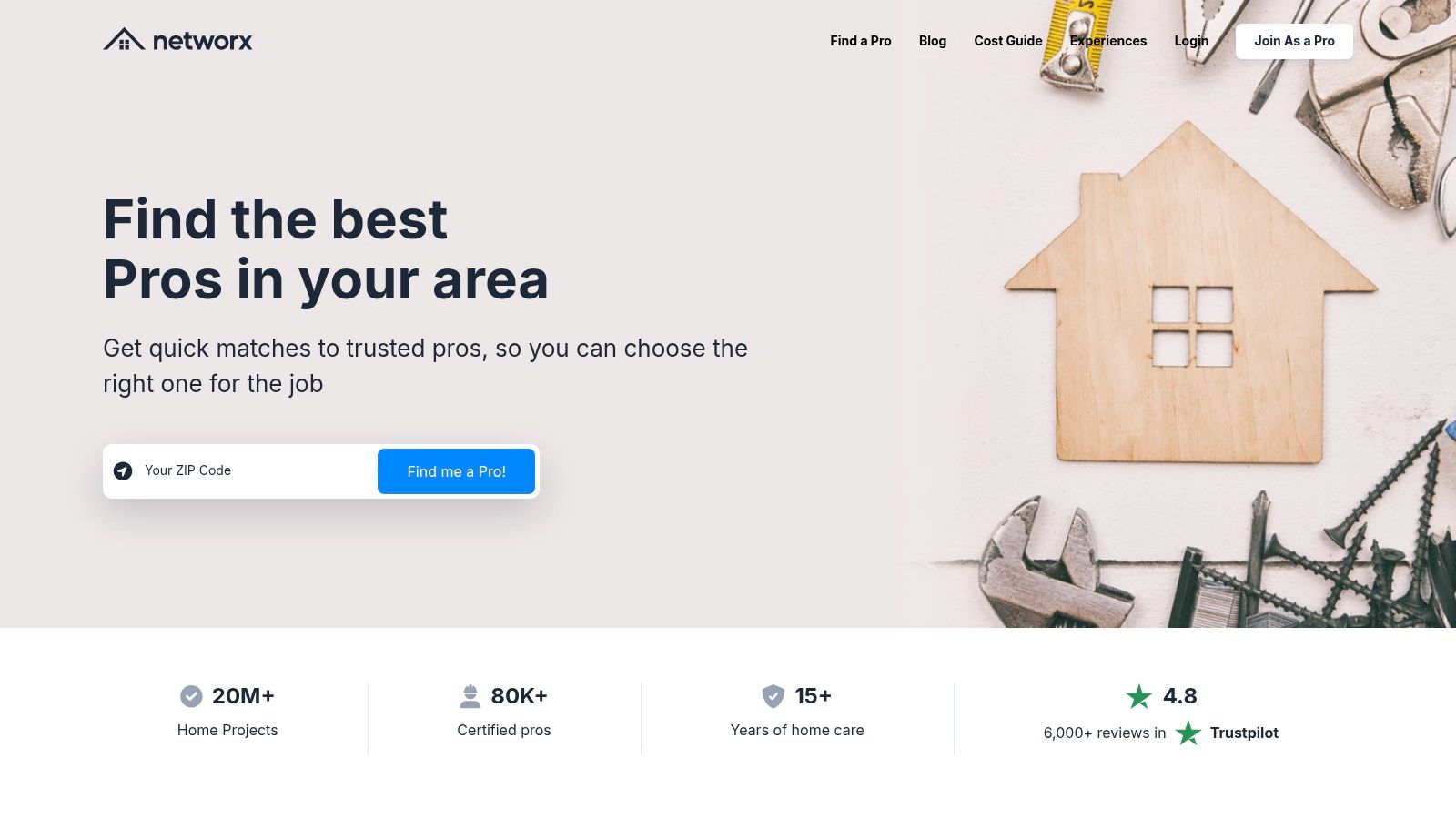
Networx appeals to contractors who are tired of bloated marketplaces and want a simpler paid lead channel. The setup is clear. You can target categories, choose ZIP codes, set a budget, and see pricing inside the portal without guessing how the platform works.
That simplicity helps, but it does not fix the core problem. You are still renting demand.
Paid lead costs swing hard across home service categories, especially in high-ticket trades where every bad lead burns office time and sales capacity. Networx gives you more visibility into spend than some bigger platforms, which is useful. It does not change the math that bought leads get expensive fast when close rates slip.
If you want a clean way to judge that tradeoff, lead generation for local businesses lays out the right comparison. Rented leads can fill gaps. Owned rankings for transactional searches produce compounding returns.
What Networx does well
Networx works best for contractors who want a lighter version of pay-per-lead. Shared and exclusive lead options give you some control over cost versus competition. The lack of a long contract also makes it easier to test without locking yourself into another vendor relationship.
The platform is also easier for newer buyers to understand. That matters. Confusing systems create sloppy buying decisions, and sloppy buying decisions wreck lead ROI.
Field insight: On Networx, speed still matters, but disciplined filtering matters more. Bad category selection and loose service-area settings will bury you before follow-up ever has a chance to help.
Where Networx falls short
Networx has the same ceiling as every marketplace model. The platform owns the customer path. The platform can change pricing. The platform can push more contractor competition into the same ZIP codes you rely on.
That is why Networx should stay in the support role, not the center of your growth plan. If you want durable lead flow, put your real investment into Transactional Marketing. Rank for high-intent searches like “roof repair near me,” “AC repair in [city],” and “water heater replacement [city].” Own the Google Maps visibility. Let marketplaces cover short-term gaps while local SEO and AI-assisted content build an asset your business keeps.
- Strength: Clearer controls and easier budgeting than many larger pay-per-lead platforms.
- Weakness: You still compete inside someone else's system, with margins exposed to platform pressure.
- Best use: Short-term lead support while you build owned visibility for transactional search terms and Maps results.
Networx is usable. It is not a long-term moat.
5. CraftJack
CraftJack appeals to owners who want leads now. That is the pitch. A homeowner submits a request, the lead hits your phone, and your team is expected to respond before the next contractor does.
That setup rewards speed, but it also exposes a hard truth about pay-per-lead platforms. You are renting access to demand, and the clock starts the second the platform sends the lead. If your office misses calls, replies late, or lets jobs sit in dispatch limbo, the spend burns fast. CraftJack does not fix those problems. It charges you while those problems punish you.
Where CraftJack fits
CraftJack can produce decent results for shops that already run tight intake. If you have a real CSR function, fast phone coverage, and a sales process built for same-hour follow-up, the platform is usable.
Its smaller lead-sharing limits help compared with the worst marketplace free-for-all models. That matters. Fewer bidders on the same homeowner usually means a cleaner shot at the appointment.
Where the model breaks down
CraftJack is still a marketplace. The platform controls the flow, the rules, and the pressure on your margins. You are still buying access instead of building an asset.
That distinction matters more than owners admit. A speed-first lead source can fill holes in the schedule, but it does nothing to strengthen your position in your market. Ranking for high-intent searches does. Showing up in Google Maps for terms like "plumber near me," "roof repair [city]," or "AC repair near me" does. That is the Transactional Marketing argument in plain English. Own the searches that signal buying intent instead of paying a middleman every time a homeowner raises a hand.
- Works for: Companies with dedicated office coverage, strict call handling, and fast estimate follow-up.
- Weak fit: Owner-operators and small crews who spend the day in the field and cannot answer immediately.
- Best use: A short-term gap filler while you build local SEO around transactional terms and Maps visibility.
CraftJack is a tactical channel, not a growth moat. Use it if your operations are sharp enough to win the race. Build your real strategy around owned lead flow.
6. Modernize Home Services
Modernize is more specialized than the general marketplaces. It leans into higher-ticket verticals like roofing, HVAC, windows, solar, and siding, and that specialization makes sense. Bigger jobs can absorb more acquisition cost, and those categories often need more qualification before an appointment gets set.
The business model also lines up better with project-based sales than emergency repair. Modernize offers lead and appointment programs, which can be useful if your team is tired of sifting through weak inquiries.
Why Modernize is worth considering
If you sell replacement projects, renovations, or retrofit work, qualification matters almost as much as lead volume. Modernize's vertical focus is an advantage there. You're not trying to fit a roofing inspection workflow into a generalist handyman marketplace.
There's also a larger point about acquisition models. In home services, some revenue-share platforms cap fees at 20% of job value, while subscription marketplaces may charge about $300 annually plus lead fees ranging from $15 to $60. Those models create very different margins depending on ticket size and close rate. For high-margin verticals like HVAC and roofing, revenue-share can be more sustainable than fixed subscription plus inconsistent lead quality.
Where to be careful
Modernize is not a broad answer for every trade. If you're a general plumber or electrician looking for everyday service calls, it may not be your best fit.
Some lead programs sell appointments. That's better than raw inquiries, but it still isn't the same as becoming the company people search for by name in your city.
- Best for: Roofing, windows, HVAC, solar, siding, and other higher-ticket categories.
- Less useful for: Everyday service trades that need constant small-job volume.
- Main tradeoff: Better fit for project sales, less universal coverage across all home services.
Modernize is more strategic than many marketplaces. It's still rented demand.
7. Service Direct
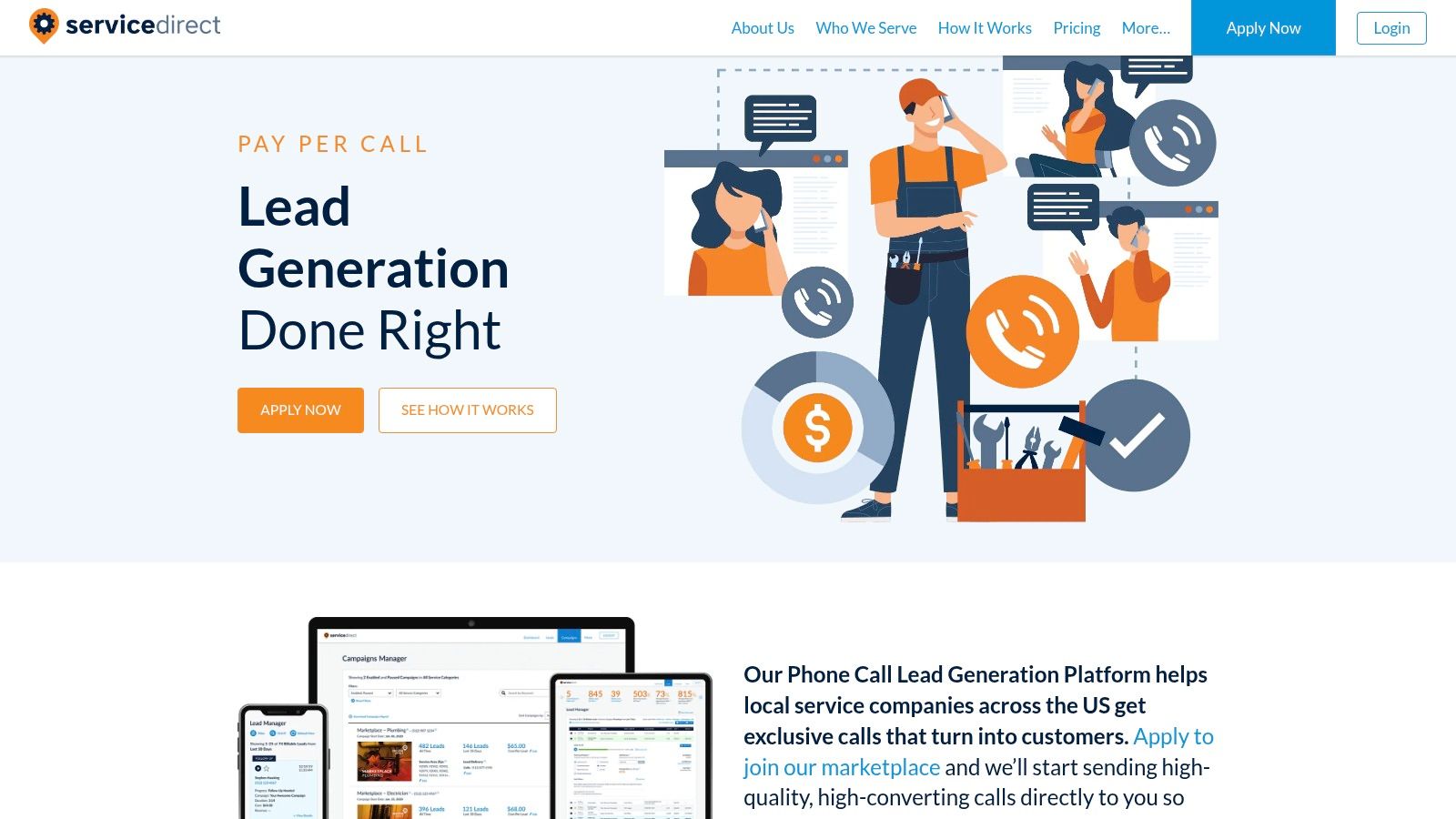
Service Direct is one of the few paid lead companies that at least tries to fix the biggest problem in this category. You are not just thrown into a race for the same homeowner with three other contractors. The pitch is simple: exclusive leads, adjustable cost per lead, and tighter rules around what gets billed.
That structure is better than the usual marketplace mess. It gives you a cleaner shot at revenue and makes spend easier to manage across service lines and ZIP codes.
Why Service Direct stands out
Control is the value here. If a category or market gets too expensive, you can pull it back. If one service line closes well, you can push harder there. That is a more disciplined setup than broad pay per lead platforms that keep charging while your office staff burns hours sorting junk.
The billing standards matter too. Lead buying usually fails in the gray areas. A contractor sees a weak inquiry, the platform calls it valid, and the margin disappears in callbacks, missed connections, and admin time. Service Direct does a better job than many competitors of defining what should count.
That said, exclusive usually means expensive.
Where to be careful
Higher CPL can still wreck ROI if your close rate slips or your intake team is slow. Paying more for a lead only works if your operation answers fast, books well, and sells consistently. Otherwise you just bought a more expensive version of the same problem.
There is also the larger strategic issue. Service Direct still sits between you and the customer. You are renting access to demand that someone else controls. The moment you cut spend, the flow slows down.
That is why paid lead services should stay in the supporting role. The better long-term play is owning transactional search in your market. Show up for high-intent terms like "water heater replacement near me" or "emergency electrician [city]," dominate Google Maps, and build an asset that keeps producing without a toll on every inquiry. That Transactional Marketing approach compounds. Marketplace spend does not.
- Best feature: Exclusive leads with more control over CPL and billable standards.
- Main drawback: Higher lead costs, plus continued dependence on a third-party source.
- Best use case: Established contractors that need supplemental volume and have a strong sales process.
- Better long-term alternative: Invest in local SEO and AI-assisted content that helps you own transactional demand instead of renting it.
Service Direct is a smarter paid option than many of the marketplaces on this list. It is still a rental model, and rental models lose to owned visibility over time.
Top 7 Home Service Lead-Gen Providers Comparison
| Item | Implementation complexity | Resource requirements | Expected outcomes | Ideal use cases | Key advantages |
|---|---|---|---|---|---|
| Transactional LLC | Medium–High: structured SEO onboarding and ongoing optimization | Moderate–High: ongoing SEO budget, website/content coordination, time for results | Improved local organic visibility and Google Maps rankings over months; measurable lead growth | Multi-location service SMBs seeking long-term local SEO and map dominance | Industry-tailored approach; GMB/map expertise; AI-driven content; transparent dashboards; contract-free |
| Angi Ads (formerly HomeAdvisor/Angi Leads) | Low–Medium: app setup and campaign management | Variable: pay‑per‑lead budget and fast lead handling resources | Consistent lead volume across many metros; broad homeowner reach | Established contractors needing steady, high-volume leads | Massive reach and brand recognition; app controls; integrations and franchise support |
| Thumbtack for Pros | Low: profile setup and in-app management | Low–Medium: pay-on-contact spend, responsive staff for quick replies | Fast lead flow for small/maintenance jobs; cost and quality can vary | Solo pros and small contractors targeting quick jobs | Pay-on-contact model; budget caps; strong mobile UX and profile/review system |
| Networx | Low–Medium: portal setup with category/ZIP targeting | Low–Medium: monthly budget controls; follow-up capacity | Predictable per-category cost ranges; flexible volume control; mixed lead exclusivity | Contractors who want visible pricing and flexible budgeting | Transparent category pricing in portal; onboarding support; exclusive/shared options |
| CraftJack | Low: real-time delivery and mobile lead manager | Low–Medium: rapid response processes and mobile access | Competitive per‑lead costs if team is fast; speed-to-contact improves conversion | Teams able to respond immediately to leads | Real-time notifications; speed-to-contact incentives; limited sharing per lead |
| Modernize Home Services (QuinStreet) | Medium: vertical-specific setup and lead qualification | Medium–High: budget for higher-ticket leads and appointment handling | Higher-quality, appointment-ready leads for mid/high-ticket projects | Contractors in windows, roofing, HVAC, solar, siding | Specialization in high-ticket verticals; appointment delivery; multi-touch nurturing |
| Service Direct | Medium: CPL negotiation and defined onboarding | Medium–High: client-selected CPLs and readiness for exclusive leads | Exclusive leads with clearer quality control and predictable billing | Businesses prioritizing lead exclusivity and predictable ROI | Exclusive leads; client-controlled CPL; clear billable-lead definitions and playbooks |
The Best Lead Gen Strategy Is Dominate Transactional Search
The marketplace model has a place. If you need demand fast, it can help. If you just opened a new territory, it can bridge a gap. But the most profitable home service businesses don't build their future on borrowed leads. They build it on being the obvious choice when someone searches with intent.
That's the entire Transactional Marketing philosophy. Show up for terms like "roofer near me," "dentist near me," and "air conditioning repair near me" because those searches come from people ready to spend. Those are transactional search terms. They aren't research traffic. They are buying traffic.
That strategy gets stronger when you pair organic rankings with Google Maps dominance. Businesses that appear in the Local Pack take the bulk of local click activity, and review behavior plays directly into that visibility. About 87% of consumers consult online reviews from third-party sites before contacting a home service provider, which is one reason Google Business Profile optimization and review management matter so much in local lead generation.
AI optimization now belongs in that same conversation. Businesses aren't just competing for blue links anymore. They're competing to be cited, summarized, and surfaced by LLM-driven search experiences. That means your city pages, service pages, Google Business Profile data, internal linking, and content structure all need to be built for discovery by both search engines and AI systems.
Transactional LLC separates itself from traditional home service lead generation companies. It isn't selling a stream of rented leads. It helps service businesses build a system that compounds. Google Maps optimization. AI-driven content silos. Local service pages by city and service. Reporting that shows rankings, heat maps, queries, traffic, and calls. That's how you create a pipeline you own.
The payoff is simple. You stop paying for every single opportunity, and you start earning direct calls from customers already looking for your service in your market. That's more stable. It's easier to defend. It also fits how people choose contractors now. They search, compare, check reviews, and call the company they trust most.
If you want a broader look at the operational side of capturing and converting those opportunities, DialNexa's lead generation strategies add useful context.
The best lead gen strategy isn't buying more leads. It's becoming the company that already owns the search.
If you want to stop competing in shared lead pools and start ranking for the exact terms customers use when they're ready to book, Transactional LLC is the clear move. They help local service businesses dominate transactional search terms, improve Google Maps visibility, and build AI-optimized content that turns searches into calls, appointments, and revenue.