

You're probably dealing with this right now. Your business shows up in Google, maybe even on page one for some terms, but the phone isn't ringing the way it should. You've got impressions. You've got visibility. What you don't have is enough people clicking, calling, and booking.
That gap is click-through rate, and for local service businesses, it's where a lot of revenue gets lost. If your listing shows up for the wrong searches, gets ignored in the results, or sends people to a weak mobile page, rankings won't save you. The only clicks that matter are the ones from people ready to hire someone now.
If you want to learn how to improve click through rate, stop thinking like a publisher chasing traffic. Start thinking like a local operator chasing booked jobs. That means focusing on transactional searches such as “roof repair near me,” “emergency dentist,” “AC repair in [city],” and other terms that show clear buying intent.
Why Visibility Is Useless Without Clicks
A ranking without clicks is a vanity metric. It looks good in a report. It doesn't pay payroll.
Most local business owners make the same mistake. They celebrate showing up in search, then wonder why leads still feel inconsistent. The answer is simple. Being seen is not the same as being chosen. CTR is the moment a searcher decides whether your listing looks like the best next step.
Transactional searches are the only clicks worth chasing
A person searching “what causes low water pressure” is browsing. A person searching “plumber near me open now” is shopping. That difference matters.
Count.co notes that CTR changes dramatically by channel and intent, with search ads around 6.64% and display ads around 0.57%, a gap of more than 11x that shows how strongly intent shapes clicks (Count.co on click-through rate). That's the whole game for local SEO. You don't need random traffic. You need the searcher who already wants a provider.
Practical rule: If the keyword doesn't suggest urgency, location, or buying intent, it usually shouldn't be your first CTR priority.
That's why transactional search terms matter so much. “Emergency HVAC repair near me.” “Same day dentist in Dallas.” “Flat roof repair contractor.” Those are searches with money behind them.
CTR is part of the sales process
Your title tag, meta description, review signals, and map presence all form a fast first impression. Searchers compare your listing against several others in seconds. If your result looks vague, generic, or untrustworthy, they skip it.
If you need a basic refresher on what is SEO, start there, then come back with one mindset shift. SEO isn't just about ranking pages. It's about getting the right person to click the right result at the right moment.
Here's the blunt version:
- Generic clicks waste time: Broad informational traffic rarely turns into fast revenue for service businesses.
- Transactional clicks drive calls: Searches with local and service intent bring people closer to booking.
- SERP presentation decides winners: Even a strong ranking can underperform if your listing doesn't look useful.
A busy service business doesn't need more “awareness.” It needs more high-intent clicks from people who are ready to take action.
Crafting Titles and Descriptions That Win Business
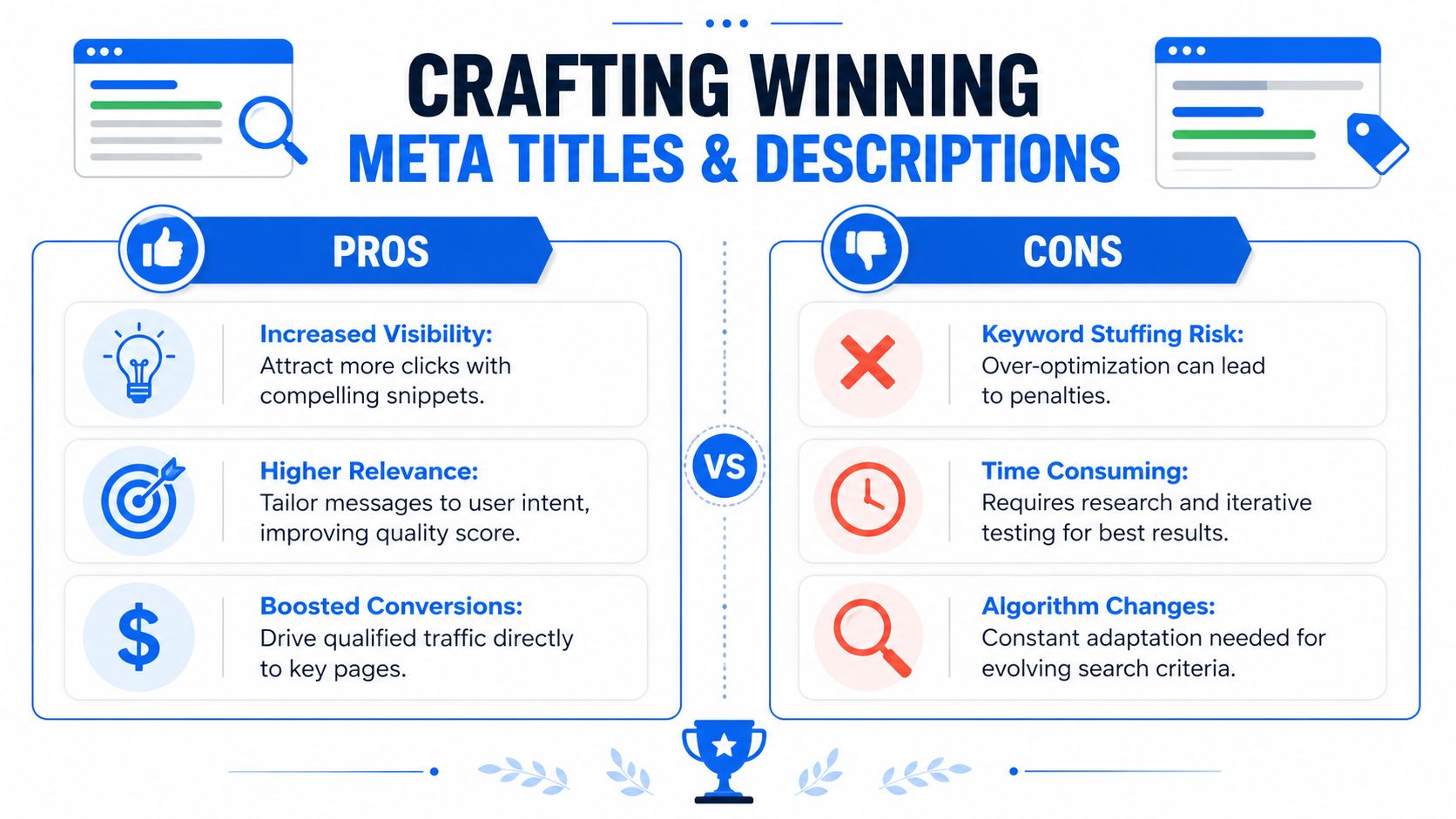
Your title and meta description are your search result sales pitch. You get a few seconds to prove you're relevant, local, and worth clicking. Most businesses waste that chance with generic titles like “Home | ABC Services” or “Trusted Local Experts.”
That copy is lazy. It doesn't match how people search.
Use a formula built for local intent
The best local titles mirror the exact need the searcher has in mind. A simple working formula is:
Service + City or Service Area + Urgency, Benefit, or Trust Signal
That structure works because it tightens relevance. The closer your page title matches the searcher's immediate problem, the easier it is to win the click. Granular alignment between keywords, headlines, and copy improves click-through performance because it reduces message mismatch (expert guidance on tighter keyword and copy alignment).
Bad titles vs better titles
Use this as your gut check.
| Business type | Weak title | Better title |
|---|---|---|
| Roofer | ABC Roofing Home | Roof Repair in Tampa |
| Dentist | Smith Dental Clinic | Emergency Dentist in Phoenix |
| Plumber | Plumbing Services | 24/7 Plumber in Columbus |
The better version does three things right. It names the service. It names the market. It gives the searcher a reason to click now.
Write descriptions that remove doubt
Your meta description shouldn't ramble. It should answer the searcher's real question, which is usually, “Can this company solve my problem quickly and locally?”
Use these rules:
- Lead with the service: Put the exact job first, not your brand story.
- Add the local cue: Mention the city or service area naturally.
- Close with action: Invite the click with a direct next step like call, book, or schedule.
A strong local description might mention fast scheduling, emergency help, same-day availability, or the specific issue you solve. Don't stuff keywords. Don't try to sound clever. Sound useful.
Most local CTR problems are copy problems. The listing doesn't look specific enough, urgent enough, or local enough.
Build pages around one search intent
One page should target one main transactional intent. If you cram “roof repair,” “roof replacement,” “commercial roofing,” and “gutter installation” into one title, you weaken all of them.
That's also why page-level content matters. If the title promises emergency plumbing, the page needs to back that up immediately. If you need a practical framework for that, this guide on how to write SEO content is a solid place to tighten the page behind the click.
Use plain language. Match the search. Promise the solution. That's how to improve click through rate without playing guessing games.
Stand Out with Schema and Rich Snippets
Google's results pages are crowded now. Blue links don't get the same clean runway they used to. Searchers see AI-generated elements, featured snippets, local packs, FAQs, and richer result formats before they ever decide where to click.
That's why plain listings get ignored.
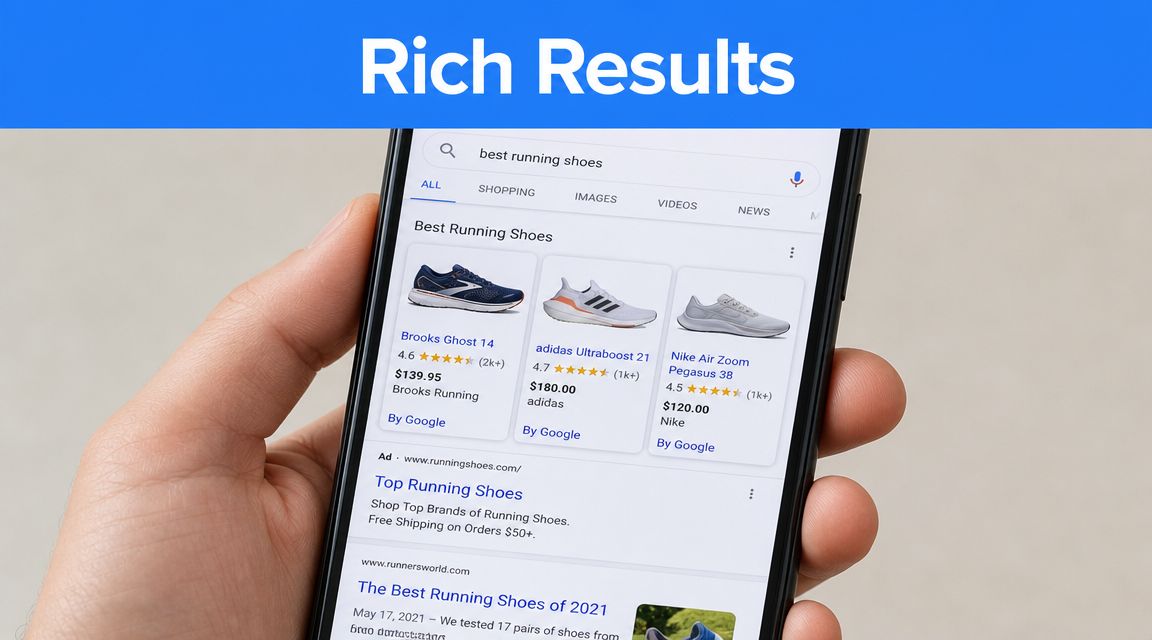
Cox Media points out that as AI Overviews and featured snippets crowd search results, traditional organic CTR can drop even when rankings stay stable. The smarter move is to improve title and meta alignment, use schema, and strengthen local-pack visibility for commercial-intent searches where users still need a provider (Cox Media on changing SERP layouts and CTR).
What schema actually does
Schema markup helps search engines understand your page details more clearly. In practical terms, it can help your result show extra information that makes it look more trustworthy and more clickable.
For local businesses, the most useful schema types usually include:
- LocalBusiness: Supports business details such as name, phone, service area, and hours.
- FAQPage: Helps surface short question-and-answer content directly in search presentation.
- Review-related markup: Reinforces trust signals when used appropriately on eligible content.
Searchers don't care what schema is called. They care that your listing looks more complete than the one above or below it.
Rich snippets pre-sell the click
A plain result forces the user to guess. A richer result answers objections before they click.
That's why FAQ content matters. If someone searches “emergency dentist near me,” a visible FAQ can reinforce things like same-day visits, insurance acceptance, or weekend availability. If someone searches “AC repair,” your snippet can hint at service area coverage or urgent scheduling.
If you're working on answer-focused SEO, this guide on how to get featured snippets is worth reviewing because the same clear structure often helps both visibility and click appeal.
Here's a quick visual explainer before you implement anything:
Don't ignore image support signals
Images won't fix CTR by themselves, but they support accessibility and help your pages stay well-structured. If your site team is uploading service photos, truck photos, office photos, or staff images, use descriptive alt text instead of junk labels. A simple alt text generator can speed that up when you're cleaning up media at scale.
Rich snippets don't replace strong titles. They amplify them.
The businesses that win more clicks usually do both. They write tight transactional copy, then enhance the listing so it takes up more visual attention and builds trust faster.
Dominate the Map Pack for Transactional Clicks
If you run a local service business, the Map Pack is the most valuable real estate in search. Not your homepage. Not your blog. Not some random service page.
The map results catch buyers at the exact moment they need a provider nearby. That's where “near me” searches turn into phone calls.
Your Google Business Profile is a click magnet or a dead asset
A neglected profile gets ignored. A fully built profile earns attention because it answers the searcher's basic questions fast. Are you close? Are you open? Do other people trust you? Can I call right now?
That's why the map result often beats a traditional organic listing for transactional searches. It's built for action.
What actually improves map clicks
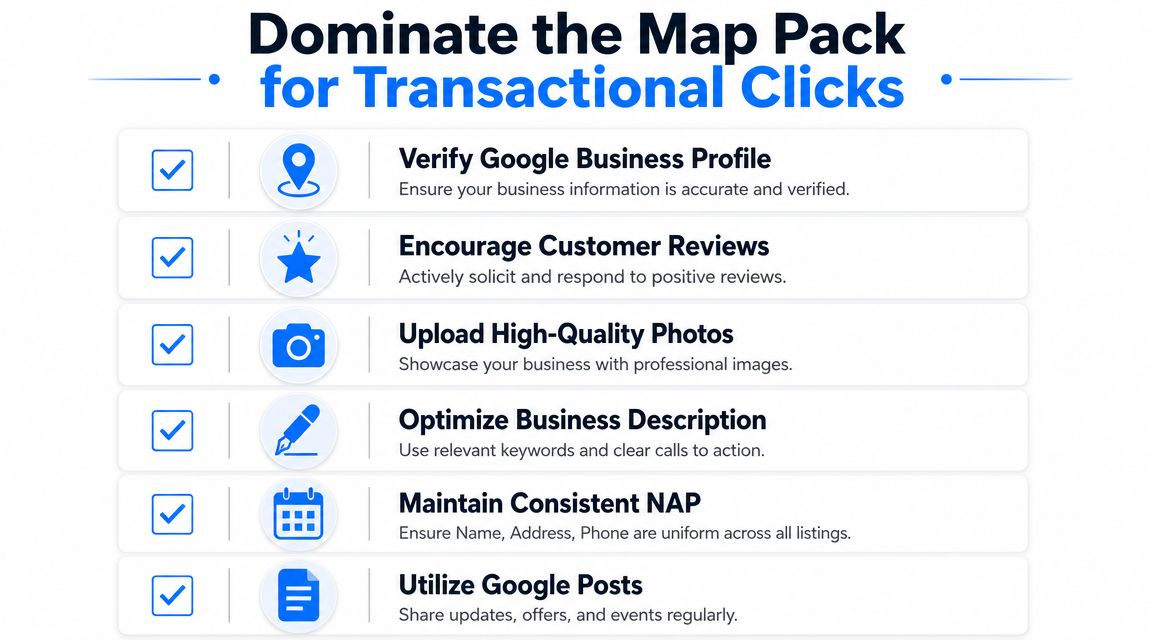
You don't need gimmicks. You need completeness, relevance, and proof.
- Lock in the right categories: Your primary category needs to match your main money service. If you're an emergency plumber, don't hide behind a vague setup.
- Fill out actual services: Add the services people search for, especially the transactional ones tied to booked work.
- Use photos that prove you're real: Upload current photos of jobs, vehicles, staff, location, and branded work.
- Respond to reviews: A dead review section makes the business look asleep.
- Publish updates: Google Posts can reinforce active offers, seasonal demand, or urgent service availability.
Reviews influence the click before the call
A local searcher often compares three businesses quickly. Reviews are part of that snap judgment. They aren't just a reputation asset. They're a CTR asset.
When your profile shows steady review activity and owner responses, the listing feels active and reliable. That's what gets the tap. For home services, dental, med spa, and pest control, people want reassurance before they commit.
A strong Map Pack profile answers the hiring question before the website visit even happens.
Consistency matters more than cleverness
Your business name, address, and phone need to match across your listings. Your service details need to line up with your website. Your category choices need to support the work you desire.
That foundation matters because local visibility and local click-through are tied together. If your profile sends mixed signals, you lose both.
If you want the tactical side of this process, read how to rank higher on Google Maps. It's where most local businesses leave easy money on the table.
Map clicks are high-intent clicks. Treat your profile like a revenue page, not a directory listing.
Secure the Lead with a Flawless Mobile Experience
A good CTR gets you the opportunity. A bad mobile site wastes it.
Most local service searches happen when the person is busy, stressed, or in a hurry. They're on a phone. They need a fast answer. If your site loads slowly, buries the phone number, or makes the form annoying, they leave and call someone else.
Mobile friction kills bought intent
The biggest mistake I see is this. A business finally earns the click from a high-intent search, then sends the visitor to a page built like a desktop brochure.
That doesn't work for “emergency electrician near me” or “dentist open Saturday.” Those visitors want instant confirmation and an easy path to action.
A strong mobile page should have:
- A visible click-to-call button: It should appear immediately, not after a long scroll.
- Simple navigation: Don't force users through cluttered menus to find core services.
- Short forms: Ask only for what you need to start the conversation.
- Readable layout: Service, city, phone, and trust signals should be obvious right away.
Your CTA button needs to be easy to tap
This is a small detail with big consequences. Beehiiv notes that a clear CTA button should be at least 44 x 44 pixels for touch usability, which reduces friction for users trying to act quickly on mobile (Beehiiv on mobile-friendly CTAs and testing).
That matters more than people think. If the button is cramped, too close to other elements, or hidden under a block of text, you create hesitation. Hesitation costs leads.
Match the page to the promise
If your search snippet says “same-day AC repair,” the mobile page needs to confirm that immediately. If your title says “emergency dentist,” the first screen should show emergency availability, phone number, and booking path.
Here's the short version:
| SERP promise | Mobile page requirement |
|---|---|
| Emergency service | Immediate click-to-call and urgent messaging |
| Local provider | Clear city or service-area confirmation |
| Fast scheduling | Obvious booking form or phone CTA |
| Trusted business | Reviews, proof, and service details near the top |
The click and the landing experience are one system. Break either one, and the lead disappears.
Measure What Matters and Prepare for AI Search
If you want to know how to improve click through rate the right way, stop obsessing over CTR in isolation. A high CTR from bad-fit searches is noise. A lower CTR from transactional terms that produce calls is far more valuable.
That's the standard local businesses should use.

Use Search Console to find money leaks
Google Search Console is one of the best tools for finding pages that get seen but don't get chosen. Look for queries and pages with strong impression volume but weak CTR, especially on service pages tied to buying intent.
That's where title rewrites, meta updates, FAQ additions, and stronger local phrasing usually pay off.
A practical workflow looks like this:
- Pull high-impression queries tied to actual services and locations.
- Sort for weak CTR on pages that should be producing leads.
- Rewrite one element at a time so you know what changed performance.
- Wait for enough data before deciding whether the new version worked.
Semrush recommends testing one variable at a time and waiting for meaningful data before making the call, suggesting at least 100 clicks for ads or 1,000 opens for emails when judging significance (Semrush on click-through testing and SERP presentation). The principle applies here too. Don't change everything at once and pretend you learned something.
Judge CTR by lead quality
Crazy Egg makes an important point that too many businesses miss. A high CTR can be misleading if the click quality is poor, because Google's Quality Score also looks at ad relevance and landing-page experience. For local service companies, the better question is which clicks are worth getting (Crazy Egg on CTR and click quality).
That's the right standard for local SEO and paid search.
Don't chase curiosity clicks. Chase buyer clicks.
A page ranking for “types of shingles” may get traffic. A page ranking for “roof replacement near me” gets closer to revenue. Those aren't the same asset.
AI search changes the game, but not the mission
AI-driven results are changing how people find businesses. Some searches get answered directly in the results. Some never send a click at all. That makes weak, generic content even less useful.
The pages and profiles that keep winning are the ones that are:
- Structured clearly
- Written around real service intent
- Supported by strong local business data
- Built for direct action
That's why local SEO and AI optimization now overlap. If your content is clean, specific, and easy for search systems to interpret, you improve your chance of being surfaced when buyers ask for a provider, not just information.
If you're serious about tying SEO to real outcomes, learn how to measure marketing effectiveness. CTR matters. Calls, booked jobs, and qualified leads matter more.
If you want help turning impressions into high-intent clicks, booked jobs, and better local visibility, talk to Transactional LLC. They focus on the searches that actually make service businesses money, including transactional SEO, Google Maps optimization, and AI-driven content built to win the click and convert it into revenue.