


A search for “roofer near me,” “dentist near me,” or “air conditioning repair near me” usually signals more than curiosity. The person searching is looking for a provider who can respond, schedule, or book work, which is why transactional search intent matters more than broad traffic volume. Local SEO case studies become useful when they connect that intent to Google Maps visibility, calls, appointments, booked jobs, and the way AI systems identify trustworthy local businesses.
This analysis keeps seven industries separate rather than forcing them into one generic formula. Each example uses the same decision lens: transactional keywords, Google Business Profile optimization, service-city targeting, AI and LLM discoverability, measurable outcomes, and execution that another service business can evaluate. Google says local results are primarily shaped by relevance, distance, and prominence, so ranking efforts must address profile fit, proximity, reviews, links, pages, and customer actions together through its official local ranking guidance.
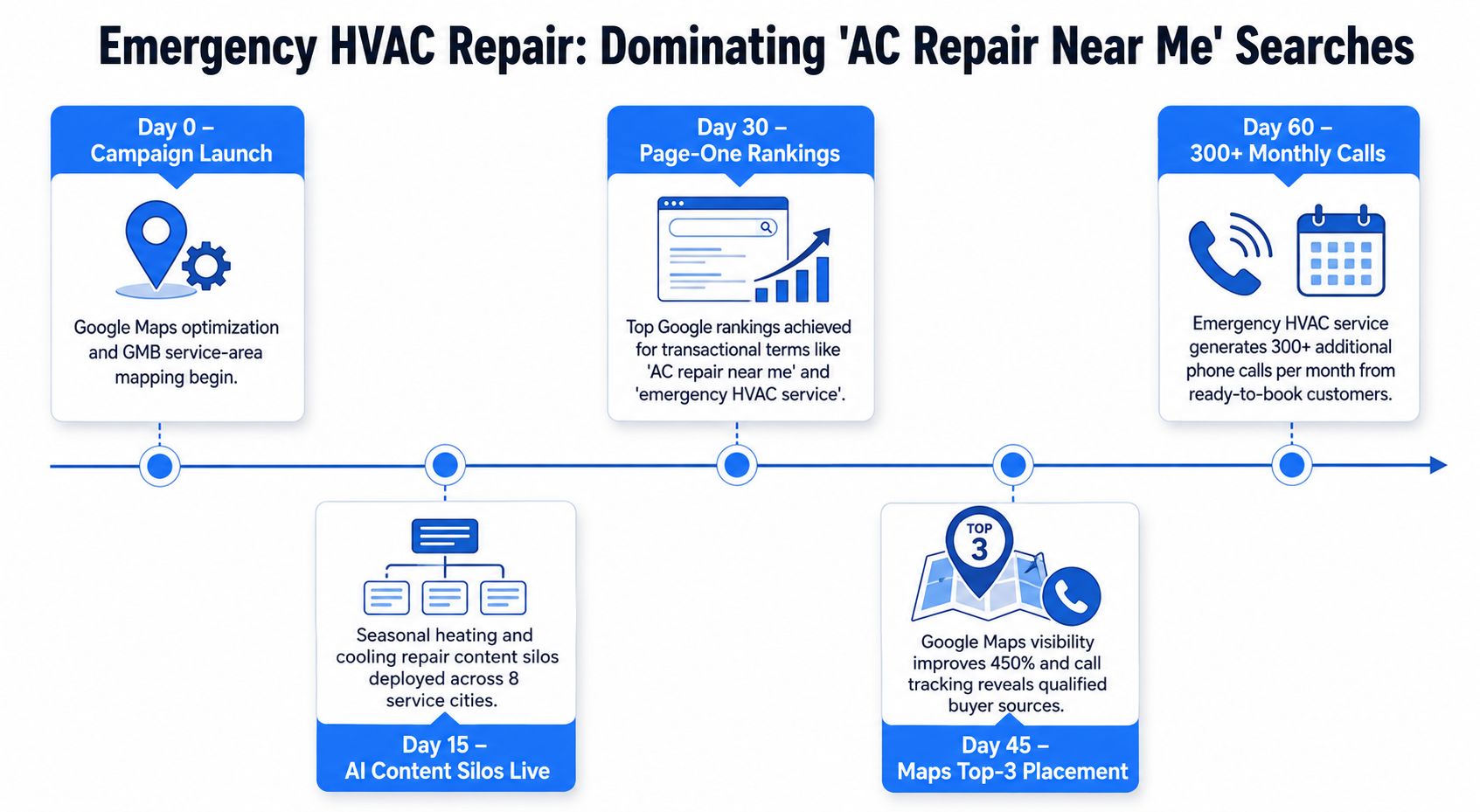
Transactional Marketing applies that framework through Google Maps optimization, GMB setup, content silos, high-intent keyword targeting, city-level reporting, and an AI-driven content process. Its stated process targets page-one visibility within 30 to 60 days, but that timeline should be measured rather than treated as a guarantee. The practical question is simple: can a business become easier to find when a nearby customer is ready to spend?
1. Emergency HVAC Repair Local SEO With AC Repair Near Me Searches
HVAC searches become highly valuable when they combine a service with urgency and location. “Air conditioning repair near me,” “emergency HVAC service,” and “furnace repair near me” identify people who usually need a response rather than a general educational article. An HVAC company should therefore organize its visibility around the service problem, the service city, and the next action, such as calling or requesting an appointment.
A useful campaign separates heating and cooling into distinct content silos. A Phoenix-area page for emergency AC repair shouldn't compete with a Colorado Springs page for furnace repair, because each market has different service language, seasonal needs, competitors, and proximity signals. Dedicated city pages can explain service coverage, emergency availability, equipment problems, and booking options without turning every location page into a duplicate.
Google Maps deserves equal attention. The Google Maps SEO factor analysis from Hook Agency highlights the importance practitioners place on primary category selection, proximity, business title relevance, open-now status, and review signals. Those factors explain why a strong HVAC website alone may not capture the customer who chooses a local-pack listing and calls immediately.
Build an HVAC system around urgency
Transactional Marketing's local SEO services for HVAC companies align with this model by combining map optimization, location-specific pages, and content designed to make service information easy for search engines and LLMs to interpret. FAQ content can address common emergencies in direct language, while structured service pages clarify what the company repairs and where it operates.
Practical rule: Separate emergency, cooling, heating, and maintenance intent before producing pages. A customer searching for AC repair shouldn't land on a generic HVAC homepage.
A real-world scenario makes the distinction clear. A homeowner in Phoenix may need same-day cooling repair, while a homeowner in Colorado Springs may need furnace service. The winning page isn't merely optimized for “HVAC.” It matches the exact problem, city, availability, and action that the searcher is ready to take.
2. Dental Practice Patient Acquisition Through Dentist Near Me Searches
Dental SEO has a different conversion path from emergency home services. A patient may search “dentist near me,” “emergency dental care,” or “teeth cleaning appointment” and compare several offices before choosing one. The local SEO case study therefore needs to measure more than rankings. It should connect each location, service, booking path, phone call, and new-patient inquiry.
A multi-location practice needs one optimized Google Business Profile for each eligible location, with accurate contact information, appointment access, services, hours, photos, and review activity. The profile must support patient decision-making. A practice known for implants should make implant services easy to understand, while an emergency dentist should communicate immediate availability and booking options clearly.
Service silos prevent generic pages from carrying too much responsibility. Emergency dentistry, cosmetic dentistry, implants, pediatric care, and routine cleaning each answer different questions and attract different transactional searches. Location-specific testimonial pages can reinforce local trust when they describe the actual office, services, and patient experience without making unsupported promises.
Make appointment intent visible to AI systems
LLM-friendly content should present facts in a consistent structure. Service pages can explain who the treatment serves, what the appointment involves, what the office offers, and how a patient can schedule. Schema for services, business hours, and appointment information can reinforce that structure, although markup should reflect information visible on the page.
A dental practice marketing resource from Transactional Marketing fits this service-specific approach. The important strategic trade-off is breadth versus clarity. A practice can publish many pages, but thin variations that merely swap city names may weaken trust and provide little value to patients or search systems.
For example, a pediatric office should build around “kids dentist near me” and explain child-focused care, while a cosmetic practice should target appointment-ready searches tied to whitening or cosmetic consultations. The decision lens stays consistent, but the content, proof, booking flow, and local service language must remain specific to dentistry.
3. Pest Control Lead Generation For Pest Control Near Me Keywords
Pest control searches often combine a visible problem with urgency. “Pest control near me,” “termite treatment,” “bed bug treatment near me,” and “emergency pest removal” suggest that the customer wants a solution, not a broad explanation of pest biology. A regional provider can use that urgency to organize pages around pests, seasons, cities, and response options.
The strongest structure separates termites, rodents, ants, bed bugs, and other major services. Seasonal content should explain the problem and the treatment path, but it must still lead toward a local action. A page about termite treatment in a particular service city can identify the service area, describe inspection or treatment options, show credible business information, and make the request process obvious.
Maps visibility remains central because proximity influences local results. A company serving several cities needs accurate service-area information and a profile that represents its actual operations. It shouldn't create misleading listings or imply a physical presence where none exists. City pages can support organic visibility, but they can't erase the distance factor in Google's local system.
Use AI to expose gaps, not manufacture pages
An AI content engine can help identify competitor topics, seasonal wording, and unanswered customer questions. It shouldn't replace subject-matter review. Pest control pages need accurate descriptions of services, safety considerations, availability, and the company's actual response capabilities.
Transactional Marketing's pest control lead-generation service reflects a practical measurement model. Track which city and keyword produce calls, form submissions, inspections, and completed work. A ranking for “pest control” may look impressive, but a page for “same-day pest removal” can be more useful if it produces qualified requests.
- Create pest-specific silos: Keep termite, rodent, ant, and bed bug intent distinct.
- Add seasonal relevance: Address the problems customers search for during the company's active periods.
- Clarify availability: Show service areas, appointment options, and emergency response information.
- Measure outcomes: Connect calls and booked inspections to the originating page or keyword where tracking permits.
A local startup may compete more effectively by owning a narrow service term, such as bed bug treatment in its actual market, than by publishing a broad library with no local proof. That is the central trade-off. Focus gives a smaller provider a clearer path to transactional visibility, while expansion should follow demonstrated demand and operational capacity.
4. Electrical Services Local SEO For Electrician Near Me Searches
Electrical SEO must distinguish danger, urgency, and planned work. Someone searching “electrician near me,” “emergency electrical repair,” or “24-hour electrician available” may need immediate help with a failed panel, exposed wiring, or a power-related problem. Another searcher may be comparing contractors for installation or replacement. A single undifferentiated service page won't address both decisions well.
An electrical company can build separate silos for residential, commercial, emergency, panel repair, installation, and scheduled projects. Each page should state the service, operating area, availability, credentials, and booking path. The content should remain factual, especially around licensing, certifications, response times, and 24-hour service.
Google Business Profile optimization should reinforce the same information. Accurate categories, service descriptions, hours, phone details, reviews, and photos help establish relevance and prominence. The Search Engine Land guide to the Google local pack also discusses local-pack factors such as primary category, proximity, review quantity, rating, and verified profile status. Those signals don't eliminate competition, but they give the campaign a concrete optimization checklist.
Match the page to the customer's risk
LLM discoverability depends on clear answers. A page that explains emergency availability, service boundaries, common electrical issues, and the next step gives AI systems more usable information than vague claims about being the best contractor. Structured local data can support details such as hours and services when the markup accurately reflects the page.
A high-intent electrical page should answer three questions quickly: Can this company handle my problem, does it serve my location, and can I contact it now?
Transparent reporting adds another layer. The company should separate rankings from emergency calls, scheduled estimates, qualified leads, and profitable jobs. A commercial contractor may value installation inquiries differently from a residential provider handling emergency repairs, so keyword performance must be interpreted through business economics rather than visibility alone.
A suburban electrician, for example, may prioritize “emergency electrician near me,” while a commercial contractor may build around installation and maintenance searches. The SEO framework is repeatable, but the profitable intent, service page structure, and lead qualification process are not interchangeable.
5. Plumbing Services And Plumber Near Me Transactions
Plumbing searches often reveal the problem in the query itself. “Plumber near me,” “emergency plumbing repair,” “leak detection service,” and “water heater repair near me” provide a direct map from search term to service page. The business that builds around that map can make its website and profile easier to interpret for both customers and search systems.
A multi-location plumbing company should divide its content by service and city rather than rely on one “plumbing services” page. Drain cleaning, water heater repair, burst pipes, sewer backups, and leak detection involve different urgency levels and different customer questions. Seasonal pages can address frozen pipes in winter or sewer problems in spring, provided they reflect actual services and local operating conditions.
The Google Business Profile should carry the same transactional signals as the website. Customers need to see whether the company serves their area, accepts emergency calls, offers appointments, and provides the specific repair they need. Reviews can add evidence about reliability and completed work, but businesses shouldn't script or fabricate customer experiences.
Track profitability, not just plumbing visibility
The most useful plumbing dashboard connects source data to operations. Search Console can show query and page visibility, while call tracking and booking records can show whether the visibility produces viable jobs. Transactional Marketing's local SEO reporting approach describes geographic heat maps, city keyword timelines, Search Console data, and biweekly reporting as tools for documenting local performance.
A practical content plan might prioritize these pages:
- Emergency plumbing: Target customers who need immediate assistance and make the call path prominent.
- Drain cleaning: Explain the service and location without mixing it with unrelated repair intent.
- Water heater repair: Address repair-specific searches separately from installation or replacement.
- Burst pipe response: State actual availability and service boundaries clearly.
The decision lens prevents a common mistake. A page can gain impressions while attracting low-value informational traffic, whereas a well-matched emergency page may generate fewer visits but stronger booking intent. Plumbing companies should evaluate that difference by city, service, call quality, and completed work.

6. Roofing Contractor Marketing For Roofer Near Me Searches
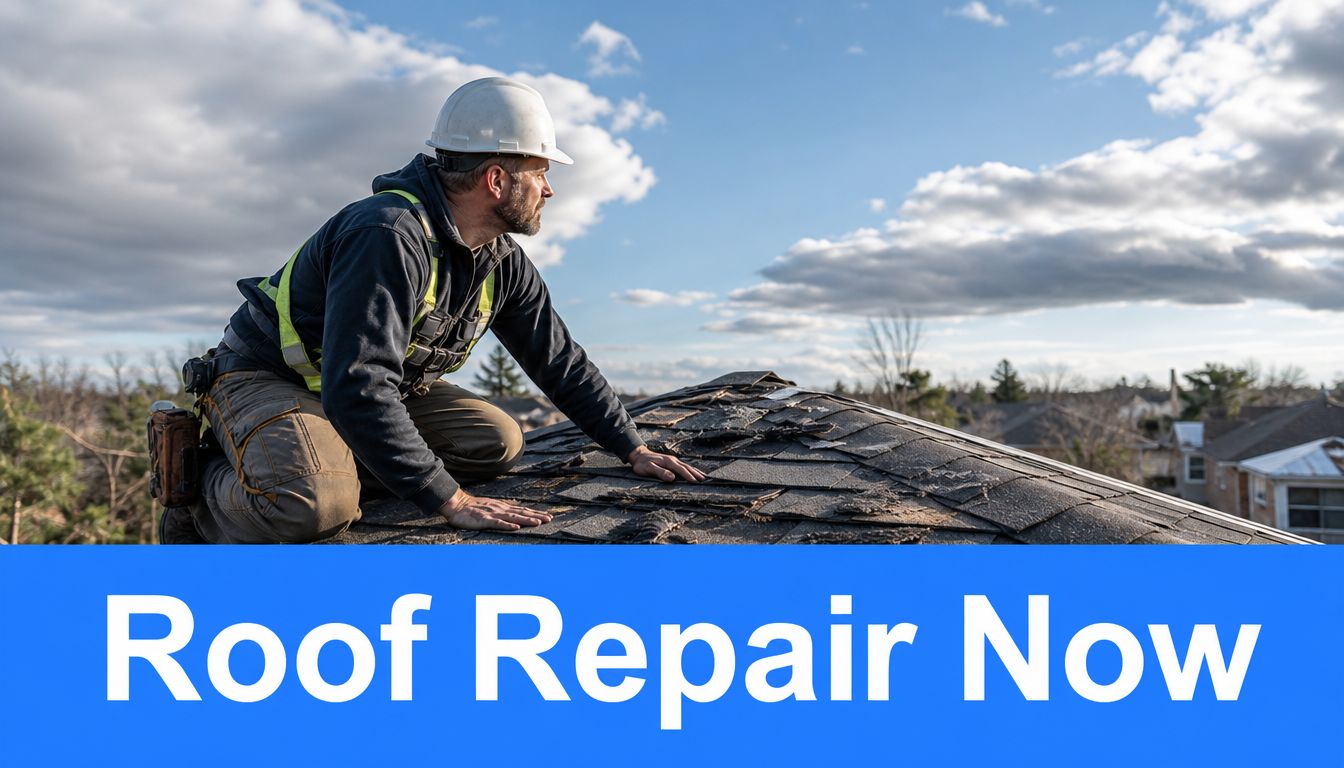
Roofing combines routine demand with sudden weather-driven demand. A customer searching “roofer near me,” “storm damage roof repair,” “roof replacement contractor,” or “emergency roof tarping” may be at the beginning of a planned project or responding to damage that needs immediate inspection. The website needs separate paths for those decisions.
Storm damage, routine repair, replacement, inspections, insurance-related work, and commercial roofing should each have a clear service silo. A storm page can explain inspection and documentation, while a replacement page can focus on materials, project scope, warranties, and scheduling. The business should only publish claims about licensing, insurance, warranties, or emergency response that it can verify.
Google Maps visibility can support discovery after a local weather event, but the profile must remain accurate and useful outside storm season. Updates, photos, services, reviews, and contact details should match the actual business. Location pages should contain unique local information, not city-name substitutions that fail to explain where crews work or what projects they complete.
Treat weather as a planning signal
AI-assisted planning can help a roofing company monitor customer questions and identify service gaps around hail, wind, or ice dams. It shouldn't generate speculative claims about a storm or imply that damage exists. LLM-friendly pages should use direct headings, clear service definitions, location information, and visible proof such as real project details or testimonials.
The roofing SEO services resource from Transactional Marketing supports a model built around high-intent terms and local service visibility. Measurement should separate inspection requests from replacement leads, insurance-related inquiries, and commercial opportunities. Those outcomes carry different sales cycles and profitability.
A regional contractor might create a dedicated page for storm damage repair in each genuine service city, then support it with routine repair and replacement content. The trade-off is operational discipline. More pages create more opportunities only when the company can maintain accurate information, local proof, internal links, and lead handling across every market.
7. Chiropractic Practice Patient Acquisition Through Chiropractor Near Me Searches
Chiropractic search intent changes with the patient's condition and reason for care. “Chiropractor near me,” “back pain relief appointment,” “auto accident injury treatment,” and “sports injury chiropractor near me” shouldn't lead to identical content. Each query reflects a different concern, referral context, and appointment decision.
A multi-location practice can build silos for auto injuries, sports injuries, chronic pain, wellness, and general chiropractic care. Condition-specific pages should explain the practice's actual services, location, appointment process, and relevant patient information. Pages for auto insurance or workers' compensation referrals may help users understand the administrative path, but they must avoid unsupported medical or outcome claims.
Each practice location also needs accurate profile management. New-patient booking, hours, phone details, services, photos, and reviews should match the individual office. Google local results use relevance, distance, and prominence, so a central website page can't fully substitute for location-level information when patients search from different areas.
Connect discovery to scheduled care
AI and voice search systems need concise, verifiable answers. A practice can structure pages around who the service is for, how to request an appointment, what conditions the office addresses, and which location provides care. Testimonials can add trust when they represent real patients and comply with applicable healthcare advertising requirements.
A useful dashboard separates patient inquiries by location and condition. A general “chiropractor near me” ranking may indicate broad visibility, while auto injury or sports injury pages may reveal which service lines attract the most valuable appointments. That distinction helps the practice decide where to invest content, profile updates, and referral-focused pages.
For example, a sports clinic near an urban area may emphasize sports injury appointments, while another office may focus on auto accident evaluations. The repeatable framework remains the same, but the page language, patient proof, booking path, and operational follow-up must fit the practice.
7 Local SEO Case Studies Comparison
| Service / Case Study | Implementation complexity | Resource requirements | Expected outcomes (30–60 days) | Ideal use cases | Key advantages |
|---|---|---|---|---|---|
| Emergency HVAC Repair Local SEO | High, multi-city mapping, HVAC terminology training | AI content engine, GMB/service-area mapping, call tracking, location pages (8+) | Page‑one rankings; Google Maps top‑3; +300 qualified calls/month | Emergency AC/heating services in seasonal markets | Rapid high‑intent calls, Maps dominance, seasonal intent automation |
| Dental Practice Patient Acquisition | Medium–High, multi-location + appointment integration | AI content, GMB appointment widgets, review management, per‑location optimization (5 locations) | Page‑one + Maps top‑3; +250% new patient inquiries; ~40% GMB bookings | Multi‑location dental groups seeking new-patient growth | Direct appointment bookings, voice/assistant visibility, service differentiation |
| Pest Control Lead Generation | Medium–High, seasonal content and competitor gap analysis | AI landing pages, seasonal content silos, GMB optimization, heat maps (6 cities) | Maps top‑3 across territories; ~+400% service calls | Regional pest control companies with seasonal demand | Urgency‑optimized pages, automated seasonal adaptation, competitor gap capture |
| Electrical Services Local SEO | High, 24/7/emergency focus and compliance display | AI content, GMB with after‑hours messaging, LLM FAQ schema, profitability tracking (4 cities) | Page‑one rankings; Maps top‑3; +280% emergency calls | Emergency/residential/commercial electricians emphasizing after‑hours service | After‑hours visibility, high‑intent emergency leads, job‑level ROI tracking |
| Plumbing Services AI‑Optimized Local SEO | High, seasonal issues + immediate response requirements | AI engine, urgency landing pages, 24/7 GMB messaging, multi‑city pages (5+) | Maps top‑3 across areas; +350% emergency calls | Multi‑location plumbing businesses handling emergencies | Seasonal keyword capture, premium emergency bookings, profit‑per‑keyword insights |
| Roofing Contractor Marketing | High, weather‑predictive targeting and insurance pages | AI weather tracking, storm damage silos, insurance claim landing pages, GMB (3+ cities) | Page‑one + Maps top‑3; +320% storm‑damage inquiries | Roofing contractors focused on storm damage and insurance work | Proactive storm keyword targeting, high‑value insurance jobs, predictive timing |
| Chiropractic Practice Patient Acquisition | Medium–High, condition-specific content and multi-location setup | AI content, GMB appointment booking, condition silos, per‑location optimization | Maps top‑3; page‑one rankings; +280% new patient inquiries | Multi‑location chiropractic practices, auto‑injury and sports care | Appointment automation, condition‑targeted patient acquisition, higher‑value referrals |
Turn the Patterns Into Your Local SEO Playbook
The seven examples point to one conclusion: local SEO works best when the business organizes visibility around transactions, not generic exposure. A searcher who types “roofer near me” or “dentist near me” is expressing a location, a service need, and often a readiness to contact a provider. The campaign should preserve that meaning from the search result to the page, profile, call, booking form, and sales record.
Start by separating the industry and service silos. HVAC companies should distinguish heating, cooling, and emergencies. Plumbers need different paths for drains, water heaters, leaks, and burst pipes. Dental practices should separate emergency, cosmetic, implant, pediatric, and routine care. This structure improves relevance for users and gives search systems clearer entities, services, locations, and answers to interpret.
Next, establish the Google Business Profile foundation. Google identifies relevance, distance, and prominence as the main local ranking factors, so businesses should verify categories, service information, contact details, hours, location or service-area accuracy, reviews, and profile completeness through its local results documentation. Website optimization supports the profile, but it doesn't replace the proximity and reputation signals that influence Maps visibility.
A practical prioritization sequence
- Identify valuable intent first: List the highest-value “near me,” emergency, same-day, appointment, repair, and booking terms for each service line.
- Build the Maps foundation: Correct profile information, categories, service details, reviews, photos, and contact paths before expanding content.
- Publish focused pages: Create unique service-city landing pages with real local information and a direct conversion path.
- Structure for AI discovery: Use clear headings, factual business details, service explanations, FAQs, testimonials, and valid structured data.
- Measure the full journey: Track rankings, map heat maps, Search Console queries, calls, leads, appointments, booked jobs, and profitability by city and keyword.
- Refine from conversion data: Keep investing in terms that generate qualified work, not merely impressions or visits.
The broader market context supports this emphasis on local discovery. Industry summaries report that 46% of Google searches have local intent and 97% of consumers search online for local businesses in the cited local SEO statistics summary. The same source discusses local searches leading to store visits and offline purchases, which explains why calls, bookings, directions, and appointments are more meaningful than rankings alone.
A reported regional service campaign also illustrates why case studies should disclose more than position changes. It recorded 161 new local keywords, a 15.3% increase in GBP interactions, and a 36.2% increase in calls over a few months, according to Go Fish Digital's local SEO analysis. Those outcomes still don't prove revenue without booking and sales data, but they show the measurement bridge businesses should demand from providers.
Transactional Marketing is one relevant option for companies evaluating contract-free local SEO, Google Maps optimization, AI-driven content planning, and transparent reporting. Its approach combines industry-specific content silos, high-intent targeting, location reporting, and map visibility, while readers should compare any provider by methodology, evidence, reporting quality, lead handling, and realistic timelines. The Solo AI website creator case studies offer another example of why documented process and measurable outcomes matter when evaluating marketing claims.
Transactional LLC helps service businesses build local SEO campaigns around transactional searches, Google Maps optimization, GMB setup, city-level content, and AI-ready service pages. Visit Transactional LLC to review its contract-free approach and discuss a reporting framework that connects keywords and map visibility to calls, leads, appointments, and booked work.