


Most pest control searches are not research projects. They're purchase signals. A homeowner searching “pest control near me,” “termite exterminator,” or “emergency rodent control service” usually wants a qualified company, a fast response, and a clear next step, not a general article about insects.
That distinction shapes a profitable SEO strategy. The priority is to reach people with money in hand who are ready to call, request an inspection, or book treatment. Research traffic still matters, but it should support transactional pages rather than consume the entire content budget.
The opportunity is substantial. One industry estimate places the global pest control market at USD 20.1 billion in 2019 and projects it to reach USD 44.3 billion by 2034, while another forecast values it at USD 26.9 billion in 2024 and also projects USD 44.3 billion by 2035. Those projections point to a mature, recurring service category with durable demand for terms such as exterminator, termite treatment, and pest control near me. (Allied Market Research market estimate)
The nine keyword groups below connect search intent to landing pages, Google Business Profile optimization, Maps visibility, AI-readable business information, phone calls, and booked pest jobs. Transactional Marketing focuses on that complete path, not rankings in isolation.
1. Transactional Keywords Drive Money-Ready Pest Control Leads
Transactional keywords signal that a searcher wants to hire someone. Phrases such as “pest control near me,” “termite exterminator [city],” “emergency wasp removal,” and “bed bug exterminator near me” belong on pages built to generate calls and bookings, not on a broad blog post that makes the visitor search again.
A pest control company should begin with a focused group of core terms for its primary service area. Build dedicated pages for major variants, including same-day pest control, commercial pest control near me, rodent control by neighborhood or ZIP code, and affordable termite treatment in the city served. Put the primary service and location in the URL, page title, heading, and meta description, but keep the wording natural.
Give every commercial term a conversion path
A transactional page needs more than keyword placement. It should show the service area, contact details, availability, treatment process, relevant proof, and a clear phone action. Add local business and service structured data where appropriate, maintain consistent name, address, and phone information across directories, and connect each page to the relevant location and pest pages.
Practical rule: Never send a termite inspection searcher to a generic homepage when a focused termite page can answer the question and make the call easier.
Google Business Profile optimization should run alongside organic SEO. Local visibility depends on relevance, distance, and prominence, with profile-query alignment helping relevance and reviews and links contributing to prominence, as explained in Google local pack guidance. Measure calls, form submissions, inspections, and booked treatments by keyword cluster. Use high-intent keyword planning to keep the campaign centered on searches that can produce revenue.
2. Local and Near-Me Keywords Build Google Maps Visibility
Local phrases combine service intent with proximity. “Pest control near me,” “pest control Denver,” “termite exterminator [ZIP code],” and “emergency pest control [neighborhood]” tell Google that the searcher wants a nearby provider. They also tell the business that a generic educational page won't be enough.
Google Maps and the local pack can appear before traditional organic listings, so a pest control company needs two assets working together. The Google Business Profile should accurately describe the company, services, hours, phone number, service areas, photos, and reviews. The website should support the profile with useful city pages, service pages, fast mobile performance, and consistent local information.

Optimize the profile and the market footprint
Use the primary category that best describes the business, then add relevant secondary categories where available. List the cities and neighborhoods served, publish authentic team and equipment photos, and request reviews through a consistent process. A proposed review target of 5 to 10 new reviews monthly belongs to the operating plan only if the company can earn them naturally and follow platform rules.
Create useful location pages. A page for each city should explain services available there, local response coverage, pests commonly handled, and how to contact the team. Don't copy one template across every suburb. Track Maps visibility with geographic reporting, then compare impressions and actions with calls and booked jobs. Google Maps optimization guidance should complement, not replace, service-page SEO.
3. Service-Specific Keywords Match Treatment Types to Landing Pages
Service-specific searches name the solution a person wants. “Bed bug heat treatment,” “rodent exclusion service,” “mosquito spraying [city],” and “pest control inspection and assessment” are more precise than the head term pest control. The visitor may already understand the problem and is comparing methods, availability, safety, or price.
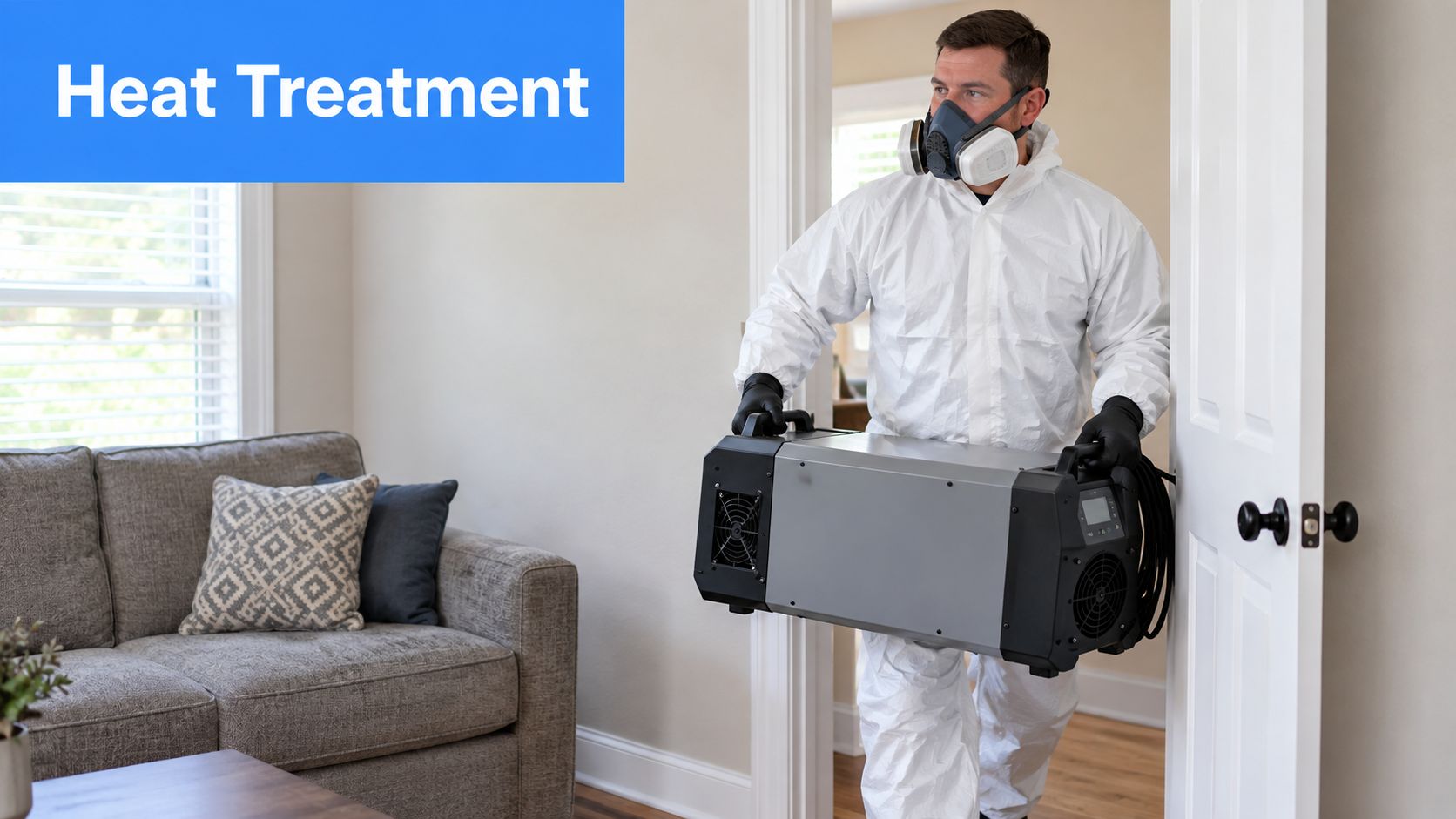
Each important service deserves its own landing page. A termite treatment page should explain inspection, treatment options, preparation, follow-up, warranty terms if offered, and the locations covered. A bed bug heat treatment page should describe the equipment, preparation requirements, what customers should expect during the visit, and how the company handles follow-up. Specific information reduces uncertainty and gives search engines clearer relevance signals.
Make the page answer the buying questions
Use treatment-specific testimonials, original job photos, process explanations, and FAQs. If pricing varies, explain the factors that affect the quote instead of publishing a misleading universal figure. Structured data can clarify the service, area, and other information when it accurately reflects the page.
Internal links should connect service pages to city pages, pest pages, inspection pages, and contact paths. That architecture helps a visitor move from “what treatment do I need?” to “can this company perform it here?” Add seasonal or urgency modifiers where they describe real demand, such as emergency wasp removal or weekend mosquito spraying.
A service page can also support paid search. Send termite inspection ads to the termite inspection page rather than a general service page, then compare calls and qualified leads. Treatment relevance is useful only when the company can fulfill the service and explain it accurately.
4. Pest-Specific Keywords Establish Specialist Relevance
Pest-specific keywords let a company organize content around the customer's identified problem. “Bed bug removal near me,” “termite inspector [city],” “rat removal near me,” “cockroach control [city],” and “wasp nest removal near me” should not all point to one generic page.
Build a dedicated page for every major pest the company treats. Each page should help the visitor confirm the pest, understand the risk, and choose an appropriate next step. Identification photos, plain-language descriptions, signs of activity, treatment methods, preparation details, and service-area information are more persuasive than a list of pest names.
Build a pest content silo around the job
A strong pest page can link to the matching treatment page, city page, inspection option, and prevention content. For example, a carpenter ant page can lead to carpenter ant treatment, a local service page, and an inspection request. This creates a coherent silo that helps both visitors and crawlers understand the company's expertise.
Pest-specific pages should also reflect biology and behavior without turning into unsupported medical or environmental claims. Explain where the pest appears, what evidence customers may find, and why professional assessment can matter. Use original photos and pest-specific customer feedback when available. Don't publish invented case results or generic testimonials.
Seasonality belongs in the editorial plan. Mosquito, wasp, tick, flea, rodent, and termite pages can be refreshed as customer questions change throughout the year. Search platforms may show different results for “mosquito spraying [city]” in warm weather than for indoor rodent control during colder months. Pair organic pages with Maps profile services and track which pest clusters produce calls, inspections, recurring plans, and completed treatments.
5. Long-Tail Keywords Capture Narrow, High-Intent Needs
Long-tail phrases often reveal constraints that broad keywords hide. “Best rated bed bug exterminator near me,” “pet-safe cockroach control [city],” “termite treatment warranty [city],” and “commercial pest control for restaurants [city]” tell the business what the searcher cares about, whether that's trust, safety, price, warranty, schedule, or property type.
The trade-off is clear. These phrases usually serve smaller audiences than broad category terms, but their specificity can make the landing page and sales conversation much more relevant. A visitor searching for pet-safe treatment shouldn't land on a page that only discusses generic pest prevention. Create a page or a strong section for the intent cluster when the service is real and commercially valuable.
Use research to prioritize, not to decorate
Tools such as Ahrefs, Semrush, and Google Keyword Planner can help uncover variations. The job isn't to publish every phrase as a separate page. Group close variants by intent, then create one useful resource that answers the full question without producing thin, repetitive location pages.
Useful dimensions include:
- Urgency: Same-day, emergency, open now, or weekend service.
- Quality: Best rated, certified, experienced, or guaranteed.
- Constraints: Pet-safe, child-conscious, eco-conscious, or low-odor options.
- Property type: Rental properties, restaurants, offices, warehouses, or multifamily buildings.
- Commercial questions: Treatment cost, inspection process, warranty, and recurring service.
Long-tail FAQs can improve conversational coverage, but every answer must match the company's actual policies. Validate high-value clusters in paid search where appropriate, then use call tracking and Search Console to see whether the traffic produces qualified inquiries. Local keyword research best practices can help connect search language with landing-page decisions.
6. Emergency and Urgent Keywords Require Operational Proof
Urgent searches create a direct test of marketing honesty. “Emergency pest control near me,” “pest control open now [city],” “emergency bed bug treatment,” and “wasp removal tonight” attract people who need an answer quickly. They can be valuable terms, but a company shouldn't target them because the phrases sound profitable.
The page must state what the business can deliver. Show hours, response areas, call handling, dispatch process, and any limits around evenings, weekends, or treatment types. Use click-to-call prominently, make the phone number easy to find on mobile, and separate emergency pages from regular service pages so the promise remains clear.
Match the promise to dispatch capacity
A company advertising 24/7 pest control [city] needs a real intake and response process. Missed calls, delayed callbacks, or technicians unavailable in the advertised area can turn high-intent visibility into poor reviews and wasted ad spend. Emergency landing pages should therefore connect to call tracking, SMS alerts, CRM routing, and a trained customer service workflow.
Paid local placements can support urgent visibility, including Local Services Ads where the business qualifies. Organic pages and Maps profile details still matter because users may compare several providers before calling. Be transparent about emergency pricing, inspection requirements, and what “same day” means.
Operational test: If dispatch can't answer the phone, confirm the service area, and provide a realistic arrival window, pause the emergency keyword campaign until the process is ready.
Track emergency calls separately from routine service calls. Review response time, booked-job rate, cancellation reasons, customer feedback, and revenue by urgent keyword cluster. The best emergency SEO strategy protects the customer experience as carefully as it pursues rankings.
7. Seasonal Keywords Follow Pest Activity and Search Cycles
Pest control demand changes with weather, pest behavior, travel, and household routines. Benchmark data describes searches rising in March and April, reaching their strongest period from June through August, and declining through October and November. In temperate climates, winter general pest control demand is often 30% to 60% of peak-season levels. (Pest control keyword seasonality benchmark)
That pattern affects both content timing and staffing. A mosquito page published at the start of summer may miss the planning window, while a rodent prevention page promoted before colder weather can help smooth demand. Seasonal keyword planning should start before the visible spike, with content, ads, inventory, and technician schedules aligned.
Turn recurring demand into planned campaigns
Relevant clusters include mosquito control [city], emergency wasp removal, rodent control near me, post-travel bed bug treatment, tick and flea treatment, and spring termite inspections. Build or refresh the page before the season, then update photos, service details, availability, and offers when the campaign returns.
Use seasonal modifiers only when the company can fulfill the service. A phrase such as “mosquito spraying this weekend” may generate calls, but it also creates a clear scheduling expectation. A page for a pre-season inspection or recurring plan can capture customers before an emergency develops and help the business plan route density.
Seasonal data also helps allocate paid spend. Compare each market's search behavior, call quality, booked jobs, and staffing limits rather than increasing budgets automatically. Location pages should link to seasonal service pages, and the Google Business Profile should display accurate hours and current services.
The pest control search benchmark from RankPill describes “pest control” as a high-demand head term while highlighting the stronger local intent of “pest control near me.” Use the broad term for topical context, but build revenue around specific, timely searches that map to an available service.
8. AI Optimization and LLM Signals Improve Local Discoverability
AI tools can answer local service questions by retrieving and summarizing information from business profiles, websites, structured data, and other online references. That changes the optimization task. A pest control company needs content that reads naturally to people and business facts that machines can retrieve without ambiguity.
Start with crawlability. Pages should be accessible to search systems, return a clean 200 status, and connect through internal links so retrieval systems can discover them. AI and LLM optimization guidance emphasizes that technical accessibility remains part of AI visibility. A beautifully written page that can't be crawled or found won't help a customer or an answer engine.
Make business facts explicit
Use accurate structured data for LocalBusiness, Service, OpeningHours, AggregateOffer, and FAQs when those types fit the content and the implementation follows search guidelines. A termite page can clearly state the service method, covered cities, inspection process, and pricing approach. An emergency page should display actual hours, not a 24/7 value that the company can't support.
Complete and update the Google Business Profile. Keep the service list, phone number, hours, photos, reviews, and service-area information consistent with the website. Write concise question-and-answer sections for conversational searches such as “Which pest control company treats bed bugs near me?” or “Does this company serve my neighborhood?”
AI discovery is not a substitute for Maps optimization or conventional SEO. It depends on the same foundation of accurate local signals, useful pages, internal linking, and customer trust. Review referral data where available, look for branded inquiries that mention AI tools, and refresh pages when services or availability change. Transactional Marketing's AI search engine optimization service addresses this overlap between traditional search and LLM discovery.
For additional context on combining SEO with structured local content planning, see Estimatty's 2026 SEO strategy. The principles apply here only when adapted to pest control services and actual business information.
9. Implementation and Measurement Turn Keywords Into Jobs
A keyword list isn't a marketing system until someone assigns each term to a page, profile action, campaign, or operational process. Start by mapping 10 to 20 core transactional keywords to the main services and locations, then organize 50 to 100 long-tail variations into useful clusters. Those quantities are planning targets, not promises of traffic or rankings.
The map should show the intended destination. “Termite treatment [city]” belongs on a termite treatment page linked to the city page and Google Business Profile service. “Emergency rodent control near me” belongs on an urgent page with click-to-call, response information, and dispatch routing. Informational queries can support these pages through internal links, but they shouldn't replace them.
Measure revenue signals, not vanity traffic
Connect analytics, call tracking, and the CRM so the team can compare keyword clusters with actual commercial outcomes. Monitor:
- Calls: Which pages and profiles generate phone conversations?
- Booked jobs: Which searches lead to scheduled inspections or treatments?
- Conversion rate: Which landing pages turn qualified visits into inquiries?
- Customer acquisition cost: What does each channel require to produce a customer?
- Lifetime value: Which services create recurring relationships?
- Revenue by cluster: Which pest, service, location, or urgency group contributes the most?
Operations must participate. Train dispatchers for seasonal surges, make emergency routing clear, request reviews after completed work, and maintain accurate service-area information. Refresh core pages quarterly, review Maps performance regularly, and use Search Console queries to find language customers use.
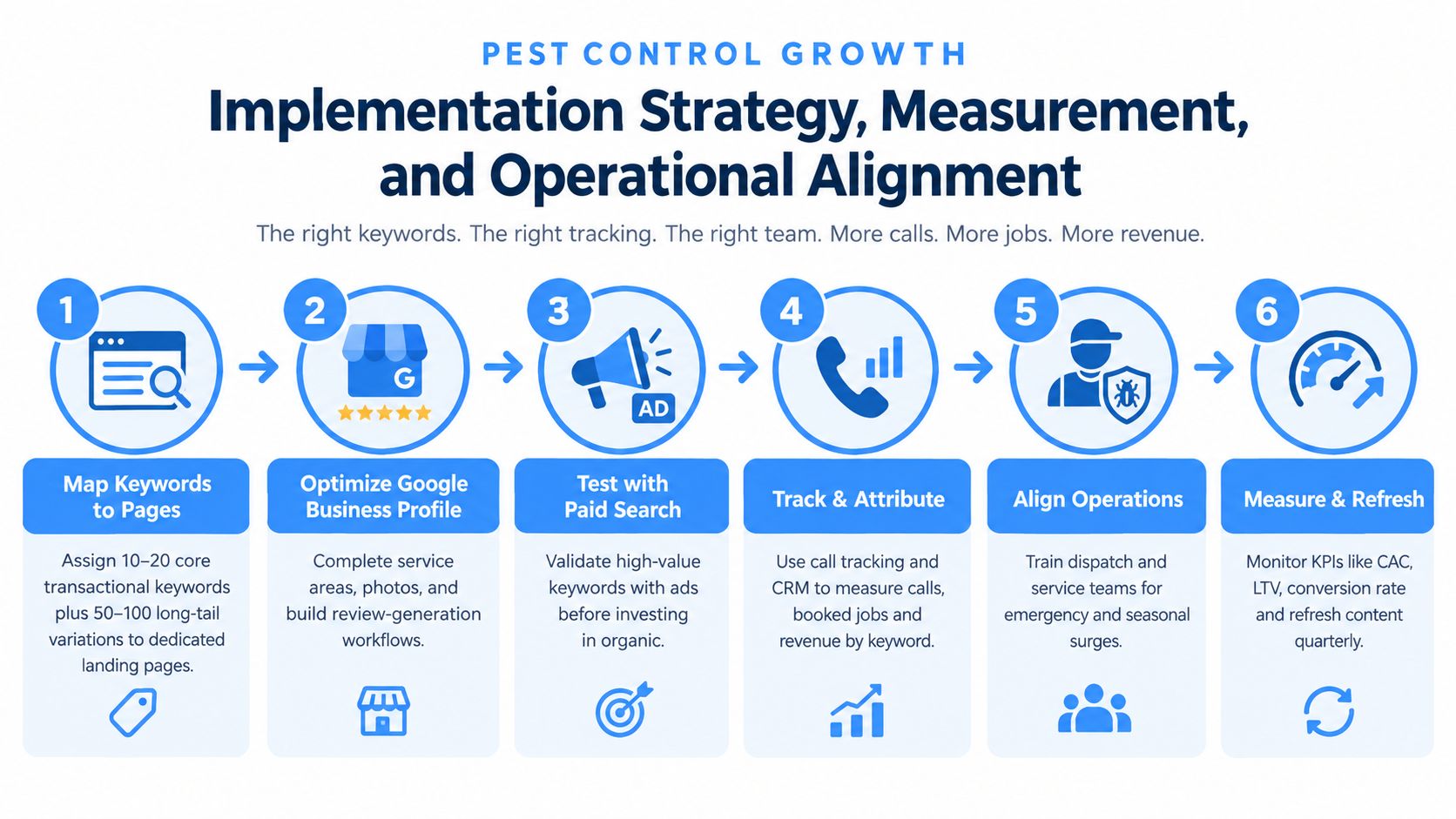
The best implementation treats SEO, AI optimization, Maps, paid search, sales, and dispatch as one system. Rankings create opportunities. Accurate information and fast follow-up create booked work.
9-Point Pest Control Keyword Strategy Comparison
| Keyword Type | Implementation complexity | Resource requirements | Expected outcomes | Ideal use cases | Key advantages |
|---|---|---|---|---|---|
| Transactional Keywords | Medium–High, ongoing optimization and competition | Landing pages, local SEO, GMB optimization, call tracking, monthly maintenance | High conversion to calls and booked jobs (often 30–60 days) | Core service areas where immediate hiring is expected | Highest conversion rates; direct revenue attribution; predictable pipeline |
| Local & "Near Me" Keywords | Medium, requires flawless GMB and citation work | Google Business Profile, local citations, reviews/photos, city landing pages | Increased Map-pack visibility and mobile call volume (top 3 drives most clicks) | Service-area businesses prioritizing local dominance and mobile users | Map-pack prominence, strong mobile conversions, trust from reviews |
| Service-Specific Keywords | Medium, many technical pages and accurate content needed | Expert content, dedicated service pages, schema, testimonials, pricing | Higher conversion for specific treatments and ability to upsell | Companies offering distinct treatment types or premium services | Builds authority, supports pricing justification, faster relevance-based rankings |
| Pest-Specific Keywords | Medium, technical accuracy and identification resources required | Pest pages, identification photos, treatment protocols, pest schema | Very high relevance and sustained organic traffic per pest type | Specialists targeting single pests or building topical authority | Specialist authority; ranks for many related variations; strong content depth |
| Long-Tail Keywords | Low–Medium, research-heavy but easier to implement | Keyword tools, many focused pages/FAQs, analytics tracking | High conversion per query; cumulative traffic from many variants | Voice-search, niche queries, budget-conscious targeting | Easier to rank, lower CPC, high intent and ROI from clusters |
| Emergency & Urgent Keywords | High, must align marketing with real-time operations | 24/7 dispatch, call routing, clear availability messaging, ads, GMB hours | Highest conversion and premium-fee bookings but variable volume | Businesses that can truly deliver same-day or emergency response | Very fast conversions; premium pricing; strong reputation when handled well |
| Seasonal Keywords | Medium, requires advance planning and timing | Seasonal landing pages, paid campaigns, staffing/inventory planning | Concentrated lead spikes during peaks; improved seasonal ROI | Markets with predictable pest cycles (mosquitoes, rodents, wasps) | Predictable demand peaks; promotional and bundling opportunities |
| AI Optimization & LLM Signals | Medium, technical markup and concise factual pages | Schema (Service, OpeningHours, AggregateOffer), updated GBP, FAQ/FAQ schema | Better chance to be cited in AI/LLM summaries and voice results | Businesses seeking AI-driven local visibility and voice referrals | Higher AI citation probability; structured extraction of key facts |
| Implementation Strategy, Measurement & Ops | High, cross-functional systems and governance required | CRM, call tracking, KPI dashboards, review flows, staff training | Improved conversion rates, accurate attribution, scalable operations | Franchises, multi-location operators, or growth-focused businesses | Aligns marketing with operations; measurable ROI; sustainable scaling |
Build a Keyword System That Books Pest Jobs
Pest control SEO works best when the rollout follows buying intent. Begin with transactional phrases and local Map visibility, because “pest control near me,” “termite exterminator [city],” and related searches can connect directly to calls and inspections. Build the Google Business Profile around real services, accurate hours, genuine service areas, strong photos, and a review process the team can maintain.
Next, expand the site architecture around service types and individual pests. Give termite treatment, bed bug heat treatment, rodent exclusion, mosquito spraying, wasp removal, and other meaningful services their own pages when the company provides them. Support those pages with pest-specific explanations, city content, internal links, original proof, and clear conversion paths.
Long-tail and seasonal clusters should follow the core commercial foundation. Use them to answer specific questions about safety, warranties, property types, availability, and treatment methods. Plan seasonal pages before demand rises, then align ad budgets, technician capacity, inventory, and booking workflows with the expected pattern. Benchmark data shows why timing matters, with pest control demand commonly rising from spring into summer and falling materially during winter in temperate climates. (Seasonality and local pest search data)
Emergency terms come later, unless the operation already supports them. Don't advertise same-day, tonight, open now, or 24/7 service without reliable phone coverage, realistic dispatch windows, and transparent pricing. High-intent visibility can expose operational weaknesses just as quickly as it can generate leads.
Assign every important target to a unique destination or action. That may be a location page, service page, pest page, emergency page, Google Business Profile service, or paid campaign. Avoid creating near-duplicate pages that change only the city name. Each page should earn its place by answering local questions, clarifying the service, and helping the customer take the next step.
Measurement should focus on business outcomes. Connect Search Console, analytics, call tracking, and CRM records so the team can see which keyword clusters produce calls, booked jobs, recurring customers, and revenue. A small-business keyword research guide from AutoSEO can support the planning process, but the final choices should come from the company's services, service areas, margins, and capacity.
AI optimization belongs in the same system. Crawled pages, clean technical access, internal links, structured service data, complete profiles, accurate hours, clear pricing information, and consistent contact details give search engines and language models dependable facts to retrieve. AI visibility won't rescue inaccurate business information. It amplifies the signals the company publishes and earns across its digital footprint.
Transactional Marketing's approach centers on transactional search terms, the searches made by people ready to hire a provider. Its local SEO work can combine focused service pages, Google Maps optimization, Google Business Profile setup, content silos, paid campaigns, and reporting that connects rankings with calls and leads. For a pest control company, the practical objective is simple: show up where nearby customers search, make the business easy to understand, and give them a fast, trustworthy path to a booked job.
Transactional LLC helps pest control companies build focused keyword systems, optimize Google Business Profiles and Maps visibility, and create AI-readable service and location content tied to calls and booked jobs. Visit Transactional LLC to discuss a pest control SEO strategy built around your service areas, treatment capacity, and highest-intent searches.