


A well-built HVAC website can convert around 8% to 12% of visitors into leads, while a template site often converts only 2% to 4%. Many HVAC websites look professional but still miss high-intent “near me” searches because they lack the conversion architecture needed to turn urgent visits into calls and booked jobs.
That distinction defines effective HVAC website design. The website isn't merely a brochure for your company, and visual polish alone won't help a homeowner who can't quickly identify your service, confirm that you work in their area, trust your technicians, or contact you from a phone.
Transactional Marketing is built around that commercial reality. A search such as “air conditioning repair near me” signals that the person searching is ready to spend money. The website, service pages, Google Business Profile, and conversion paths should all support that moment instead of sending the visitor through a generic homepage.
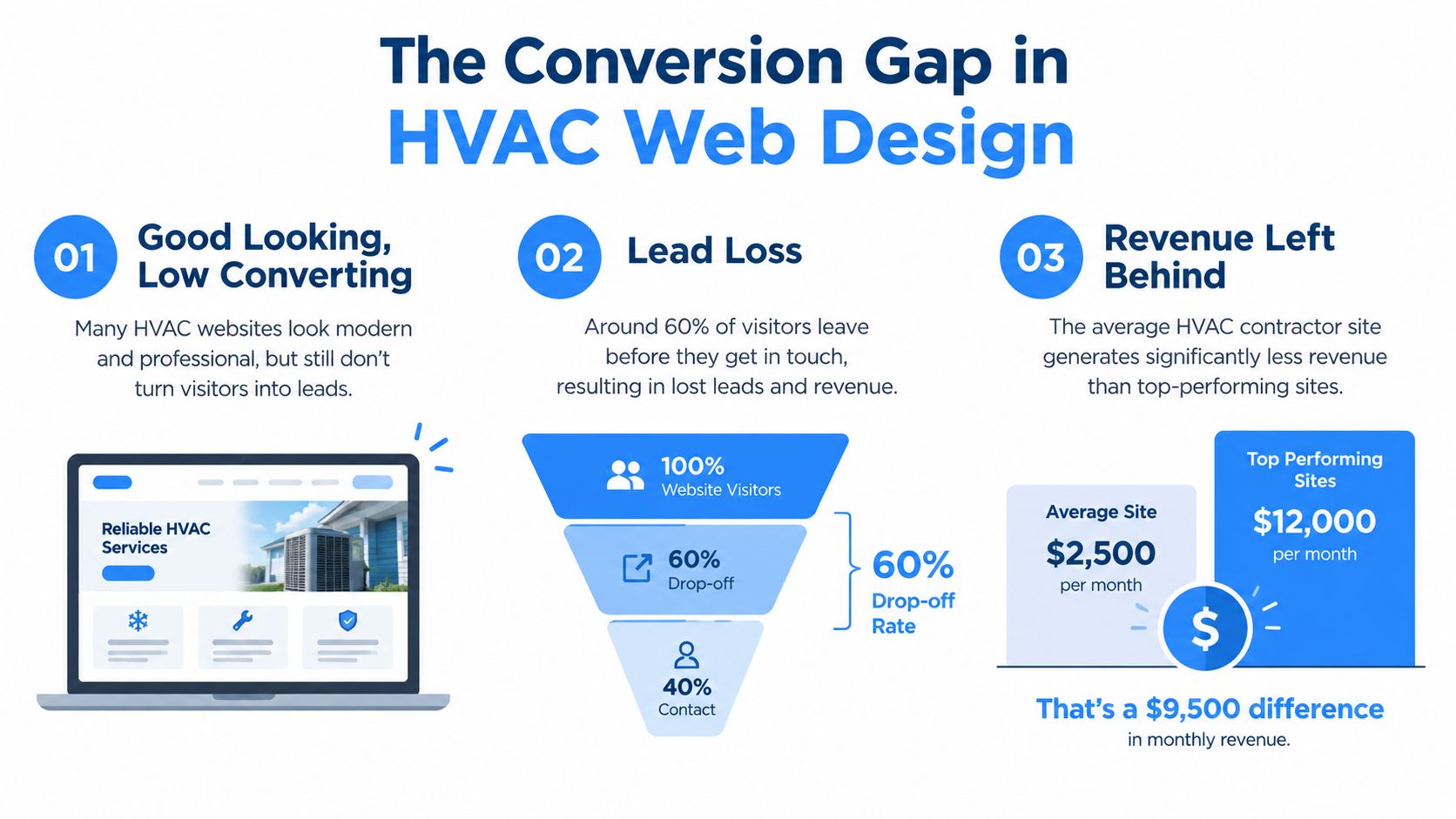
The Conversion Gap in HVAC Web Design
A site converting 2% of visitors produces one-fifth as many leads as one converting 10%, even when both receive the same traffic. That difference affects booked calls and schedule capacity. It usually comes from the site's structure, not its color palette or animation.
Industry benchmarks report that well-built HVAC websites convert around 8% to 12% of visitors into leads, while average or template-based contractor sites often convert around 2% to 4%, as shown in HVAC website design benchmarks. A separate home-services benchmark places HVAC conversion at 6.56%, compared with 9.08% for electricians, 7.63% for plumbers, and 3.70% for roofers. The figures vary by trade and offer, but they reinforce one practical point: a generic contractor template does not address every transactional search equally.
Why appearance isn't enough
HVAC visitors arrive with different levels of urgency. Someone searching for furnace repair may be cold, frustrated, and comparing companies that can respond immediately. A homeowner researching replacement needs evidence of installation experience, financing information, and a clear route to an estimate. A maintenance visitor needs a different offer and next step.
A conversion-focused HVAC site gives each intent a clear path:
- Dedicated service pages: Repair, installation, maintenance, heating, cooling, and air quality should each have a focused destination.
- Visible action paths: Calls, quote requests, booking, and emergency dispatch should remain prominent instead of competing with decorative elements.
- Local proof: Service cities, reviews, credentials, and accurate business information reduce doubt before the visitor contacts the company.
- Useful page hierarchy: Visitors should move from a broad service category to a specific, location-relevant solution without unnecessary clicks.
These choices also support Google Maps visibility. A page that clearly matches a service and location gives visitors a stronger destination after they find the company through local results. It also gives the business a clearer conversion path than a homepage trying to serve every query.
A homepage can introduce the company, but it cannot carry every transactional intent effectively. The guide to improving website conversion rates helps teams assess whether each important page has a defined job, a credible offer, and a measurable next action.
Practical rule: Design each important page around the call or booking it should generate, not the visual element visitors are meant to admire.
Lead generation continues after the form submission or phone call. The business needs a clear intake process, fast response, accurate qualification, and follow-up. Reviewing mastering lead quality and sales process keeps attention on booked revenue, not just inquiry volume.
Mastering Mobile Speed and User Experience
56.1% of people looking for a home service provider use their phones, according to independent home-services research. The same analysis cites Google and SOASTA research showing that 53% of mobile visitors abandon a page that takes longer than 3 seconds to load, while another benchmark reports that each additional second can reduce conversions by roughly 32%. Mobile-first home-services research provides the supporting context. For an HVAC company, those figures connect directly to booked work. A slow page can lose the homeowner before the phone number or booking option appears.
Mobile performance should serve transactional intent. Someone arriving from Google Maps after searching for a nearby HVAC provider needs a page that confirms the service, loads quickly, and makes the next action obvious. A visually polished site that delays that decision has failed its commercial purpose.
Start by designing the first screen around the mobile visitor. The company category, service area, primary benefit, and direct action should appear without pinching, zooming, or dismissing an intrusive pop-up. Compress the hero image with modern formats and appropriate dimensions, and choose an image that supports the service rather than consuming the available screen. Reduce script weight by removing sliders, unnecessary animation libraries, and third-party widgets that do not contribute to calls, bookings, or measurement.
Make the phone number actionable with a persistent click-to-call control that remains easy to reach without covering the content. Simplify forms by requesting only the details the team needs to respond, then display a useful confirmation state after submission. These decisions reduce hesitation for visitors who need emergency repair, replacement, or maintenance.
Performance work also requires measurement. Test the largest contentful paint against the industry target of Largest Contentful Paint under 2.5 seconds for a good experience, as explained in home-service website performance guidance. Use caching and lean code to improve first paint and reduce layout shifts, especially for visitors using inconsistent mobile connections.
Review the complete path on an actual phone. Open a service page, tap the phone number, submit the form, inspect the confirmation message, and verify that the lead reaches the right person. A page can score well in a technical audit while losing jobs through a hidden call control, unclear form feedback, or a broken handoff.
A documented UX design process steps can connect research, structure, prototyping, testing, and implementation. Teams should also apply a mobile-optimized website approach across phones and tablets, rather than just resizing a desktop page. The standard is practical: a visitor from search or Google Maps should understand the next step immediately and be able to take it without friction.
Structuring for Transactional Search Intent
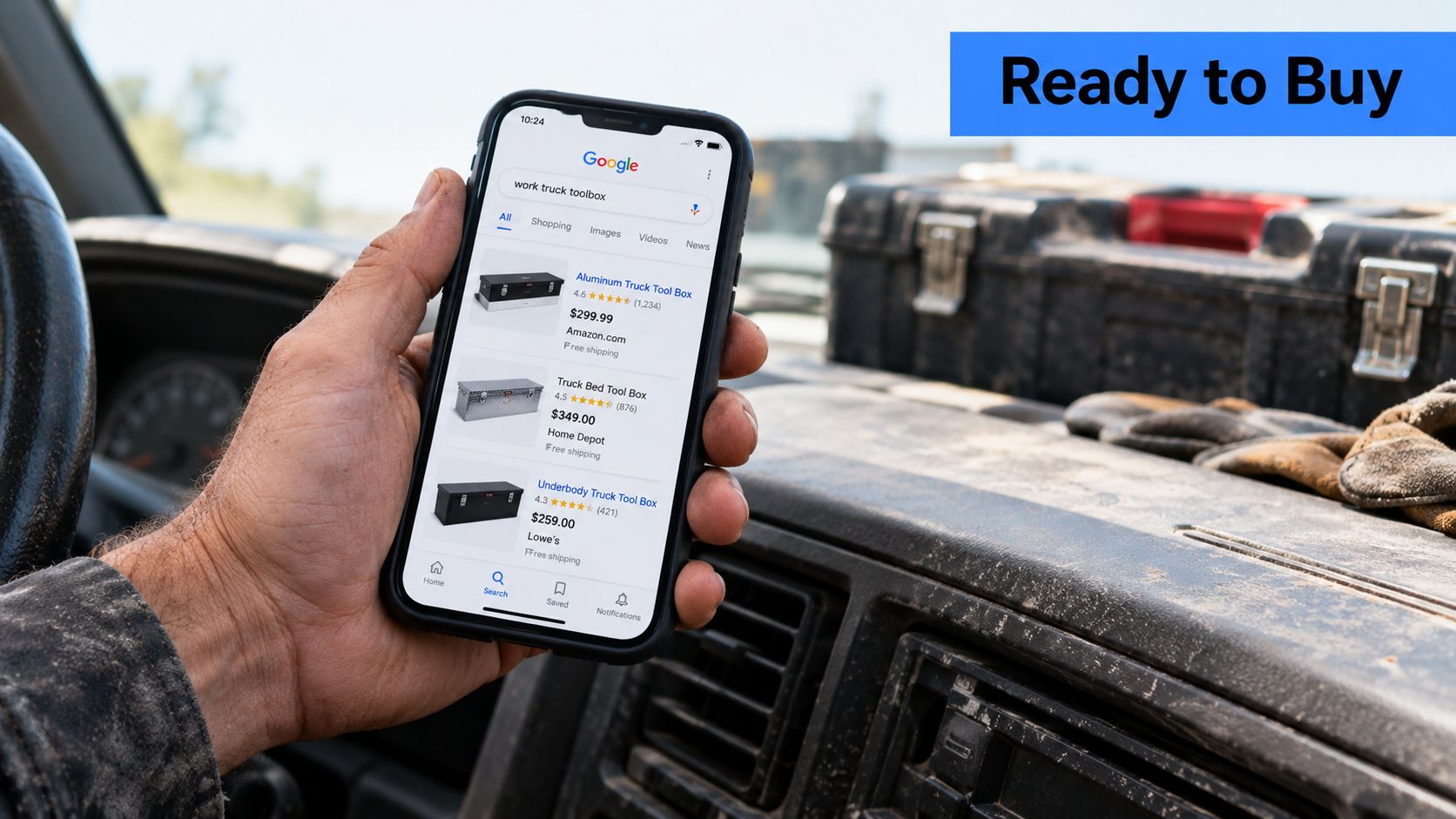
Searches such as “air conditioning repair near me,” emergency furnace repair, AC replacement estimate, HVAC maintenance near me, and heat pump installation in a specific city show a customer choosing a provider, location, and next action. Transactional marketing serves that intent directly. The page must help the visitor call, request an estimate, or book service, while giving Google clear signals for organic results and Google Maps visibility.
A single “HVAC services” page makes users and search engines sort through unrelated options. Build separate, crawlable pages for each service and priority location. Each page can match the language customers use, explain the work involved, and lead to one clear conversion path.
A practical structure might include:
- Cooling: Air conditioning repair, installation, replacement, and seasonal maintenance.
- Heating: Furnace repair, heating installation, boiler service, and heat pump solutions.
- Air quality: Filtration, duct services, humidification, and ventilation.
- Maintenance: Memberships, tune-ups, inspections, and preventive service.
- Locations: Dedicated pages for the cities and communities the company serves.
The hierarchy should reflect how customers search and how Google connects services with places. A city page can link to AC repair, furnace service, and maintenance pages for that market. Keep each page useful on its own, rather than creating thin location pages that repeat the same copy.
Every destination needs semantic headings, descriptive links, readable contrast, labeled forms, and useful error states. Accurate business profile information, metadata, canonical URLs, and sitemaps support crawling and local search. The guidance on HVAC website architecture and accessibility covers these structural requirements in more detail.
Internal links should make the next choice obvious. A cooling overview can lead to AC repair in a particular city, then to the booking path. A maintenance page can explain the plan and connect to relevant service-area pages.
The name Transactional Marketing reflects the goal: attract searches from customers seeking a provider now, not broad informational visits that produce no call. Strong HVAC websites give each high-intent query a relevant destination and a direct route to contact the business.
Designing for Trust and Speed-to-Lead
A homeowner who clicks through from Google Maps after searching for HVAC help is evaluating risk as much as service. They need evidence that the company is legitimate, qualified, insured, and ready to respond. Trust architecture places that proof beside the next action, while speed-to-lead gives the visitor a way to contact the business before choosing another provider.
Useful proof includes the license number, insurance information, BBB presence, years in business, current reviews, service guarantees, and recognizable manufacturer credentials when they apply. Do not hide these details on an About page. An emergency repair page can place a concise trust strip near the primary phone action. A replacement page can give more room to installation experience, financing, warranties, and customer feedback.
Recent independent summaries report that trust signals such as license information, insurance, BBB, and years in business outperform aesthetic design by 3.2x. The same summaries report that AI receptionists on leading HVAC sites capture 40% to 60% of after-hours calls that might otherwise reach voicemail. The figures appear in HVAC trust and speed-to-lead coverage. Treat them as directional benchmarks, not a guarantee that adding a badge will produce the same result.
Match proof to the visitor's concern
Trust elements should answer the objection behind the search.
| Visitor intent | Useful proof | Appropriate action |
|---|---|---|
| Emergency repair | Availability, response process, license details, recent local reviews | Call now or request dispatch |
| System replacement | Installation experience, financing information, warranties, product guidance | Request an estimate |
| Maintenance | Plan inclusions, scheduling flexibility, service terms, customer reviews | Join or book maintenance |
| Indoor air quality | Relevant certifications, diagnostic process, equipment explanation | Schedule an assessment |
Speed-to-lead includes more than displaying a phone number. Add text messaging, online scheduling, a short callback form, and routing rules that send urgent requests to the right team. An AI receptionist can ask whether the visitor needs repair, replacement, or maintenance, identify urgency, and route the conversation toward booking or dispatch. It should not claim to diagnose a dangerous problem or replace a qualified technician.
A visitor arriving from a high-intent Google Maps result should reach a page that confirms the business details, supports the promised service, and offers an immediate contact option. That connection between local discovery and a fast response is where design affects booked work, not merely visual appeal.
A trustworthy website doesn't force visitors to believe a claim. It gives them enough verifiable evidence to make the next decision confidently.
The trade-off is control versus convenience. A long form may collect more details, but it can reduce urgent submissions. A short form may generate more inquiries, while requiring the office team to qualify them quickly. Choose based on service type and operational capacity. Measure completed calls, qualified requests, booked appointments, and missed contacts, rather than form volume alone.
From General Pages to Local Service Landing Pages
A homepage introduces the company, summarizes its services, and helps visitors reach the rest of the site. It cannot answer every local, service-specific question. A page titled “Air Conditioning Repair in Mesa” can address one service, one location, one customer problem, and one next action without making the visitor search through general information.
Dedicated service pages often outperform broad homepages because they match transactional searches more closely. A visitor searching for air conditioning repair in a specific city has already revealed the service and location they need. The page should confirm that match immediately, explain what happens next, and make calling or booking easy.
Build a useful destination for each service area
A local page needs a clear purpose and evidence that the business serves the stated market. Include:
- A location-specific headline: State the service and city plainly rather than relying on a vague slogan.
- A local service explanation: Describe the repair, installation, or maintenance need in terms that fit the area and customer situation.
- A clear coverage statement: Explain whether the company serves the city, nearby neighborhoods, or selected ZIP codes.
- Proof from the market: Use legitimate reviews, technician details, credentials, and service information connected to the business.
- A direct conversion path: Offer a phone action, quote request, or appointment option suited to the visitor's intent.
ZIP-code routing can direct visitors to the appropriate branch, service area, or booking workflow. It can also expose a common local SEO problem: a company lists many cities but provides no useful information for residents of those places. Each page should answer a genuine local need and connect to the relevant service category through internal links.
Use the service landing page framework to assess whether a page offers enough distinct value to stand alone. Changing only the city name creates thin content. Add accurate coverage details, meaningful service information, local proof, and a specific next step. If those elements cannot be provided, consolidate the material into a stronger regional page.
Google Maps visibility depends on the same accuracy. A location-relevant website can support the wider local presence, but it does not replace accurate Business Profile data or a legitimate service footprint. The page should clarify where the company works, reinforce the service shown in Maps, and never imply an office that does not exist. That consistency helps turn local discovery into a phone call or booked job.
Advanced Conversion Features and Automation
HVAC visitors arrive with different problems and different levels of urgency. A homeowner without heat needs a fast route to a phone call. Someone comparing replacement systems may want a quote flow, financing information, and options to compare. A maintenance customer may prefer online scheduling and clear plan details. The design should match the action each visitor is ready to take.
Reported industry benchmarks suggest that instant quote tools can convert 2 to 3x better than sites without them. Emergency-intent pages have also been reported to convert at 10% to 15%, compared with 2% to 4% for average HVAC sites. These figures come from HVAC website conversion strategy coverage, which presents category benchmarks rather than guaranteed results for every contractor.
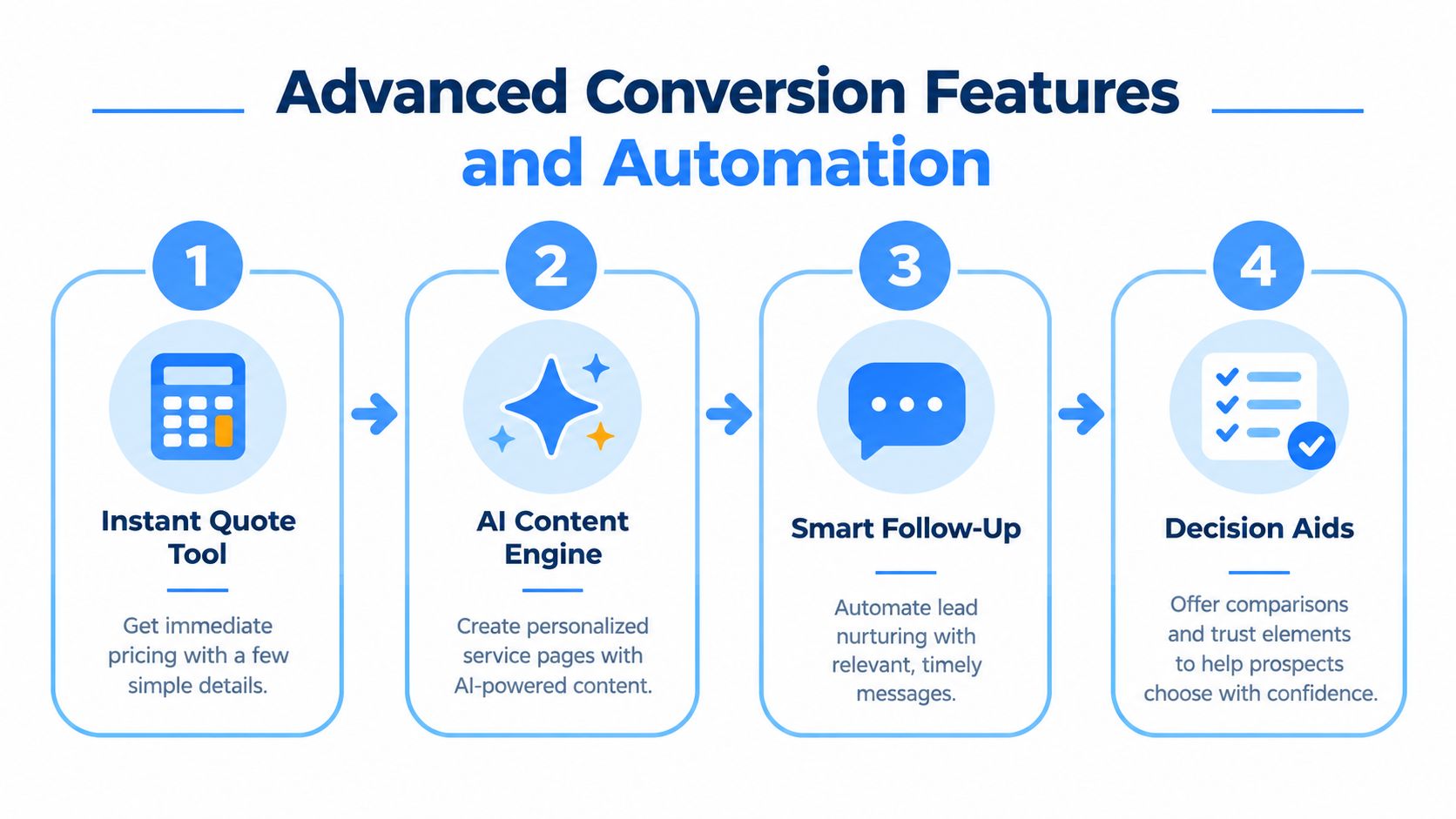
An instant quote flow can collect the system type, property size, service need, ZIP code, and project timing. It can then show an estimate range or request technician review. The interface must explain what happens next, because a preliminary figure is not a diagnosis or a final installation proposal.
AI chat agents can qualify another layer of demand. They can sort an emergency repair request from replacement research or maintenance planning, then send the visitor to a call, booking form, or relevant service page. Follow-up automation can confirm receipt, provide preparation instructions, and alert staff when a lead requires immediate attention.
The handoff matters. A useful automation setup gives Instant quote tools a role in reducing uncertainty for replacement shoppers, while AI-assisted conversations identify urgency and intent. Smart follow-up keeps valid inquiries from disappearing after submission. Decision aids explain options, proof, and next steps without forcing the visitor through a long sales process.
An AI content engine can support the page architecture behind these tools by planning distinct service and location pages. Technicians or managers should review every publication for factual accuracy, unsupported promises, and service details. Automation should expand useful coverage, not fill a site with interchangeable pages that weaken trust.
These features work after pages load quickly and service information is clear. Used properly, they help an HVAC company capture transactional searches, route qualified visitors, and generate more calls or booked jobs without requiring staff to answer every inquiry immediately.
Integrating SEO and Maps Optimization
Web design, search optimization, and Google Maps performance should operate as one system. The website explains services, locations, and next steps. The Google Business Profile confirms the company's identity and service coverage. Reviews, citations, relevant landing pages, and clear conversion paths support the trust a local customer needs before calling.
Google's local pack is shaped by relevance, distance, and prominence. Local-search guidance also identifies the primary business category and profile completeness as factors that affect eligibility for map visibility. Google local pack optimization guidance explains how these factors relate to local results.
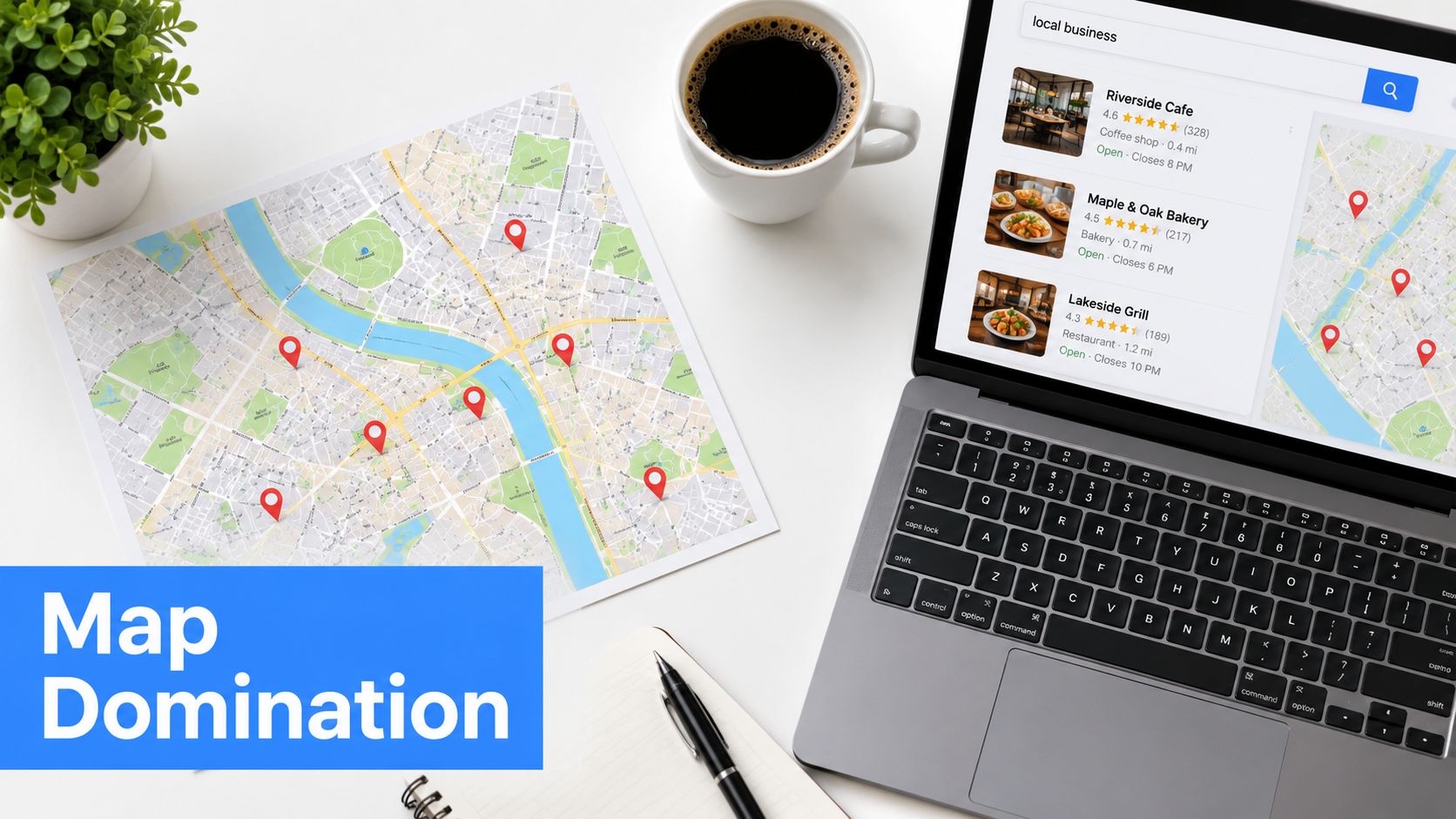
A page targeting “air conditioning repair near me” cannot change distance, but it can strengthen relevance by explaining the repair, the problems addressed, the areas served, and the action available. The profile can support prominence through accurate business details, legitimate reviews, and consistent citations. Service-area accuracy still matters. A website cannot create sustainable local visibility for an irrelevant or inaccurate location.
Transactional Marketing focuses on searches from people ready to act. Its HVAC-specific SEO work can combine service landing pages, conversion-focused copy, Google Maps optimization, and an AI-driven content process that organizes pages around service cities and high-intent queries. The website remains the destination for that visibility. A ranking that leads to a vague or unhelpful page creates a poor customer experience.
Measure results by service and city, not traffic alone. Track which queries produce calls, which pages attract qualified visits, how the business appears in target map areas, and whether visitors complete forms or book jobs. These measures show whether the design is capturing transactional demand or only generating low-value impressions.
The following video provides another visual perspective on connecting search visibility, web experience, and local conversion paths.
A high-performing HVAC website functions as a sales and service asset. It loads quickly, explains the requested service, demonstrates credibility, matches local intent, and makes the phone call or booking action obvious.
Transactional LLC builds HVAC-focused websites, service landing pages, SEO systems, and Google Maps optimization around searches such as “air conditioning repair near me.” Visit Transactional LLC to discuss a conversion-focused plan for your service areas and booked-job goals.