

An HVAC owner compares two vendors by price per lead, signs up, and soon discovers that the cheapest inquiries are shared with several competitors. The phone rings, but many callers are shopping around, outside the service area, or asking for work the team can't schedule. The lead price looked attractive. The booked-job cost doesn't.
That distinction drives this list of the best HVAC lead generation companies. Each provider is judged through three filters: lead model, including shared leads, exclusive calls, live transfers, or owned search visibility; contract and pricing terms, including credits, refunds, bidding, and quote-based plans; and depth of HVAC experience. Several companies don't publish pricing and require a quote.
The right choice depends on your service area, schedule capacity, response speed, and close rate. A marketplace can fill an empty dispatch board quickly. A local SEO program can build visibility for transactional searches such as air conditioning repair near me, where the homeowner is looking for a provider now. The seven options below aren't interchangeable, and none should be judged by advertised lead price alone.
1. Angi Leads formerly HomeAdvisor and Angi Ads
Angi Leads is a large U.S. home-services marketplace that sells access to homeowners requesting HVAC work. Contractors can target categories and ZIP codes, adjust lead flow, and add profile, review, or advertising options. That structure makes Angi useful when you need volume quickly, especially if your team has open capacity and can respond to several inquiries in a short window.
The trade-off is competition. Many leads are shared with multiple professionals, so the contractor who calls first and qualifies efficiently often has the advantage. A low inquiry price can still become expensive when dispatchers spend time on duplicate requests, distant jobs, or homeowners comparing several estimates.
Angi doesn't publish a universal HVAC rate card. Pricing and lead quality vary by market, service category, and demand. Read the lead-credit and cancellation terms before turning on a large flow, then set a small test budget that reflects your actual capacity.
Angi Leads for professionals suits contractors who want adjustable marketplace demand rather than an owned search asset. It can fill schedule gaps, but it won't give you control over the homeowner relationship before the inquiry enters the platform.
Practical rule: Track qualified calls and booked appointments separately from purchased inquiries. A shared lead is only useful if your team can turn it into profitable work.
For contractors comparing this model with other acquisition channels, pay-per-lead marketing for service businesses explains why the number of inquiries isn't the same as the number of jobs.
2. Modernize Home Services
Modernize Home Services takes a broader approach than a basic form marketplace. Its HVAC programs can include shared form leads, live transfers, and inbound calls. That matters because a live conversation gives the contractor a better chance to qualify the request while the homeowner is actively seeking help.
The platform also uses feedback from set and close rates to refine delivery. In practice, that means your CRM discipline matters. If your team marks every inquiry as successful, fails to record cancellations, or doesn't distinguish replacement opportunities from repair calls, the optimization signals become less useful.
Modernize is a stronger fit for established HVAC companies with trained call handlers and enough capacity to respond immediately. It offers broad homeowner reach and HVAC-specific intake, but many programs still involve shared leads. Branded or potentially exclusive programs may improve control, though the exact availability and terms depend on the market and service.
Where Modernize earns its place
The useful feature is the combination of lead types. A contractor can compare form inquiries with transfers and inbound calls instead of treating every contact as equivalent. Modernize also provides Connect tools intended to support faster outreach workflows.
The downside is evaluation friction. Modernize doesn't publish a standard rate card, so pricing varies by market and service and requires a sales conversation. Ask whether the quote covers shared delivery, exclusive delivery, transfers, or a mixture.
Modernize's HVAC lead program is best tested with separate tracking for repair, maintenance, replacement, and installation. That separation shows whether the platform is supplying the jobs your technicians can actually serve.
The same principle applies when comparing home-service lead-generation companies. A platform's reach matters less than the quality of calls your dispatch team can book.
3. Networx
Networx gives contractors several ways to buy demand, including shared leads, exclusive leads, and live transfers in some situations. Category and ZIP controls help define the service area, while lead-credit policies and support give contractors a framework for disputing contacts that don't meet the program's requirements.
Its flexibility is the main attraction. You can begin with shared leads to understand local demand, then test exclusive delivery when your close rate justifies the higher cost. Some published pricing ranges provide directional expectations, but per-lead costs still vary widely by market and category. Treat any range as a planning reference, not a promise.
Networx can work well for teams that have a fast speed-to-lead process. Shared inquiries create competition, and contractor experiences are mixed, so the platform needs a controlled test rather than an open-ended budget. Record the lead source, first-response time, qualification result, booked status, and final revenue in your CRM.
The right Networx test
Start with one service area and one job type. Repair, replacement, and maintenance calls should not sit in one blended report because each has a different ticket, urgency, and close process.
Ask Networx how live verification works during your operating hours, when credits apply, and whether exclusive leads are exclusive by territory, service category, or individual request. Those details can materially change the economics.
Networx for contractors is a practical option for a contractor willing to pay for a controlled comparison between shared and exclusive demand. It isn't a substitute for owning visibility in Google Search and Maps.
For the owned-search side of the decision, local SEO for contractors covers the systems that help a business build its own service-area presence rather than renting access to marketplace inquiries.
4. Thumbtack for Pros
Thumbtack uses a pay-per-contact model. Homeowners find a professional profile and contact the contractor, while the contractor controls budgets, categories, and service areas. That setup can be useful for smaller HVAC projects, maintenance-related work, and add-on services where a team can quote quickly.
Thumbtack's economics depend heavily on profile quality and response speed. Reviews, service descriptions, photos, availability, and clear coverage information help homeowners decide whether to respond. A slow reply can waste the contact because the homeowner may continue comparing providers.
Pricing is dynamic and unpublished. Cost per contact changes by market and job type, and contractors report mixed lead quality. That makes seasonal throttling important. Increase or reduce spend based on booked work, not on the number of contacts generated.
A good fit for flexible capacity
Thumbtack is easier to test than a long-term SEO engagement because you can control the budget and service area. It may fit a smaller shop that wants incremental demand without committing every marketing dollar to one channel.
It becomes less attractive when your team receives contacts for low-value work, distant jobs, or requests outside technician availability. Define the service radius before spending, and use the platform's category controls to avoid paying for work you don't want.
Thumbtack for Pros is a marketplace channel, not an owned asset. Contractors should pair it with a profile and landing-page strategy that makes the next step obvious.
For a separate paid local channel, Google Local Services Ads for home services explains why booked-job economics matter more than a nominal cost per contact.
5. Porch for Pros
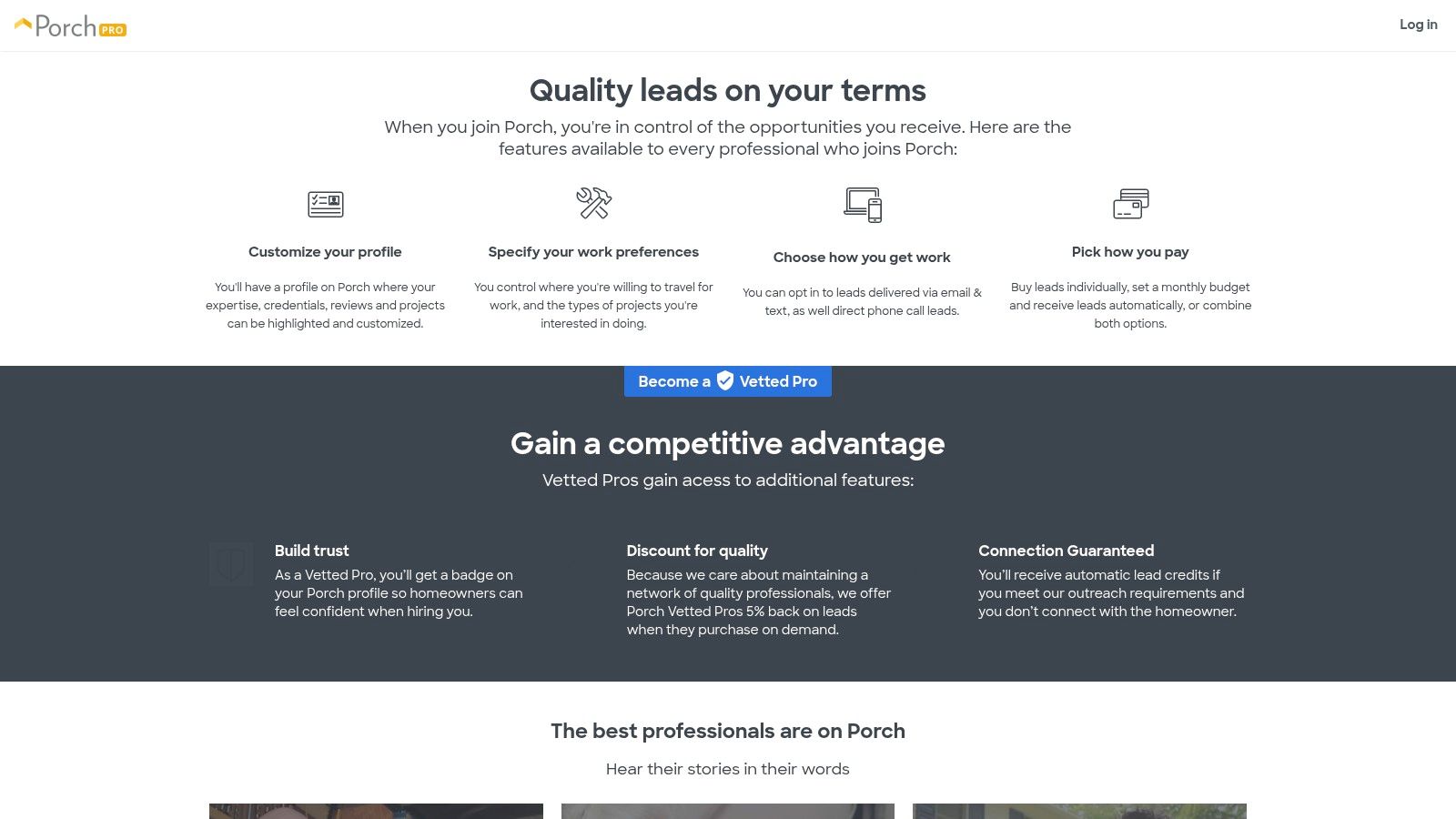
Porch for Pros adds another marketplace source for contractors that want to test incremental HVAC demand. Contractors can set service areas and categories, manage on-demand purchases, and use travel-radius controls. The platform also provides lead-credit and refund policies, which gives the contractor specific rules to review before launch.
The Porch Vetted Pro badge may help a contractor build trust within the platform. Vetted pros can also receive an incentive on some on-demand leads, subject to the program's terms. That benefit shouldn't be confused with lead exclusivity. Porch remains primarily a marketplace environment, and shared-lead dynamics can reduce close rates.
Use Porch as a secondary channel
Porch makes more sense as a controlled supplement than as the only lead source. It can help test coverage in a market where other marketplaces are saturated, but variable lead quality means your dispatch team needs a clear qualification process.
Set a travel radius that reflects actual technician economics. A contact outside a profitable service area isn't a good lead just because it arrives through a reputable platform. Also separate emergency repair requests from estimates and planned replacement work when evaluating results.
Porch for Pros doesn't publish a universal HVAC rate card. Per-lead pricing varies by market and service type, so request the current terms for your target locations and categories.
6. Service Direct
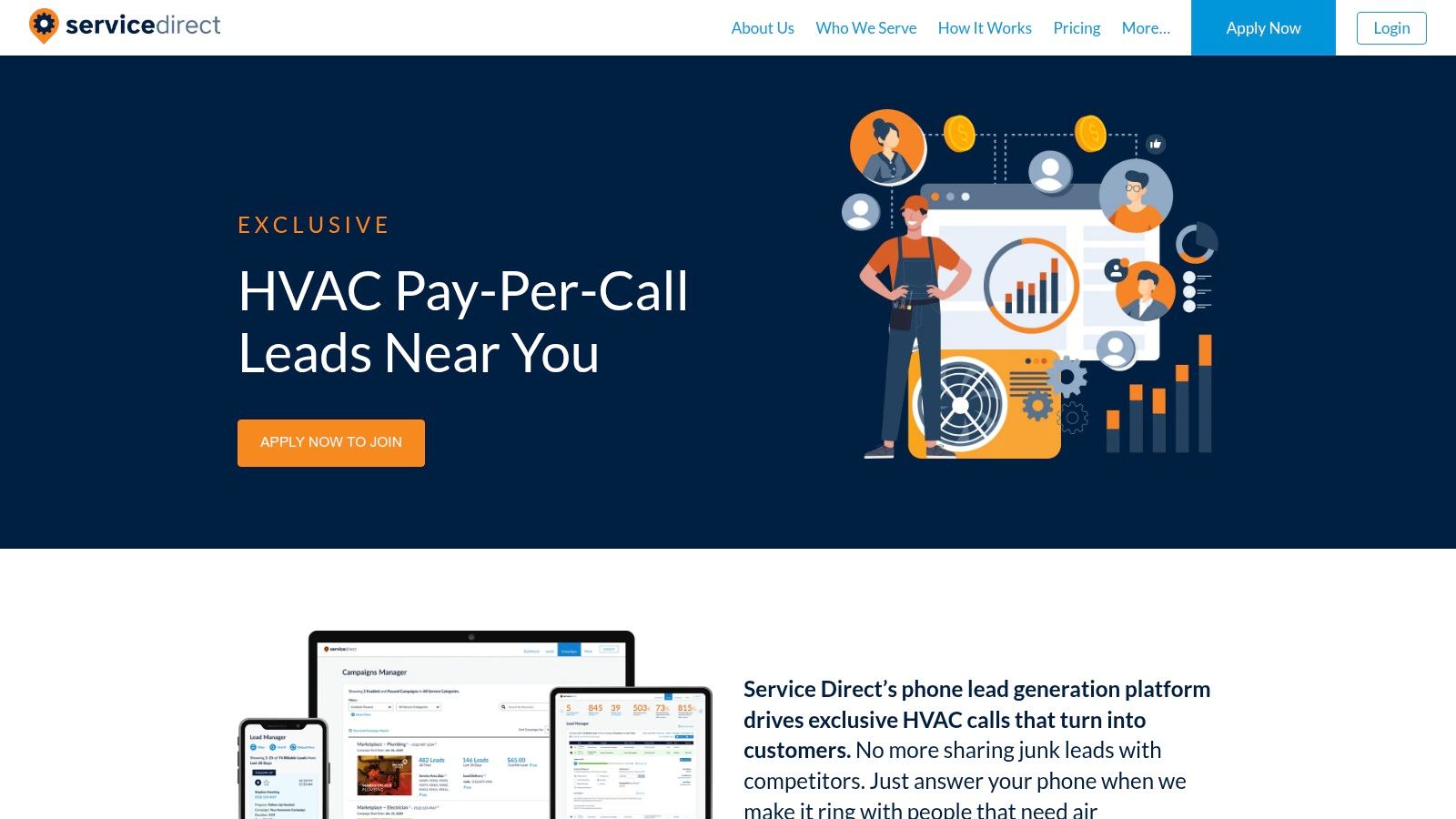
Service Direct focuses on exclusive inbound phone calls. You define the geographic areas and service categories, set a target cost per qualified call, and pay for billable calls that meet your criteria. That model is different from a shared form lead because the call routes directly to your number and isn't sold to several HVAC contractors at once.
Exclusivity usually improves the operating experience. Your dispatcher isn't competing with three other companies for the same homeowner, and call recordings give managers material for quality assurance, coaching, and dispute review. Service Direct also provides reporting through its campaign dashboard.
The trade-off is price and volume. High-intent HVAC calls can cost more than shared inquiries, while call volume varies with seasonality, geography, bid strength, and demand. A contractor with poor phone handling can still lose money on exclusive calls, so recordings should be reviewed regularly.
What to ask before launch
Confirm the definition of a billable call. Ask about duration, duplicate calls, wrong numbers, out-of-area requests, missed calls, and refund procedures. Make sure the service category matches the work your technicians are prepared to accept.
Then connect the call record to your CRM. Mark each call as qualified, booked, completed, sold, or lost. Without that closed-loop process, you may optimize for call volume while missing the cost of cancellations and unclosed estimates.
Service Direct's HVAC lead program fits contractors who prefer exclusive phone opportunities over shared form inquiries. It works best when the business answers promptly, has clear service-area rules, and can convert qualified calls into scheduled work.
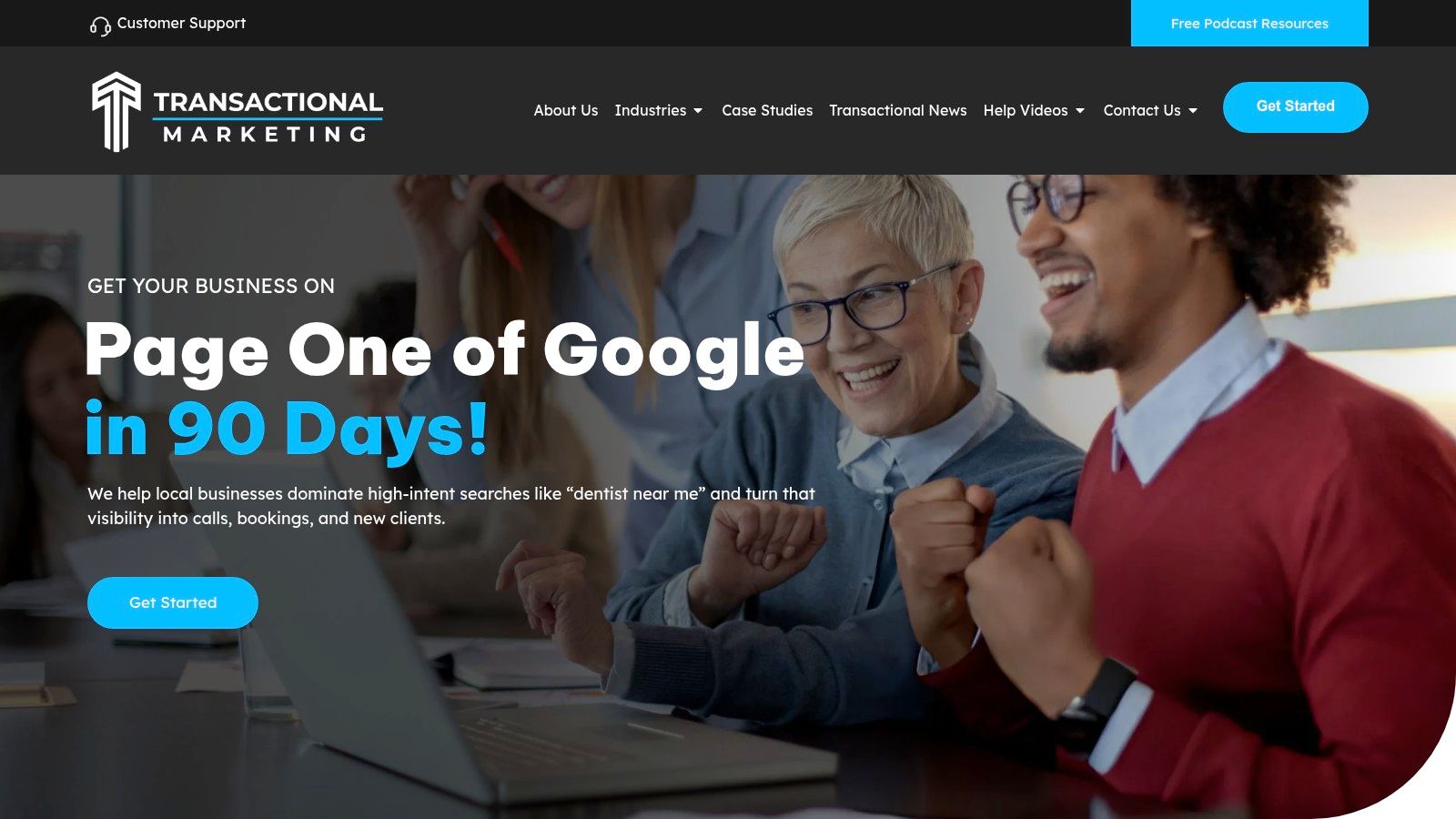
7. Transactional LLC
Transactional LLC takes a different route from the marketplaces above. It builds owned local search visibility for service businesses, combining Google Maps and Google Business Profile optimization with conversion-focused websites, service-city pages, and an AI-driven content engine. The target isn't a rented inquiry. It's visibility for transactional searches such as air conditioning repair near me, furnace repair, and other service-plus-location terms that signal immediate commercial intent.
The company focuses on Google Maps, where accurate business information, service relevance, geographic proximity, and prominence influence local visibility. Google identifies relevance, distance, and prominence as primary local ranking factors in its Business Profile guidance. Transactional's work should therefore connect the website, Business Profile, service areas, phone number, hours, and conversion actions into one consistent local entity.
The process includes content silos that answer repair, maintenance, efficiency, diagnostic, cost, and replacement questions. That matters as AI-assisted discovery changes how homeowners research providers. A 2026 home-services survey reported that 83% of homeowners begin their search online, while 22% use AI tools such as ChatGPT for research or recommendations. The survey covered 2,000 U.S. homeowners and 944 home-services operators, marketers, and executives, according to the published HVAC and home-services report.
What the reporting should prove
Transactional LLC provides dashboards with keyword timelines by service city, map-ranking heat maps, Search Console queries, traffic, and call tracking. Biweekly reporting helps a contractor connect visibility with actual inquiries instead of relying only on impressions or generic traffic totals.
The company also develops industry-specific collaboration networks that help similar businesses promote one another. Its broader services include web development, website management, and paid advertising, so an HVAC company can combine owned organic visibility with immediate paid demand when needed.
Transactional LLC was founded by multi-location service entrepreneur Dave Kaminski. The company presents a contract-free model and offers a free demo, but pricing isn't published and requires a custom quote. SEO is a medium- to long-term investment, so this option fits contractors prepared to invest in their website, service-area content, tracking, and conversion process.
Measure the job, not the ranking: A map position matters because it can generate a call. The useful report connects the search term and service city to a qualified inquiry, booked appointment, completed work, and collected revenue.
Top 7 HVAC Lead Generation Companies Comparison
| Provider | Implementation complexity | Resource requirements | Expected outcomes | Ideal use cases | Key advantages |
|---|---|---|---|---|---|
| Angi Leads (formerly HomeAdvisor/Angi Ads) | Low, quick marketplace onboarding | Budget for pay-per-lead; staff to handle high lead volume and filter settings | High lead volume; variable lead quality and competition | Businesses that can work shared leads at scale and fill schedule gaps | Very large consumer reach; ZIP/category targeting; add-on marketing |
| Modernize Home Services | Moderate, setup for live transfers and closed‑loop tracking | Fast follow-up, CRM/process integration, budget for varied lead products | High-intent inquiries; optimization improves delivery over time | Established contractors able to handle live transfers and rapid response | Live transfers/inbound calls; closed‑loop optimization; HVAC-focused intake |
| Networx | Low–moderate, straightforward marketplace with options | Team able to test shared vs exclusive plans and act quickly on leads | Steady geographic coverage; variable per-lead ROI by market | Teams testing exclusive upgrades or switching lead types | Shared/exclusive options; published cost ranges for direction |
| Thumbtack (for Pros) | Low, profile-based setup | Ongoing profile/review management; quick quoting; flexible budget control | Real-time contacts for local jobs; quality varies by market | Local projects and add-on HVAC services where speed and reputation matter | Pay-per-contact flexibility; easy budget control; large consumer footprint |
| Porch (Porch for Pros) | Low, on-demand lead purchasing | Manage on-demand purchases and travel-radius settings; test spend | Incremental leads in saturated areas; variable quality | Secondary channel for incremental HVAC demand and testing | Vetted-pro badge; clear portal; on-demand controls and refund rules |
| Service Direct | Moderate, bid and call-criteria configuration | Willingness to bid for calls; QA review of recordings; campaign monitoring | Exclusive inbound calls with higher contact and conversion potential | Contractors preferring phone leads and exclusivity over shared forms | Exclusive calls; call recordings and reporting; bid control for target cost-per-call |
| Transactional LLC | Moderate–high, strategic SEO and ongoing content program | Website, long-term budget, collaboration, and time for SEO to compound | Sustainable organic visibility and bookings; measurable, compounding leads | Businesses seeking long-term local-pack/map visibility and scalable organic growth | Google Maps/GMB specialization; AI-driven content silos; transparent dashboards; contract-free model |
Matching a Lead Source to Your Schedule and Close Rate
Start with the data you already own. Audit the close rate on shared leads you've purchased, separating valid HVAC requests from duplicates, wrong numbers, out-of-area calls, unbooked estimates, and jobs your team couldn't accept. If shared leads produce weak economics, buying more of them won't fix the underlying problem.
Next, test one exclusive channel with a capped budget. Service Direct offers exclusive inbound calls, while Modernize and Networx may provide live-transfer or exclusive options depending on the program and market. Give the test a clear service area and job type, then measure cost per booked job over 30 days, not cost per lead.
Your tracking should include:
- Lead source: Record whether the inquiry came from a marketplace, live transfer, call campaign, Google Maps, organic search, paid search, referral, or repeat visit.
- Qualification status: Mark the request as serviceable, qualified, booked, completed, sold, cancelled, or lost.
- Job economics: Connect marketing cost with dispatch cost, discounts, financing, cancellations, unclosed estimates, and gross profit.
- Service type: Separate emergency repair, maintenance, replacement, installation, and commercial work because each follows a different sales process.
Add an owned channel for transactional searches such as air conditioning repair near me and for Google Maps visibility in every service area. Marketplace leads aren't owned by your business. Your website, verified Business Profile, service pages, reviews, call tracking, and customer data give you a more durable acquisition asset.
Before signing with any vendor, request written terms covering pricing, lead credits, refunds, cancellation rules, billable-call definitions, service-area exclusions, duplicate handling, and contract length. Several providers in this comparison don't publish pricing, so the sales quote must be specific enough for your team to model booked-job cost.
Transactional LLC is a fit for businesses that want their own local search visibility rather than relying only on shared marketplace demand. Angi, Modernize, Networx, Thumbtack, Porch, and Service Direct can all have a role, but the right mix depends on technician capacity, response speed, close rate, and margin.
The U.S. HVAC contracting market grew from $90.3 billion in 2018 to a projected $123.2 billion in 2023, while establishments increased from 119,635 to an estimated 146,075, according to FMI's market outlook. That larger contractor base makes measurable acquisition more important. The provider that generates the most inquiries isn't automatically the best choice. The better partner is the one that helps you understand which channel produces profitable, completed work in the areas you can serve.
Transactional LLC combines Google Maps optimization, Google Business Profile work, AI-driven content silos, conversion-focused websites, and call tracking for HVAC contractors targeting transactional searches. Visit Transactional LLC to request a free demo and discuss a contract-free local search strategy for your service areas.