


Your phone rings. Someone needs service now. They're ready to book, ask about availability, or compare one last quote before choosing a company.
But if you can't tell whether that call came from Google Ads, Google Maps, organic SEO, a truck wrap, or a referral site, you're guessing. And guessing is expensive.
For local service businesses, phone calls are where revenue happens. That's especially true when you're targeting transactional search terms like “roofer near me,” “dentist near me,” or “air conditioning repair near me.” Those are the searches that matter because the person typing them usually isn't browsing for fun. They're trying to hire someone. If your marketing is built to win those searches, call tracking stops being a nice add-on and becomes part of how you prove your SEO, Maps, and ad spend are producing customers.
Why Every Call Is a Transactional Data Point
Most service businesses know their phones matter. Fewer know how to track phone calls in a way that ties each call back to the exact search, page, ad, or campaign that created it.
That gap creates a real problem. You can rank well, run ads, show up in Google Business Profile, and still have no clean way to connect the marketing activity to booked jobs or new patients. You just see calls coming in and hope the money is being spent in the right places.

Transactional searches create the calls that matter
A transactional search term is simple. It's a query like “plumber near me,” “dentist near me,” or “air conditioning repair near me.” The searcher wants a provider, not an article.
That matters because 84% to 86% of Google Business Profile views come from transactional queries like “plumber open now” or “near me,” not branded searches, according to Google Business Profile optimization data. If you're trying to grow a local service business, winning those searches is the game.
That's why every inbound call should be treated as a transactional data point. It's not just a phone lead. It's evidence that a searcher found you at the exact moment they were close to buying.
If you need a practical breakdown of call tracking methods and setup, that resource is useful because it shows the difference between just counting calls and truly attributing them.
Practical rule: If your business depends on phone leads, every unanswered question about where calls came from is an unanswered question about profit.
Call tracking now supports AI optimization too
Call tracking used to be framed as a reporting tool. It's more than that now.
AI-driven discovery is changing how businesses get surfaced in search results and conversational assistants. Large language models and AI search systems reward businesses that send strong signals about relevance, location, service fit, and outcome quality. Structured call data helps create those signals. When your business can connect search term, landing page, caller intent, service area, and call outcome, you build a cleaner record of what demand looks like in your market.
That's one reason this topic belongs inside a larger SEO and AI optimization strategy, not in a silo. Businesses that understand what search queries mean can align content, Google Maps presence, and call tracking around the same commercial intent.
What happens when you don't track
Without call tracking, owners usually fall back on weak attribution:
- Asking callers manually if they remember how they found you
- Trusting platform dashboards without checking what they miss
- Judging campaigns by form fills even though many buyers prefer calling
- Keeping one phone number everywhere and losing source clarity
That approach hides what's driving the best customers. It also makes it harder to refine ad targeting, local pages, and AI-ready content around the calls that convert.
Choosing Your Call Tracking Method
Not every tracking setup is equal. Some methods are fine for basic visibility. Some are too limited for serious local SEO. One method stands out if you want reliable attribution from transactional searches.
The three practical options
Most service businesses end up choosing from three approaches.
Static numbers work best for offline channels. You assign one number to a billboard, another to a postcard, another to a directory listing, then route them all to the same main line. This is simple and useful, especially for truck wraps, print, radio, and mailers.
Google Ads call forwarding is better than nothing if you only want light reporting inside Google Ads. It can show some ad-driven call activity, but it doesn't give the full picture across channels or user journeys.
Dynamic Number Insertion, usually shortened to DNI, is the standard if you care about precise digital attribution. A script changes the displayed phone number based on the visitor's source, session, or keyword, so the system can connect the call back to how the user arrived.
What the data says
The strongest reason to use DNI is attribution accuracy. Industry data indicates that session-based call tracking software attributes 95% of call conversions to specific marketing keywords, while Google Ads' built-in tracking measures 60% of conversions because forwarding numbers miss cross-device interactions, according to Nimbata's call tracking comparison.
That difference matters if you're paying to rank or advertise for high-intent phrases. If someone searches “roofer near me” on mobile, returns later from another device, then calls, weak tracking often loses that story. DNI is built to preserve more of it.
For companies reviewing phone infrastructure at the same time, it's also worth understanding how modern systems improve business communication with VoIP. The phone system and the tracking layer should work together, not compete.
Call Tracking Method Comparison
| Method | Attribution Accuracy | Best Use Case | Data Granularity |
|---|---|---|---|
| Static tracking numbers | Qualitatively useful for channel-level visibility | Offline marketing like flyers, wraps, postcards, directories | Channel-level only |
| Google Ads forwarding numbers | 60% of conversions measured for call tracking inside Google Ads, based on the source above | Basic Google Ads call reporting | Limited to Google Ads environment |
| Dynamic Number Insertion | 95% of call conversions attributed to specific keywords based on the source above | Website visitors from SEO, Google Ads, referrals, and other digital sources | Session, source, keyword, and journey-level attribution |
A static number tells you which bucket worked. DNI tells you which search, click path, and session created the call.
What works and what doesn't
Use static numbers when the customer can't be tied to a website session. That includes mailers, signs, and print. Don't use static numbers as your only digital tracking method if your growth plan depends on local SEO, Maps, or paid search.
Use Google Ads forwarding if you need a quick internal metric and nothing more. Don't mistake it for a full attribution system.
Use DNI if you want to know which transactional terms, pages, and campaigns are bringing in revenue. If your business wants to dominate “near me” searches, this is the method that supports that goal.
Implementing Call Tracking on Your Website and Ads
The setup is less complicated than most owners expect. The key is doing it in the right order and making sure your website, ads, and analytics all agree on what a call means.
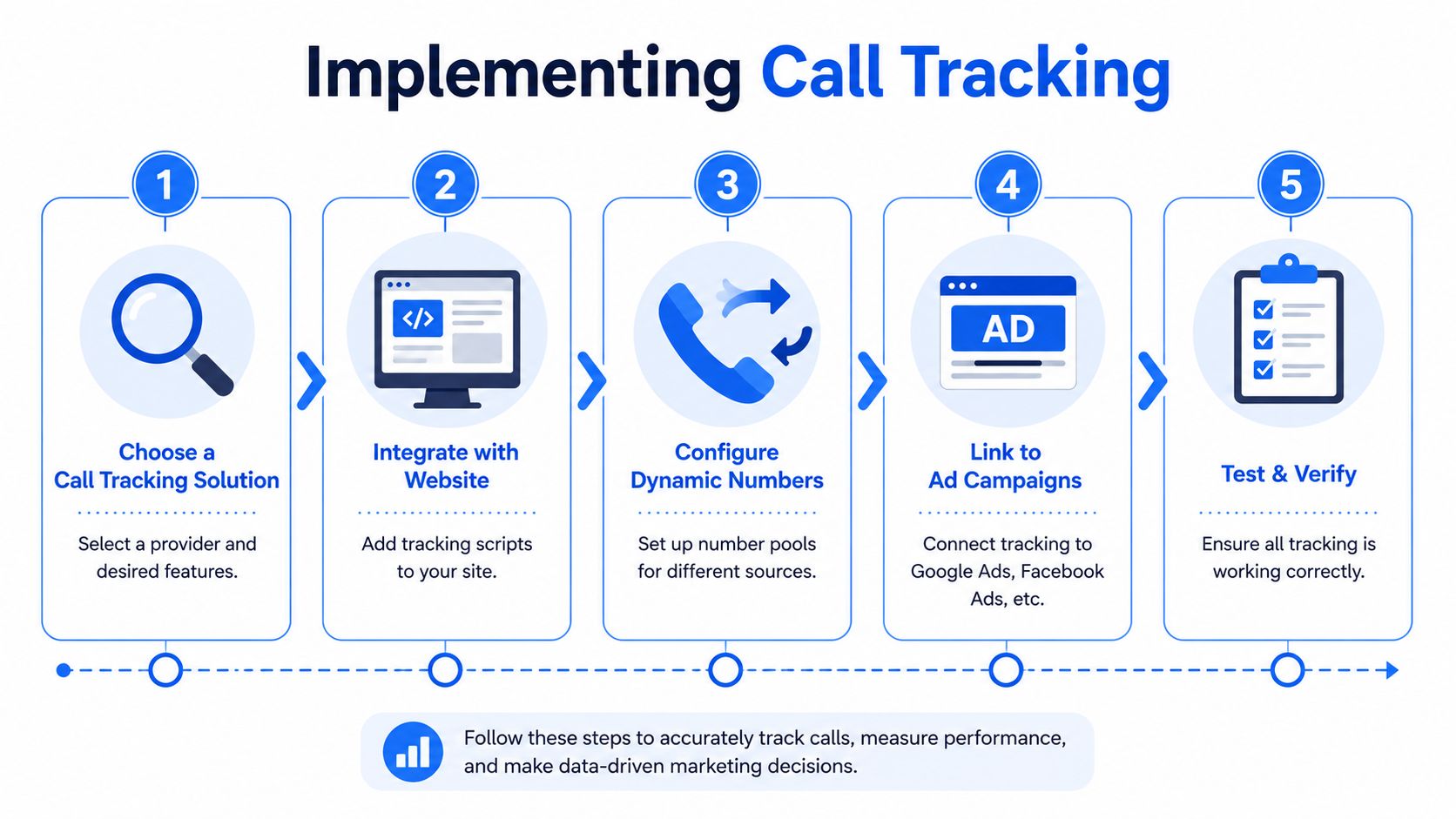
Install Dynamic Number Insertion on the website
Start with the website because that's where digital attribution begins.
Enterprise-grade call tracking starts by deploying Dynamic Number Insertion through a JavaScript snippet on your website, which swaps displayed phone numbers based on source such as Google Ads keyword, organic search, or referral, as outlined in PowerChord's implementation guide. In practice, that means a visitor from a Google Ads campaign can see one tracked number, while an organic visitor sees another, even though both calls still route to your main line.
This is what makes how to track phone calls meaningful instead of cosmetic. You're not just changing the visible number. You're preserving source context.
Use this checklist during setup:
- Place the script correctly so tracked numbers appear on every page where a customer might call
- Define your number pools based on expected traffic and active channels
- Keep routing simple by sending all calls to your main business line
- Test from different sources including organic search, paid ads, and referral traffic
Configure Google Ads the right way
A lot of businesses stop after installing DNI. That leaves money on the table.
Inside Google Ads, connect your call tracking platform to the campaigns that target transactional queries. Align tracking with terms like “air conditioning repair near me,” “dentist near me,” or “roofer near me,” because those are the searches closest to revenue. If your ad account structure is weak, clean that up before blaming call tracking.
A step-by-step guide to setting up a Google Ads campaign for local leads helps here because your call data is only as useful as the campaign structure feeding it.
After the platform is connected:
- Turn on call reporting where appropriate inside Google Ads
- Map tracked calls to conversions so your bidding and reporting reflect actual phone leads
- Separate branded and non-branded campaigns so you can see whether your spend is creating new demand or capturing existing name searches
Here's a walkthrough that complements the process:
Connect calls to GA4
GA4 should help you understand the whole journey, not just the call itself.
Create call-related events so you can compare phone conversions with page paths, source groups, landing pages, and engaged sessions. That makes it easier to spot pages that influence calls even if they aren't the last click before the phone rings.
Key takeaway: If your ads, website, and analytics each define conversions differently, your reporting will stay noisy no matter how good the call tracking software is.
Keep the event naming consistent. Keep the attribution rules documented. Test the flow by placing calls from different traffic sources before you trust the dashboard.
Connecting Call Data to Your Business Systems
Tracking calls is useful. Routing that data into the systems your team already uses is where it becomes operational.
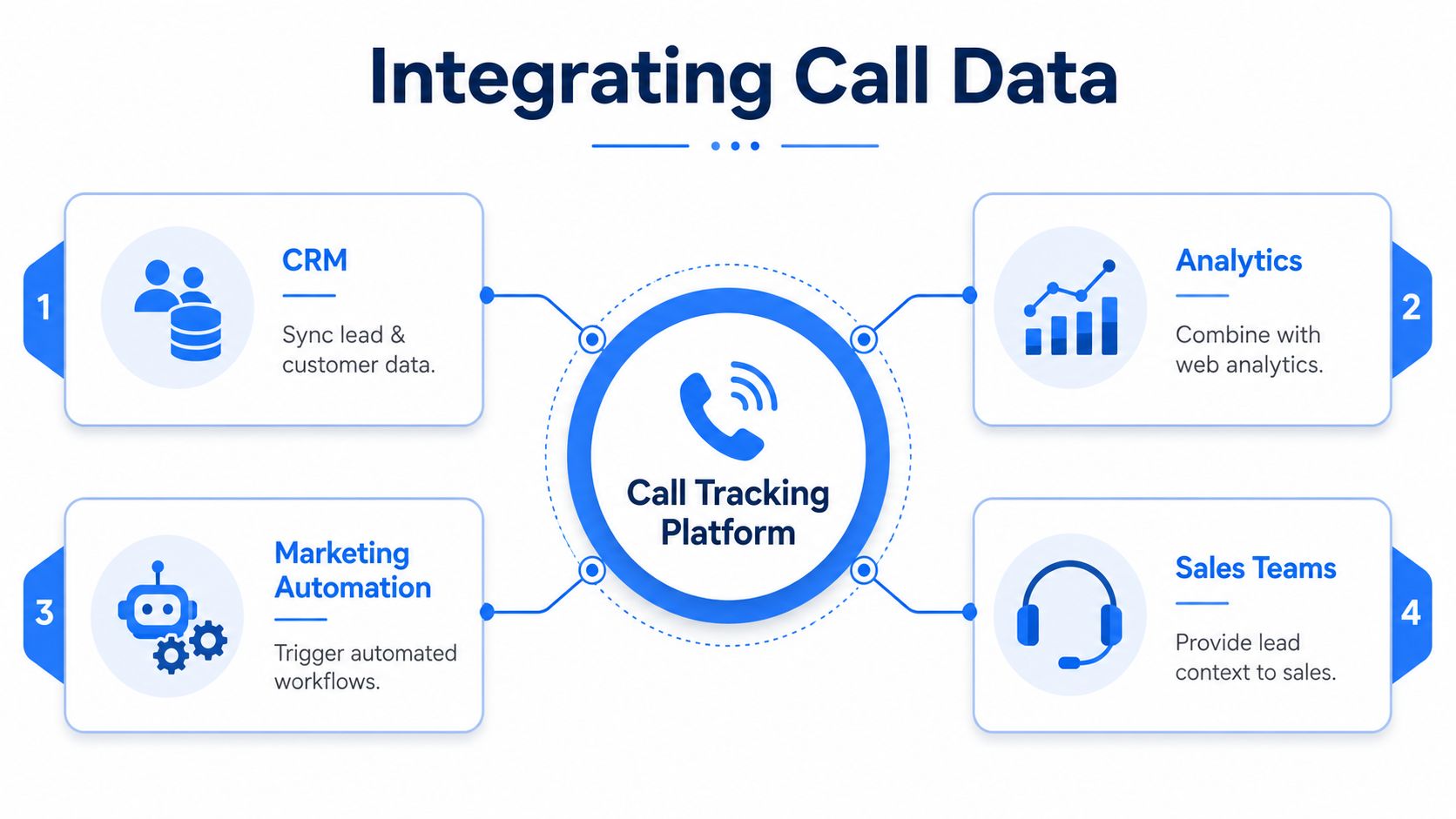
If marketing sees the source but sales sees only a phone number, the business still has a blind spot. The fix is integration.
Push call data into the CRM
A solid setup sends caller information, source details, call duration, and disposition into your CRM automatically. Tools like HubSpot and Salesforce are common destinations because they let staff follow up without re-entering notes manually.
When that connection is working, a front desk team or sales rep can open a lead record and see more than just a missed call. They can see whether the person came from Google Ads, organic SEO, a referral source, or a location-focused page built for a transactional term.
That context improves follow-up quality. It also gives you a cleaner record of which campaigns bring in booked work instead of noise.
Use recordings and transcripts carefully
Call recording and transcription can sharpen operations fast. Teams use them for lead qualification, script improvement, training, and identifying frequent objections.
Good use looks like this:
- Review booking calls to hear how staff handle price questions and scheduling friction
- Tag outcomes such as booked, estimate requested, wrong service area, spam, or existing customer
- Surface language patterns customers use so marketing can mirror real demand in service pages and FAQs
- Share short excerpts internally for training, not blame
That last point matters. Recording should support better service, cleaner QA, and smarter optimization. It shouldn't become a surveillance habit.
Recorded calls are only valuable if someone turns the conversation into a decision. Otherwise, you've just created storage.
Respect compliance from the start
Privacy rules vary by location, and call recording laws can change based on where both parties are located. The safest operational habit is simple: tell callers when recording is active and get legal guidance for your market and workflow.
That applies whether you operate in one city or across multiple states. It also applies if you use AI transcription tools. Audio, transcripts, and customer data need retention policies, access controls, and a clear business purpose.
Why this matters for Maps and local intent
This isn't just a back-office exercise. Nearly 90% of consumers use Google Maps for local business discovery, and 46% of all Google searches have local intent, according to local discovery data on Google Maps optimization. If your business is competing for local, high-intent searches, the call data from those visits needs to flow into reporting and follow-up systems you can act on.
That's where attribution models matter. A framework like multi-touch attribution for local marketing helps businesses avoid crediting the wrong channel when a customer interacts with Maps, organic listings, and ads before calling.
Measuring ROI from Transactional Searches
If call tracking doesn't improve decision-making, it becomes an expensive dashboard. The point is to tie calls back to revenue and adjust your marketing based on what produces booked jobs or new patients.
Start with the metrics that change behavior
Most local businesses drown in vanity metrics because they're easy to report. Clicks. Impressions. Rankings without lead quality. None of those pay the payroll.
Focus on metrics that connect directly to outcomes:
- Cost per call so you know what each channel is generating for the spend
- Call-to-lead rate so answered calls are separated from real opportunities
- Lead-to-booked-job rate so your team can see what closes
- Revenue per call by source so premium channels stand out
- Missed call rate so you know how much demand you're wasting
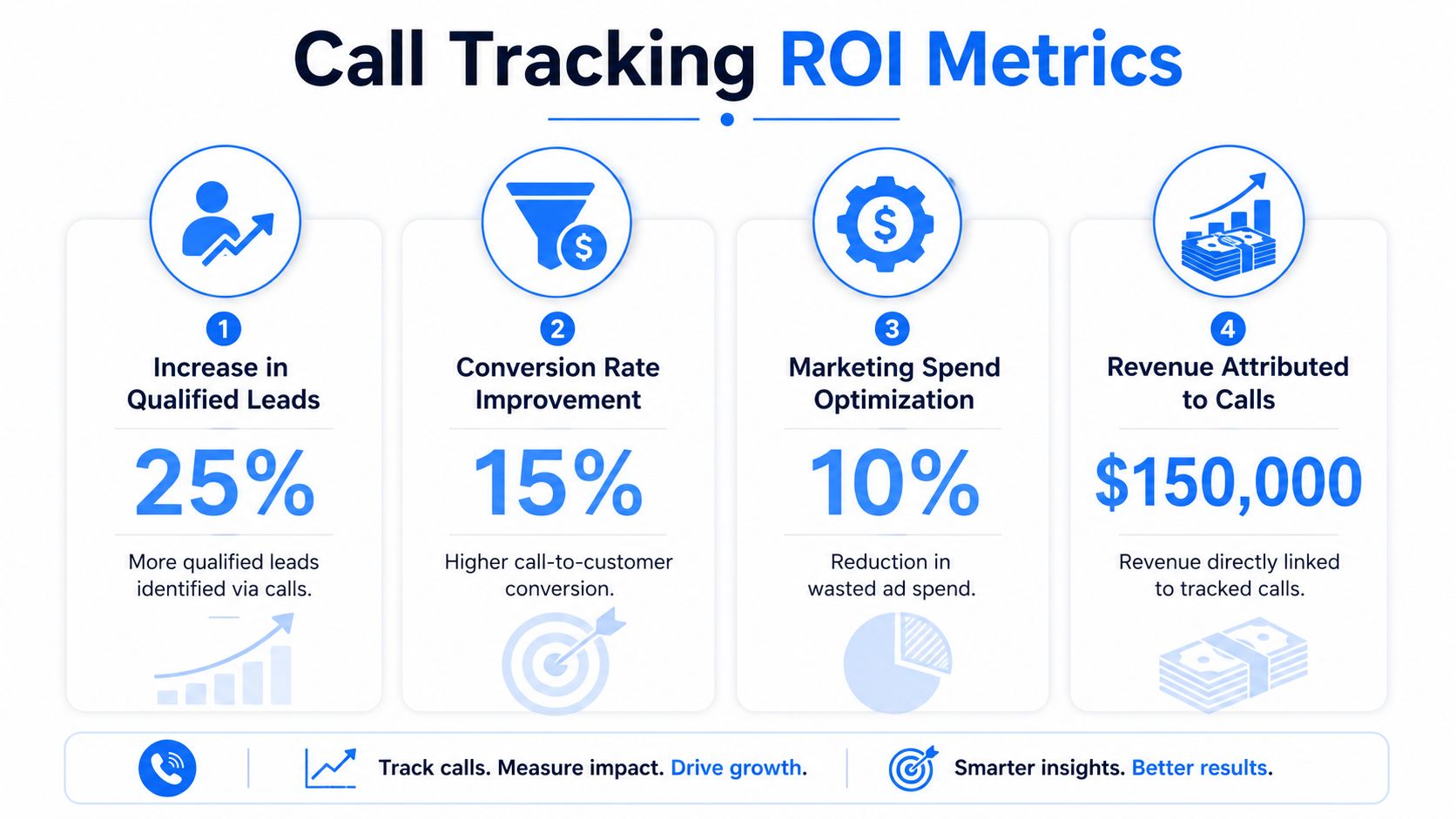
If you're tightening financial reporting, use a clear framework for calculating cost per acquisition so calls are evaluated against real customer acquisition costs, not rough estimates.
A realistic local example
Take an HVAC company targeting the phrase “air conditioning repair near me.” A customer sees the business in search, visits the service page, leaves, comes back later, and then calls.
With proper call tracking in place, the business can answer practical questions:
- Did the call come from paid search or organic SEO?
- Which landing page influenced the call?
- Did the caller book emergency repair, request an estimate, or ask for pricing only?
- Was the lead inside the service area?
- Did the office answer on the first attempt?
Without that visibility, owners often keep spending evenly across channels that perform very differently. With it, they can shift budget toward the campaigns, keywords, and pages that produce the best calls.
Protect ROI by reducing missed calls and junk data
A surprising amount of call tracking ROI is lost after the phone rings.
Expert analysis shows missed call penalties can account for up to 20% to 30% of inbound leads if they aren't addressed promptly, and businesses using automated missed call alerts achieve 40% higher follow-up rates, according to Nimbata's analysis of small business call tracking. That means tracking doesn't stop at attribution. It has to include response speed.
Use a cleanup process:
- Flag spam and wrong-number calls so they don't pollute channel reporting
- Separate answered from qualified because not every answered call is a sales opportunity
- Alert staff on missed calls using tools they already monitor, such as email or team messaging
- Review by source regularly so underperforming campaigns don't keep consuming budget
The fastest way to ruin attribution is to count every call as equal. A booked customer and a spam robocall should never sit in the same bucket.
What good ROI reporting looks like
Good reporting doesn't just say that calls increased. It shows which transactional searches produced quality conversations, which pages influenced them, how quickly the business responded, and what revenue came out the other end.
That's the standard. If your report can't tell that story, it's not finished.
Conclusion Turning Calls into Your Competitive Advantage
Call tracking matters because local service businesses don't get paid for visibility alone. They get paid when someone finds them at the right moment and makes contact. In many markets, that contact is still a phone call.
That's why learning how to track phone calls is tied directly to local SEO, Google Maps performance, paid search, and AI optimization. If you want to win transactional searches like “roofer near me,” “dentist near me,” or “air conditioning repair near me,” you need proof of what's driving calls and what happens after the call starts.
The real advantage is the dataset you build
The immediate benefit is cleaner attribution. You stop guessing which campaigns work. You identify the pages, keywords, and locations that create high-value conversations. You catch missed calls faster. You route spend toward channels that produce actual customers.
The longer-term benefit is more strategic. Structured call data becomes a proprietary asset. It helps you understand buyer language, service demand by location, common objections, and the path from search to sale. That matters now for SEO and Maps. It will matter even more as AI systems and LLM-driven discovery decide which businesses appear most relevant for high-intent local queries.
What strong operators do differently
They don't settle for a single phone number pasted everywhere.
They don't treat call volume as the same thing as lead quality.
They don't separate SEO, Google Maps, ads, CRM data, and call outcomes into disconnected tools that can't talk to each other.
They build a system. Then they refine it.
If your business depends on local buyers who are ready to spend, call tracking is not optional. It is part of the operating system for modern local growth.
If you want help turning transactional searches into measurable calls, booked jobs, and stronger Google Maps visibility, Transactional LLC builds SEO, AI optimization, Google Business Profile strategy, content systems, and local lead generation around the searches that signal buying intent. The focus stays on service-area terms like “roofer near me,” “dentist near me,” and “air conditioning repair near me,” because those are the searches that produce revenue.