

Most local service companies don't lose money on paid media because ads "don't work." They lose because they buy visibility without buying intent. Google's local pack is estimated to receive up to 44% of clicks on local searches that show the map unit, yet plenty of businesses still pour budget into broad campaigns that never push them into the searches where customers are ready to call.
That's backwards.
At Transactional Marketing, we don't chase vanity traffic. We chase transactional search terms. Searches like "air conditioning repair near me," "dentist near me," and "roofer near me" mean the buyer isn't browsing for entertainment. They've got a problem, a location, and money in hand. That's why our process doesn't look like every other boring marketing company. We laser-focus on the exact searches that produce calls, form fills, booked jobs, and new patients.
Paid media works best when it supports a bigger system. That means search visibility, Google Maps dominance, strong location pages, and AI optimization built for how LLMs and AI-driven search experiences decide what to surface. Businesses aren't just fighting for blue links anymore. They're fighting to be the answer inside AI-generated search experiences too. If you want a useful primer on ad creative that fits this environment, this guide on AI creative for service businesses is worth reviewing.
Transactional Marketing is built for service businesses that need to show up on page one, often within 30 to 60 days, and then turn that visibility into long-term local dominance. The paid media examples below matter because each one can support that mission when used correctly.
1. Google Local Services Ads for Transactional Search Dominance
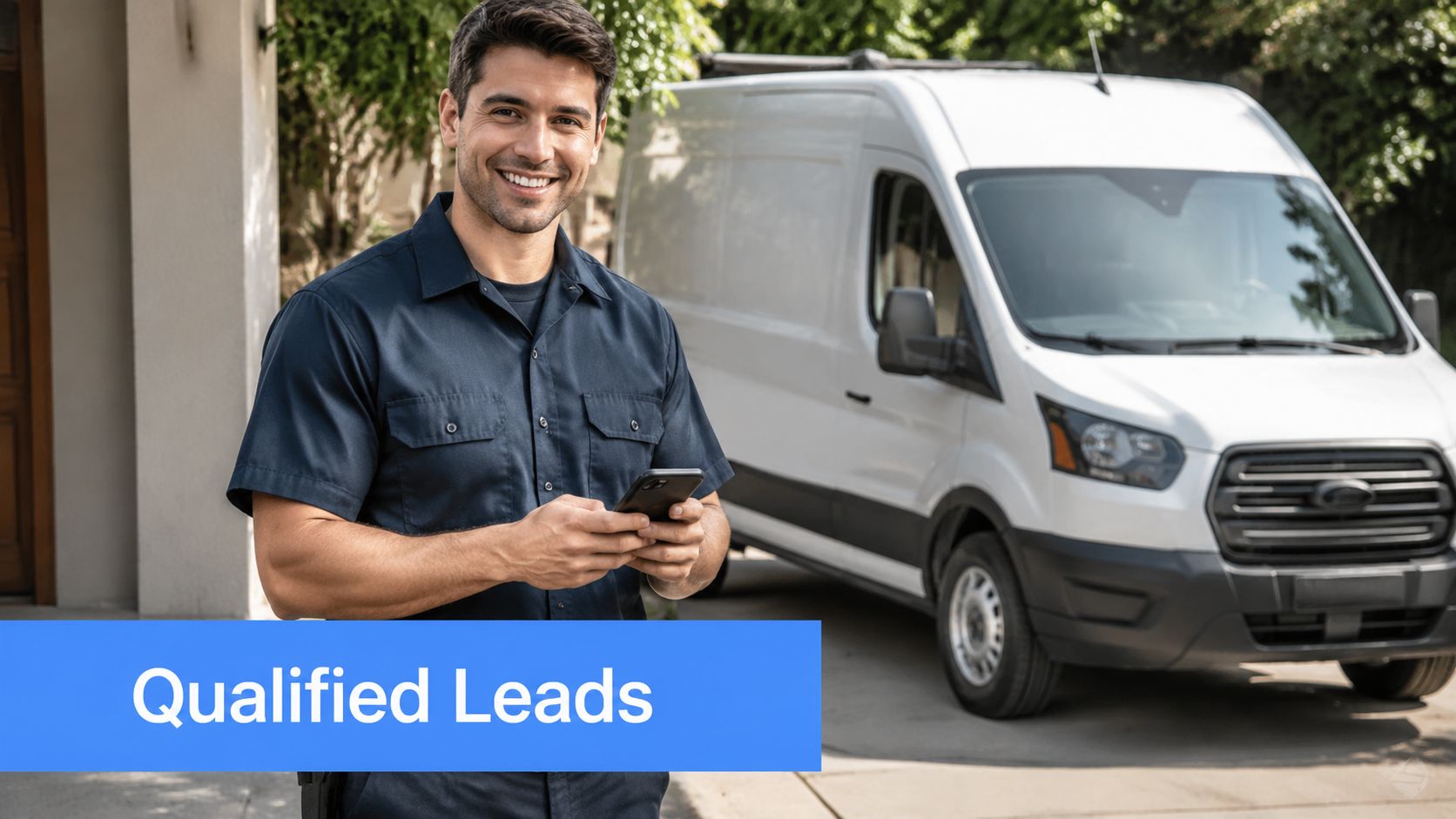
Google Local Services Ads sit at the top of the local buying journey for many service businesses. When someone searches "plumber near me" or "dentist near me," they're not asking for a whitepaper. They're looking for someone to call now.
That makes LSAs one of the cleanest paid media examples for local companies that need calls, not just clicks.
Why LSAs fit the Transactional Marketing model
LSAs align with our core philosophy because they show up against transactional search terms. If your market includes searches like "air conditioning repair near me" or "emergency electrician near me," this placement can intercept buyers before they ever scroll into standard ads or organic listings.
For HVAC, plumbing, pest control, roofing, and many dental categories, that matters because response speed often wins the lead. A good LSA setup also reinforces your Google Business Profile, review profile, and local trust signals, which helps your Maps performance.
Practical rule: LSAs aren't a substitute for SEO or Maps work. They're a pressure multiplier when the rest of your local presence is tight.
A Phoenix HVAC company can use LSAs to capture "air conditioning repair near me" traffic during heat spikes. A Denver dental office can prioritize "dentist near me" and emergency-intent categories. A Houston roofer can stay visible after storms, when buyers don't want options. They want the first credible business they can reach.
What works and what usually wastes money
The winning setup is boring in the best way. Tight service areas, complete profile data, strong review velocity, answered calls, and booking workflows that don't create friction.
A few practical moves matter most:
- Complete profile accuracy: Match services, hours, service areas, and business details across your profile and site.
- Review support: Ask for reviews after real jobs, because weak review volume usually weakens LSA performance too.
- Lead handling discipline: Missed calls kill return faster than bid tweaks.
- Maps coordination: Pair LSAs with Google Guaranteed ads management and local profile optimization instead of treating them as a standalone channel.
- Click behavior awareness: Better ad visibility still depends on compelling messaging, so this breakdown of optimizing click-through rate is useful when you're refining supporting search assets.
What doesn't work is running LSAs with a half-built profile, weak review generation, and no process for qualifying leads. That's how businesses decide the channel failed, when the underlying problem was operational.
2. Google Maps Paid Placement with Top-3 Ranking Optimization
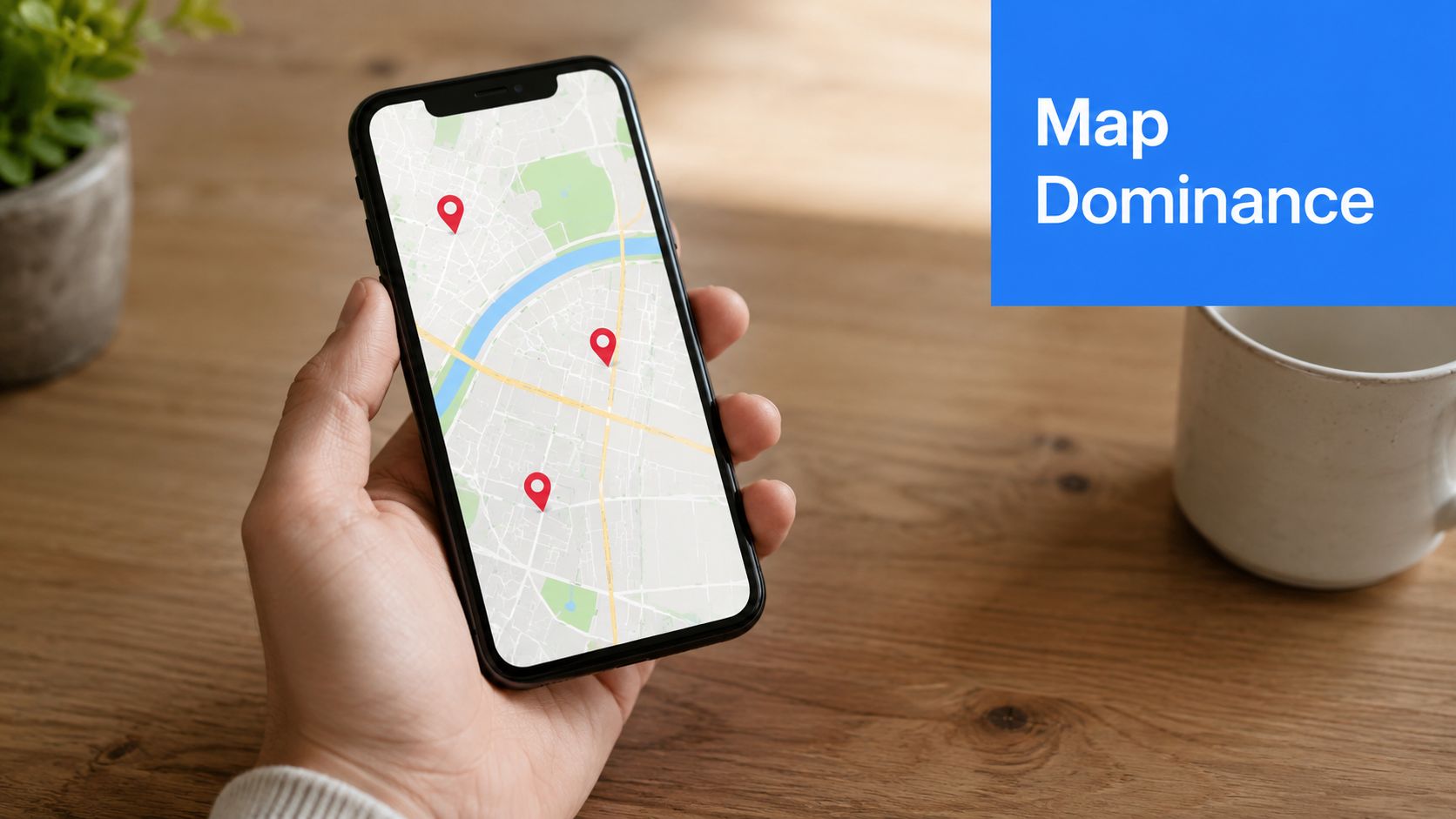
If you care about local service growth, you should care about Maps more than most agencies do. The map pack isn't decorative. It's where local buyers compare, call, and choose.
At Transactional Marketing, Google Maps optimization isn't a side service. It's one of the core ways we get businesses in front of transactional searchers in their own cities.
Why the top three matter
For local service businesses, showing in the top three map positions is often more valuable than ranking lower on a traditional organic page. Searches like "roofer near me," "dentist near me," and "chiropractor near me" trigger immediate comparison behavior. Buyers look at proximity, reviews, category fit, and whether the listing feels active and legitimate.
Transactional Marketing has the technology to turn map locations into real competitive assets and push visibility where it matters most. That's how businesses generate hundreds more phone calls each month and thousands more over a year. The reason is simple. Buyers act from Maps.
A local HVAC company might dominate "HVAC repair near me" within a tight service radius. A pest control company can push visibility during peak seasonal demand. A multi-city dental group can treat each location as its own conversion engine instead of lumping everything into one generic campaign.
Paid acceleration paired with ranking control
Purely organic Maps work can be slow in competitive cities. Paid support can accelerate attention while your review growth, local citations, on-page relevance, and behavioral signals build. That bridge matters because local map packs tend to rotate less often than organic results, and an 8 to 12 week push can help create enough momentum to improve local standing over time, as noted in this analysis of paid campaigns as a bridge to local pack visibility.
The businesses that win Maps don't just "exist" on Google. They actively shape relevance, trust, and local demand.
A few rules separate strong Maps campaigns from weak ones:
- Profile completeness: Add photos, services, categories, hours, and accurate service areas.
- Review response habits: Respond to every review. Stale profiles lose trust.
- Zip code focus: Don't spread budget evenly. Push harder in profitable pockets.
- Search term discipline: Use local paid support around high-intent phrases, and understand the underlying cost dynamics in Google paid search before you scale.
What fails is the lazy version. One generic profile, vague service descriptions, no review system, and a hope that "being on Google" is enough.
3. Programmatic Display Retargeting for Transactional Service Searches
Display prospecting is usually overrated for local services. Retargeting isn't.
If someone searched for your service, visited your site, checked a financing page, or opened a booking form and then disappeared, that prospect already signaled intent. Programmatic retargeting lets you stay in front of that buyer while they're still deciding.
Where retargeting pulls its weight
This works best after a real intent action. A homeowner searches "furnace repair near me," visits your emergency service page, then leaves to compare options. A dental prospect reads your implant page but doesn't submit the form. A roofing lead checks storm damage repair and pauses because they want to talk to a spouse or insurance rep first.
Those buyers often don't need more education. They need a reason to come back to you.
A strong retargeting campaign segments by service line and urgency. Emergency plumbing visitors shouldn't see the same creative as someone who viewed a routine drain cleaning page. The same goes for med spa leads comparing a cosmetic treatment versus a past-due dental recall patient.
What to build and what to avoid
Use creative that mirrors the original intent. Show the service category, the geography, and the next step. Generic "Call us today" banners underperform because they ignore why the prospect visited in the first place.
Retargeting also works better when tied to first-party data and conversion feedback. One B2B SaaS advertiser improved a blended CPL from $125 to $65, increased conversion rate from 2.1% to 3.7%, and attributed 68% of pipeline-generating MQLs to paid media after tightening funnel structure and syncing CRM data with Google Ads and GA4 via offline conversion imports, according to this paid media case study roundup. Different vertical, same lesson. Closed-loop attribution beats platform-level guesswork.
- Segment by page intent: Emergency, financing, cosmetic, maintenance, and quote pages should each trigger different retargeting logic.
- Control frequency: Enough repetition to stay remembered, not enough to become annoying.
- Refresh creative: Buyers tune out stale banners quickly.
- Use local proof: Service area mentions, review language, and clear booking paths outperform vague branding.
What doesn't work is blasting the same banner to every past visitor for weeks and calling that strategy.
4. Google Ads Search Campaigns for Hyper-Local Transactional Keywords
Google Ads search campaigns are still the fastest way to buy visibility for high-intent local demand. That's why they're central to almost every serious list of paid media examples.
They're also where local businesses burn money fastest when they chase volume instead of intent.
The right keywords are expensive for a reason
Search ads work because they intercept a buyer at the moment of need. Searches like "emergency plumber near me," "best dentist near me," and "air conditioning repair near me" are pure transactional search terms. This is the exact lane Transactional Marketing goes after.
That urgency is why clicks can get expensive. In competitive local service verticals, advertisers can pay anywhere from $40 to $150 per click or more for high-intent transactional terms. If you target the wrong terms, use sloppy match types, or send traffic to weak pages, your margin disappears fast.
A smart account breaks campaigns by service and geography. Emergency AC repair in one city shouldn't share budget and ad copy with install campaigns across another city. A dental practice should separate "emergency dentist near me" from lower-urgency terms tied to cosmetic interest or routine cleanings.
How Transactional Marketing uses search the right way
We don't run paid search as a forever crutch. We use it as an immediate revenue driver while building page-one rankings and stronger Maps visibility. Search is the accelerator. SEO and AI optimization are the compounding assets.
As search changes, that AI layer matters more. When AI-generated overviews dominate the top of results, traditional organic and paid listings below can see up to a 30% to 40% reduction in click-through share. If your business isn't structured to appear in AI-driven search experiences, you're leaving visibility on the table.
Field note: Winning Google Ads today isn't just about bids. It's about making sure your business can also be understood by AI systems that summarize local options for users.
A few essential points:
- Use exact and phrase intent clusters: Broad match on local service accounts often invites junk.
- Build service-specific landing pages: Match "air conditioning repair near me" to a page built for that exact need.
- Track calls and booked jobs: Lead counts aren't enough.
- Review search terms weekly: Most waste hides there.
- Set up structure correctly from day one: This walkthrough on how to set up a Google Ads campaign is a useful baseline for local operators.
What fails is broad, citywide spraying with generic headlines and no post-click relevance.
5. Facebook and Instagram Local Lead Generation Ads for Service Businesses
Facebook and Instagram do not create high-intent demand the way Google Search does. They let local service businesses intercept people who are close to buying, shape the offer, and push them toward a call, form fill, or booked consult before they search a competitor by name.
That only works if the campaign is built around transactional intent.
For local service companies, paid social performs best when the offer matches a problem people already recognize. Seasonal HVAC tune-ups. Dental consults for implants or Invisalign. Roofing inspections after a storm. Pest control before peak season. Med spa consults tied to a specific treatment, not vague brand awareness. The ad has to answer a practical question fast: why should this person act now, in this service area, with this business?
Meta remains a major ad channel. Meta reported $131.95 billion in 2023 ad revenue, which explains why local operators can still buy attention efficiently inside a tight radius. But reach is not the point. Booked jobs are.
That is the trade-off many agencies ignore. Search traffic usually converts better because the intent is explicit. Social traffic can produce lower-cost leads, but lead quality swings harder, no-show rates rise, and weak follow-up kills ROI. If your front desk takes three hours to call back, Facebook leads will look worse than they should.
Your business page matters here more than people think. Before running lead ads, set up a Facebook page for your business that looks credible, local, and active. Reviews, real staff photos, service-area proof, and offer consistency all affect whether a prospect submits the form or keeps scrolling.
Offers and filtering decide whether social leads are profitable
Generic “contact us” ads usually attract cheap clicks and weak buyers. Specific service ads do better because they pre-qualify the lead before the form opens.
A dental office should split whitening from implants. An HVAC company should separate tune-ups from emergency repair. A med spa should run distinct creative for each treatment category. A roofer should not send storm inspection leads to a generic homepage and hope the sales team sorts it out later.
Use these rules:
- Run one offer per ad set: Mixed offers blur intent and make performance harder to read.
- Keep forms short, but not useless: Name, zip code, service need, and preferred timing usually beat ultra-short forms.
- Use local proof in the creative: Real trucks, technicians, storefronts, before-and-after work, and city references outperform stock imagery.
- Connect ads to your CRM and response process: Speed matters more on paid social because intent is less stable.
- Retarget engaged visitors and video viewers: Paid social starts to support the broader transactional system through these efforts, especially after people visit service pages or Maps listings.
The businesses that win with Meta are not “doing social media.” They are using paid social to create more branded searches, more repeat site visits, and more qualified leads that can later convert through search, Maps, remarketing, or direct outreach.
Boosted posts rarely do that. Structured local lead gen campaigns can.
6. YouTube Pre-Roll and In-Stream Ads for Local Service Discovery
A lot of local businesses ignore YouTube because they think video ads are for brands with giant budgets. That's a mistake.
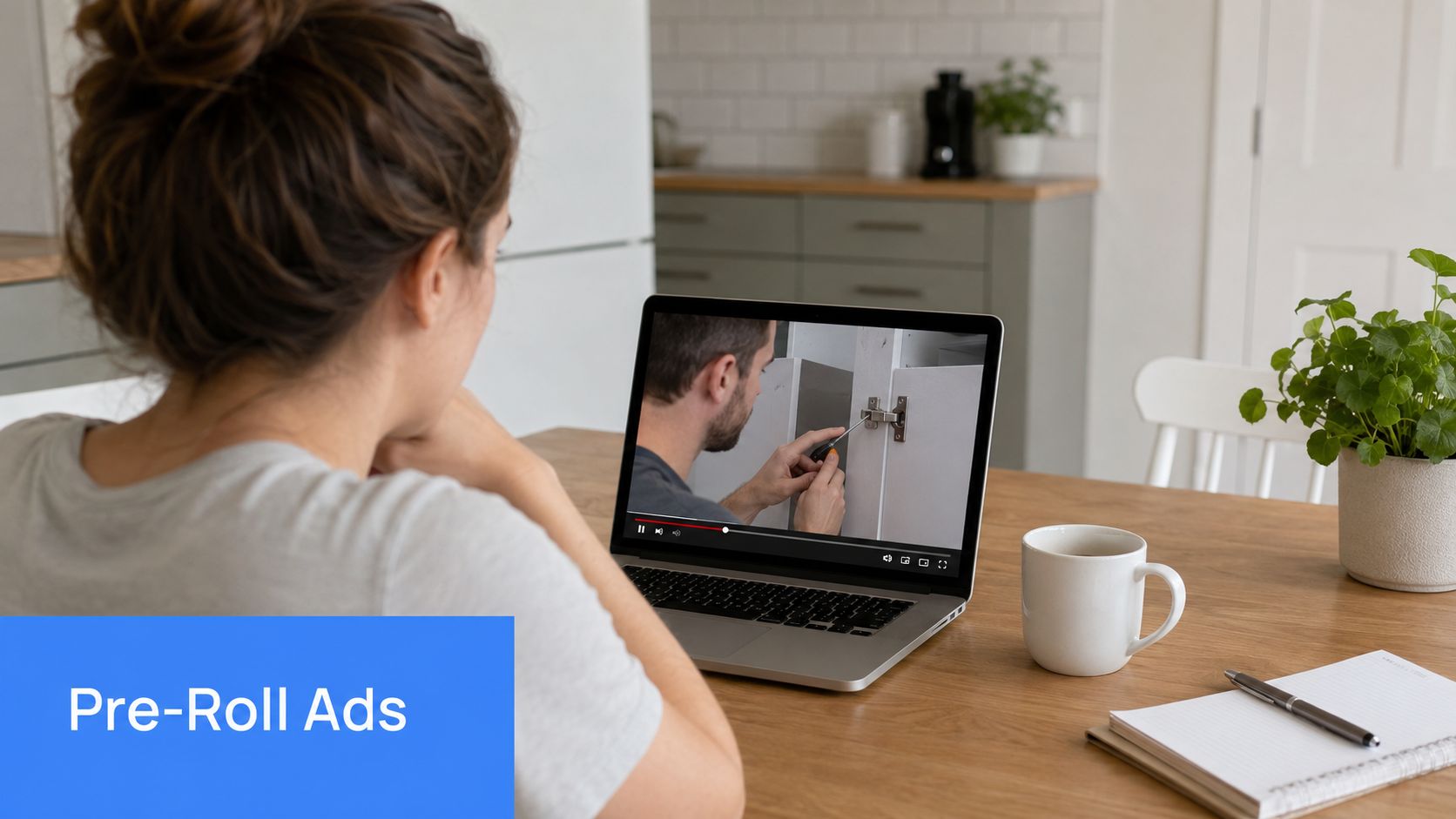
YouTube is where people go when they have a problem and want a fast answer. That puts service businesses in front of buyers earlier than search ads sometimes can.
Catch the buyer before the DIY attempt fails
Homeowners watch "how to fix a roof leak" videos. They search for AC troubleshooting. Dental patients look up tooth pain relief or treatment explanations. Med spa prospects watch result videos before they ever fill out a form.
If your pre-roll ad opens with the exact problem they're trying to solve, you earn attention fast. A roofer can lead with visible leak damage. An HVAC company can open on a broken unit in summer heat. A dental office can speak directly to urgent pain or cosmetic concern.
This channel is getting more important, not less. Video ad spend is projected to exceed $236 billion worldwide in 2026, which tells you where advertiser attention is moving. Local service companies don't need to outspend national brands. They need better message-market fit in local geographies.
What to say in the first few seconds
The opening matters more than the production budget. Start with the problem, not your logo animation.
"Your AC stopped working today? Book local repair before tonight."
That kind of direct hook beats a polished but vague brand intro almost every time for transactional service categories.
A few execution rules help:
- Lead with the pain point: Leak, outage, infestation, pain, cracked tooth, visible damage.
- Show the fix quickly: Before-and-after visuals build trust.
- Overlay contact action: Call, book, request estimate, same-day availability.
- Target solution content: Don't run broadly. Place ads against relevant service problem videos.
- Support SEO and AI optimization: Publish your own service videos too, so paid and owned video work together.
What fails is turning YouTube into a TV commercial. Local service buyers don't need cinematic storytelling. They need confidence that you solve the problem in their area.
7. Google Shopping Ads for Service Availability and Product Upsells
Most agencies treat Google Shopping as an ecommerce-only channel. That's too narrow.
Service businesses with structured offers, visible pricing, or package-based upsells can sometimes use Shopping-style placements to create more commercial clarity than a plain text ad.
Where Shopping fits for service businesses
This works best when the service can be framed as an offer with specifics. A med spa can promote a treatment package. A dental office can showcase whitening or consultation packages. An HVAC company can feature a maintenance plan or inspection offer. Pest control can package inspection plus treatment.
The visual format helps buyers compare quickly. Image, rating, offer framing, and availability cues can make the ad feel more concrete than a standard search headline.
A strong example comes from retail, but the lesson applies. A multi-local retailer in the US and UK improved blended ROAS from 2.8x to 4.6x, lifted attributed online sales by 41%, and saw a 22% lift in offline sales tied to exposed households after improving feed structure, margin-tiered labels, geo-bid adjustments, and dynamic remarketing, according to this shopping and paid media case study. For service businesses, feed quality and offer structure matter just as much.
The offer has to be real
Shopping-like service promotions fail when the business invents a vague package nobody asked for. They work when the offer simplifies a real buying choice.
- Use service names buyers search: Whitening, maintenance, inspection, emergency repair.
- Show clear pricing when possible: Ambiguity hurts clicks from comparison shoppers.
- Match the landing page exactly: If the ad mentions same-day availability or a package, the page must confirm it.
- Keep feed data clean: Titles, categories, imagery, and promotional labels need discipline.
- Bundle logically: Inspection plus repair credit works. Random add-ons don't.
What doesn't work is trying to force every service into a product feed. Some categories belong in search or LSA, not Shopping.
8. Bing Ads Local Services for Underused Market Capture
Microsoft Ads is one of the easiest places to find incremental booked jobs after Google is already producing. Local service companies ignore it, bid pressure is often lower, and the traffic can still come from buyers searching phrases with clear intent to call, book, or request an estimate.
That matters if your whole paid media strategy is built around transactional search terms, not vanity reach.
A lot of agencies treat Bing as a copy of Google with a smaller budget attached. That is lazy account management. The better use is to port over the proven high-intent structure, then tighten it based on how Microsoft traffic behaves in your market. Search partners, device mix, and audience profile can change what counts as a good click.
For local services, I want Bing focused on the same bottom-funnel terms that drive Google performance. "Emergency plumber near me." "Water heater repair [city]." "Dental implants financing." "AC repair open now." Broad awareness queries usually waste money here just like they do everywhere else.
Use Bing to capture the demand your competitors ignore
Microsoft has published its own case studies showing advertisers can gain incremental conversions by extending paid search coverage beyond Google, especially when campaigns are adapted to the platform instead of cloned blindly. Their Microsoft Advertising success stories are worth reviewing for the pattern, not for a one-size-fits-all benchmark.
The strategic value is simple. If Google CPCs are inflated in your city, Bing can pick up profitable residual demand from the same local buying cycle. That is especially useful for services where one booked job covers a lot of ad spend, such as legal, dental, HVAC, roofing, and restoration.
This is not a replacement channel. It is a market-share channel.
The setup has to respect local intent
Bing works best when the account is built around the same local conversion path you use elsewhere. The ad should match a real service. The landing page should match the ad. The booking action should be obvious on mobile. If your Google Maps presence, organic local pages, and AI-facing business data are already strong, Bing benefits from that trust layer because the buyer will often research your brand after the click.
Use these controls:
- Import selectively: Bring over proven transactional campaigns, not the whole Google account.
- Cut weak match types early: Search query quality can drift fast if you get loose.
- Split by service and geography: "Emergency drain cleaning" should not share intent signals with "bathroom remodel plumbing."
- Watch call performance by hour: Some categories produce stronger phone leads than form fills.
- Write ads for decision-makers: Homeowner trust signals, availability, financing, and years in business often matter more here.
One operational note. If you are also running email and SMS follow-up after paid acquisition, protect that pipeline with good list hygiene and deliverability practices. This guide on avoiding spam folders in 2026 is useful if your booked-lead follow-up starts slipping.
Bing rewards disciplined expansion. Local service brands that already know their transactional keywords, service-area economics, and close-rate by lead source can turn it into profitable incremental volume. Everyone else usually treats it as an afterthought and gets afterthought results.
9. Email Remarketing and SMS Campaigns for Repeat Service Booking
Email and SMS don't always get included in paid media examples, but for local service operators, excluding them is a mistake. If you already paid to acquire the customer once, the cheapest next booking often comes from staying top-of-mind with that same customer.
A lot of companies leak revenue without realizing it.
Your past customers are still transactional buyers
An HVAC customer needs seasonal service again. A dental patient is due for a cleaning. A pest control customer needs annual treatment. A med spa client may be ready for a complementary service. Those aren't awareness-stage leads. They're transactional opportunities with lower friction.
Email works well for richer reminders, educational framing, and maintenance offers. SMS works when the opening is time-sensitive and the action is simple, like a same-week appointment gap or a seasonal reminder with one-click booking.
The best local operators tie this to their CRM and booking system so they aren't blasting everyone with the same message. Timing based on last service date, service type, and geography usually beats generic monthly newsletters.
Keep it targeted or don't bother
A recall email for six-month cleanings should look different from a whitening upsell. A pest control pre-season SMS should not hit customers who already booked. An HVAC campaign should separate maintenance-plan members from one-time repair buyers.
For deliverability, message quality matters as much as offer quality. If your list hygiene is weak, even strong campaigns will underperform, so this guide on avoiding spam folders in 2026 is worth a look.
- Segment by real service history: Last appointment, service category, and urgency should drive messaging.
- Use direct CTAs: Book now, claim opening, confirm recall visit.
- Sync suppressions: Remove already-booked customers from active sends.
- Respect frequency: Overmessaging lowers response and trust.
- Tie back to transactional demand: The reminder should connect to a concrete service need, not vague brand awareness.
What fails is using email and SMS like a digital billboard instead of a booking engine.
9 Paid Media Examples Comparison
| Channel | Implementation complexity | Resource requirements | Expected outcomes | Ideal use cases | Key advantages |
|---|---|---|---|---|---|
| Google Local Services Ads (LSA) | Moderate–High (verification, compliance, review thresholds) | 100+ verified reviews, maintained Google Business Profile, pay‑per‑lead budget | High-intent phone leads and bookings within weeks; strong local visibility | Home services, dental, pest control, high-margin urgent jobs | Pay-per-lead model, Google Guaranteed badge, top-of-search placement |
| Google Maps Paid Placement (Top‑3) | High (GBP optimization + paid bidding, multi-location management) | GBP optimization, review generation, bidding budget, heat‑mapping tools | Top‑3 map visibility, increased mobile calls and local brand awareness | Multi-location service areas, mobile-dominant 'near me' searches | Dominates local pack, lower CPC vs. search, direct directions/calls |
| Programmatic Display Retargeting | High (RTB setup, audience engineering, creative ops) | Programmatic platform, dynamic creatives, 500+ audience pool, AI optimization | Recapture warm searchers; improved conversion rates and ROAS vs. cold channels | Users who searched but didn't convert; competitive local markets | Cross-device retargeting, lower CPM, dynamic creative personalization |
| Google Ads Search Campaigns | Medium (keyword strategy, bid & landing-page optimization) | Keyword research, landing pages, continuous bid management, CPC budget | Immediate top-of-page visibility; highest conversion rates for transactional queries | Hyper-local transactional keywords, emergency and appointment-driven services | Direct intent capture, measurable search-term data, rapid results |
| Facebook & Instagram Lead Ads | Medium (audience setup, creative production, CRM integration) | High-quality images/video, audience build, lead form & CRM pipeline | Lower CPL, leads in consideration phase, brand discovery | Cosmetic, elective services, homeowners in demographic targeting | In-app lead capture, rich demographic targeting, lower CPL than search |
| YouTube Pre‑Roll & In‑Stream Ads | High (video production, targeting strategy, creative testing) | Professional video assets, channel setup, daily ad spend for optimization | Capture solution-seeking viewers; build trust and inbound calls/bookings | Problem-solution searches, before/after storytelling for services | Video storytelling, pay for engaged views, strong brand trust signal |
| Google Shopping Ads (Services/Packages) | High (product feed + booking/inventory integration) | Google Merchant Center feed, images, pricing/availability sync, feed management | Visual placements with pre-qualified clicks; upsell and appointment conversions | Services with priced packages or limited slots (med spa, dental, maintenance) | Shows price & availability, higher CTR, pre-qualifies searchers |
| Bing Ads Local Services | Low–Medium (separate platform setup, simpler tools) | Bing Places, separate campaign management, modest budget | Lower CPC/CPL; access to underserved, often older affluent audience | Markets with older demographics or where Google competition is high | Less competition, lower cost-per-lead, complementary channel to Google |
| Email & SMS Remarketing | Medium (automation, segmentation, compliance) | Customer database, CRM/automation, compliant SMS/email platform | Very high ROAS: repeat bookings, increased customer lifetime value | Retention, reactivation, last‑minute openings, maintenance reminders | Low cost-per-conversion, precise targeting, direct booking links |
Your Next Step: Dominate Local Transactional Searches
These nine paid media examples only work when they're tied to a real local growth system. That's the part many agencies miss. They sell channels one by one, as if buying more ad types automatically creates more revenue. It doesn't. A service business wins when every channel points at the same objective, which is owning transactional search terms in the exact cities and service areas that produce profitable jobs.
That's why Transactional Marketing is built around transactional SEO, Google Maps optimization, paid media, and AI optimization working together. If somebody searches "air conditioning repair near me," "dentist near me," or "roofer near me," we want our clients showing up where the decision gets made. That means page one visibility, top-three Maps presence, and strong enough local signals that AI-driven search systems can understand and surface the business too.
The AI piece isn't optional anymore. Large language models and AI-generated search experiences increasingly influence what users see first. Businesses that structure content well, build clear service pages, strengthen entity signals, and publish content around exact local service intent are in a much better position to be found. That's one reason we keep SEO and AI optimization so tightly connected. The same business that becomes more understandable to Google often becomes more understandable to AI systems that summarize local options.
Our process is not like every other boring marketing company because we don't chase empty visibility. We laser-focus on the search terms buyers use when they're ready to spend. Transactional terms. That's the reason for the name, and it's the reason the strategy works. We don't want vague "brand awareness" if your calendar has open slots and your phone isn't ringing. We want the business to show up for the exact terms that produce booked jobs and patients in local cities.
Paid media also shouldn't become a permanent crutch. Used correctly, it can accelerate growth in the first 30 to 60 days while the long-term assets build. Search ads can capture immediate demand. LSAs can generate direct leads. Maps optimization can improve local click share. Retargeting can recover lost prospects. Email and SMS can drive repeat bookings. But over time, the strongest outcome is a business that doesn't have to buy every click forever because it owns more of its local market organically too.
That's the Transactional Marketing system in plain terms. Build visibility where buyers act. Target the exact transactional search terms that signal money-in-hand intent. Use paid media to accelerate traction. Use SEO, Maps, and AI optimization to compound it. Then turn that visibility into booked jobs, new patients, repeat customers, and stronger local market share.
If you're serious about growth, stop guessing which ad platform might save you. Start building a system that makes your business impossible to miss in the searches that matter.
Transactional LLC helps local service businesses turn searches into booked jobs by combining paid ads, Google Maps optimization, transactional SEO, and AI-driven content strategy. If you want your business showing up for searches like "dentist near me," "roofer near me," or "air conditioning repair near me," visit Transactional LLC and start building a system that drives calls, rankings, and real local revenue.