


A homeowner with a dead air conditioner searches “emergency AC repair near me.” A parent with a child's sudden toothache searches for an emergency dentist. Someone watching water spread across a basement floor searches for a plumber before comparing every company in town. The ad that earns the call is usually the one that immediately confirms the service, the location, the urgency, the trust signal, and the next step.
That's the practical meaning of ad copy best practices for local services. Effective copy matches transactional search intent with a truthful, platform-compliant promise. A transactional search such as “roofer near me,” “dentist near me,” or “air conditioning repair near me” signals that the searcher may be ready to call, book, or request service locally, rather than learn about a topic. That's why Transactional Marketing focuses on the exact terms businesses want to own in their service areas.
The strongest campaigns don't combine unrelated industries into one generic message. HVAC, plumbing, pest control, dental, roofing, electrical, chiropractic, and med spa campaigns need separate strategies, landing pages, service areas, and proof. AI tools, large language models, Google Maps optimization, structured content silos, and disciplined testing can support that work, but they can't replace accurate claims or a business that delivers what the ad promises.
1. AI-Powered Transactional Intent Matching for High-Intent Search Terms
Start with the words customers use when they're ready to buy. A person searching “emergency AC repair near me” needs a different ad from someone searching “how to maintain an air conditioner.” The first query expresses immediate service intent. The second may belong in educational content, not an emergency-call campaign.
AI can help organize search-query data into usable intent groups, but the strategy still needs a human review. Search-term reports, call recordings, landing-page behavior, and location data reveal how people in a specific service area describe the problem. Your ad should then mirror that language without forcing awkward keyword repetition.
An HVAC company in Phoenix might create one campaign for “emergency AC repair near me,” another for “AC not cooling,” and a separate campaign for maintenance. A dental practice should isolate “emergency dentist near me” from routine cleaning searches. A pest-control company might distinguish “bed bug exterminator near me” from ongoing pest prevention, while an electrical contractor separates “emergency electrician near me” from planned panel upgrades.
Build around the query that starts the call
Use AI to identify recurring transactional phrases, then write a complete message around each service and location combination.
- Separate service types: Don't place emergency HVAC, plumbing, and dental messaging in one campaign structure.
- Use local language: Include “near me,” city names, neighborhoods, or service-area terms where they accurately reflect targeting.
- Match the landing page: A search for emergency AC repair should reach an emergency AC repair page, not a general homepage.
- Measure real actions: Track calls, forms, and bookings instead of treating every click as a business result.
Industry benchmarks show why precision matters. Average click-through rates cited for Google Search Network, Facebook newsfeed ads, and Google Display Network are around 3.17%, 1.11%, and 0.46%, respectively, according to AdRoll's data-driven ad copy guidance. Those modest benchmarks leave little room for vague promotion. Transactional Marketing targets the searcher who's looking for the exact service now.
2. LLM-Optimized Geographic Modifier Integration for Local Dominance
A customer searching “AC repair in Dallas” has given you more location detail than someone searching “HVAC near me.” Effective local ad copy uses that detail without promising coverage the company cannot provide. Searchers may use a city, suburb, neighborhood, ZIP code, landmark, or a local name for the area.
Use an LLM to find recurring geographic phrasing, then verify every suggestion against the service area. A plumbing company serving Dallas and nearby suburbs should not advertise locations its technicians cannot reach promptly. A dental office may need distinct messaging for areas around downtown, north, south, and east neighborhoods. A roofing contractor serving several communities can separate campaigns only where crews, reviews, or established coverage support the claim.
Make geographic specificity believable
For an HVAC campaign, test “air conditioning repair in [city]” against genuine neighborhood wording. A Phoenix roofing company could create separate ad groups for service areas with verified coverage. A plumber can compare city and suburb terms, then judge them by qualified calls rather than clicks alone.
Carry the location through the full conversion path:
- Headlines: Pair the service with the city or neighborhood naturally.
- Descriptions: Confirm the area served and state the next action, such as calling or booking.
- Display paths: Reinforce the service-area relationship where the platform supports it.
- Landing pages: Repeat the location accurately, with relevant service details and local proof.
- Call reports: Record caller locations so budget can follow profitable service areas.
The same principle applies across platforms. Google Ads and Local Services Ads can use geographic targeting and call assets, Facebook can test location-specific creative, and Maps visibility improves when ad, profile, and landing-page language remain accurate. AI search also benefits from clear service-area wording, but it cannot justify an unsupported neighborhood claim.
Natural language beats stuffed location strings. Review geographic performance as coverage changes, and let completed calls and bookings decide which areas receive more budget. Truthful modifiers improve lead quality while reducing compliance risk.
3. Google Maps Optimization Integrated Ad Copy Strategy
A local-service ad doesn't operate in isolation. Searchers may click the website, tap the phone number, open the map listing, or compare reviews before contacting the business. Your ad copy, Google Business Profile, landing page, and Maps presence should all describe the same service, location, and next step.
Google describes local visibility through relevance, distance, and prominence, meaning how well the business matches the search, how close it is to the searcher or searched area, and how well-known or trusted it appears online and offline, as summarized in this guide to Google Maps ranking factors. Ad copy can support relevance by clearly naming the service, but an ad alone can't manufacture proximity or prominence.
Make the profile and the ad agree
A pest-control company targeting “exterminator near me” should use accurate service categories, complete business information, relevant services, current photos, and a landing page that explains the same offer. A dental practice should distinguish emergency dentistry from routine care in both its profile services and its ads. A roofing contractor serving several locations needs a clear structure for each legitimate service area, not duplicate profiles created without a valid business presence.
Reviews also matter to local decision-making. One local-search guide reports that reviews account for about 20% of grouped local-pack influence, while Google Business Profile signals account for about 32% and on-page SEO about 15%, according to Merchynt's local search ranking guide. These figures shouldn't be treated as a promise of ranking, but they do reinforce the need to connect ad copy with profile quality and on-page relevance.
For a detailed operational approach, see how to rank higher on Google Maps.
A Google Maps result is worth little if the profile sends callers to a disconnected page or an unanswered phone. Make the next action obvious, then report Maps interactions separately from website traffic so you can see which visibility path produces calls and bookings.
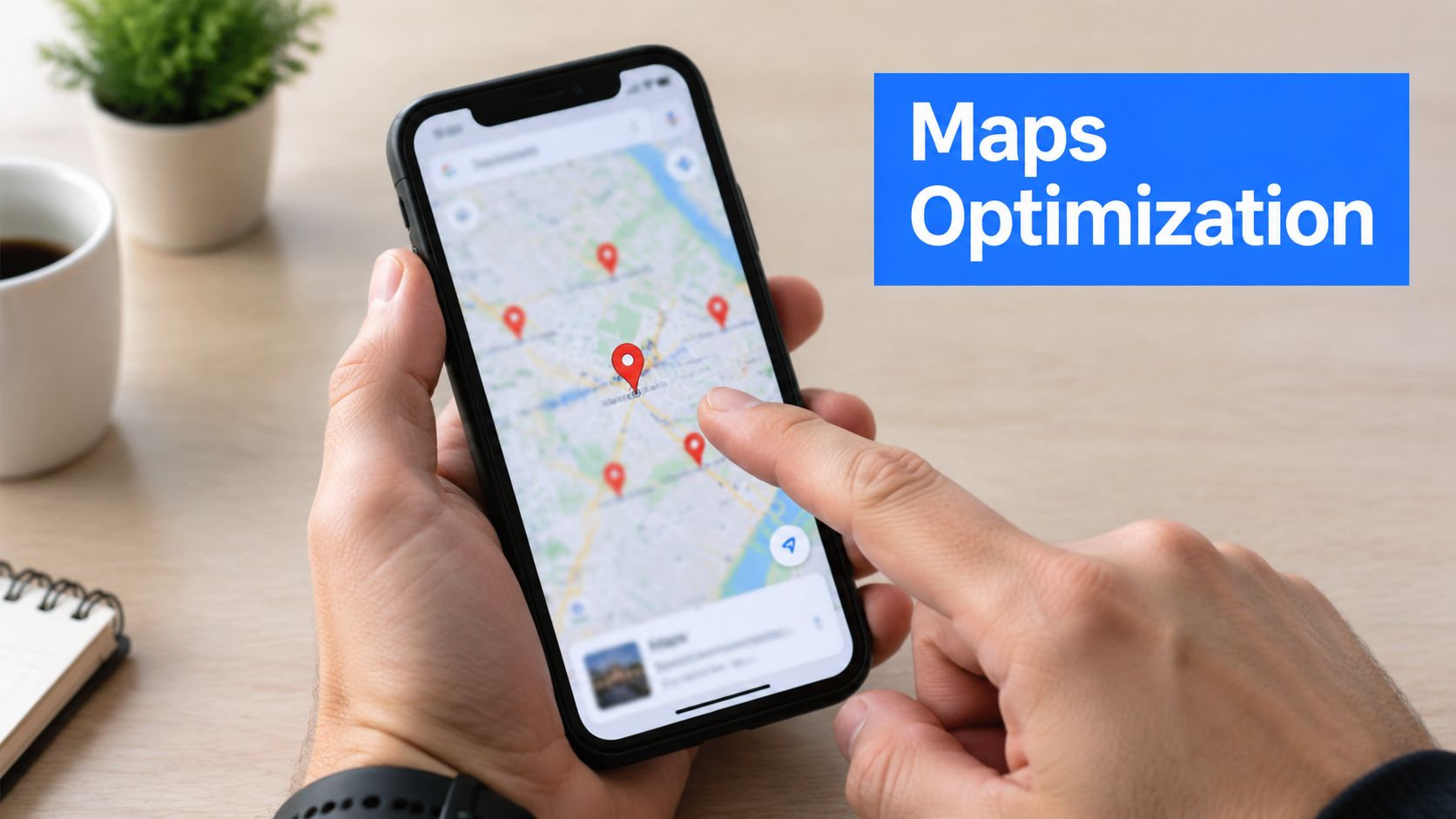
A short explanation of how Maps visibility fits into a local campaign can help business owners understand why profile optimization and ad messaging need to work together.
4. AI-Driven Content Silo Architecture for Conversion-Focused Ad Copy
A caller searching “emergency plumber near me” expects a page about that repair, in the areas the company serves. If the ad promises fast leak response but the click opens a generic plumbing page, relevance drops and the visitor must search again. Content silos prevent that mismatch by connecting one service, one transactional intent, and one service area to a defined conversion path.
Build the page architecture before generating headlines. A dental practice can separate emergency dental care from routine cleanings, then create locally accurate pages for the cities it serves. An HVAC account can keep AC repair, heating repair, and maintenance distinct. Pest control may separate bed bugs, termites, and mosquitoes, while plumbing can divide leak repair, drain cleaning, and pipe replacement.
The ad and destination should agree on the offer:
- Emergency dental ad: Link to emergency-care details, availability, directions, and a direct call or booking option.
- AC repair ad: Show repair-specific proof, service coverage, diagnostic information, and a call CTA.
- Bed bug ad: Address the infestation, explain the treatment process, and avoid unsupported guarantees.
- Drain cleaning ad: Repeat drain-cleaning language across the headline, page title, body copy, and form.
That alignment applies across Google Ads, Facebook campaigns, Local Services Ads, and Maps profiles. A Facebook ad may introduce a seasonal pest service, while a Local Services Ads listing must make the service area and call action immediately clear. AI search systems also benefit from pages that answer a specific service question instead of combining unrelated offerings.
Service-area pages need useful, locally accurate details, not city-name substitutions. LLMs can identify service and location combinations to evaluate, but staff must verify every page. Do not let generated copy invent offices, technicians, response times, certifications, or availability.
Use separate conversion tracking for each silo. Compare calls, forms, and bookings from “emergency AC repair in Phoenix” with “AC maintenance in Phoenix,” then test the headline, description, CTA, and landing-page proof within the same intent group. One transactional promise should lead to one relevant conversion path.
5. High-Intent Keyword Clustering with AI-Powered Ad Copy Differentiation
A homeowner searching “emergency AC repair,” “AC maintenance,” or “AC repair near me” is showing a different need in each query. Treating them as one audience weakens the ad, landing page, and conversion path. Keyword clustering for search campaigns helps separate those intent signals before AI drafts variations.
Start with the service problem, then add the local context. For HVAC, an emergency-repair cluster can use headlines such as Same-Day AC Repair in Phoenix, while a maintenance cluster focuses on seasonal service and scheduling. Plumbing ads might separate Burst Pipe Repair from drain cleaning. Pest-control copy can distinguish bed bug treatment from prevention. Dental campaigns may separate emergency appointments, family care, and pediatric visits. The wording must match verified services, coverage, and availability.
Each cluster should have its own message and destination:
- Urgent problem: State the issue and use a direct call CTA.
- Specific service: Confirm the requested work in the headline and description.
- Routine need: Lead with scheduling, convenience, or ongoing care.
- Location intent: Name the actual city or service area without implying broader coverage.
The same separation applies across Google Ads, Facebook, Local Services Ads, and Maps visibility. A Facebook pest ad can introduce seasonal treatment, while a Local Services Ads profile should make the service area and call action clear. For AI search, service-specific pages give systems a clearer answer than one page combining unrelated offerings.
AI can group related queries and produce first drafts, but staff must review every claim. Generated copy should not invent technicians, offices, certifications, response times, or availability. Track calls, forms, bookings, and accepted estimates by cluster. A smaller emergency group may deliver more qualified calls than a larger routine group, so judge performance by business actions, not click-through rate alone.
6. AI-Powered A/B Testing, Conversion Optimization and Real-Time Bid Adjustment Automation
A local campaign needs a testable business decision, not constant copy changes. For an HVAC company, compare “Call for Same-Day AC Repair” with “Schedule AC Service” and judge the result by qualified calls. A dental campaign might test emergency availability against a general booking prompt. Plumbing, pest control, and other service campaigns can apply the same method to the action that matters, such as booked visits, completed forms, or accepted estimates.
Start by defining that conversion goal and the call-handling process. Then change one message element at a time:
- Headline test: Compare the service phrase with an urgency signal.
- Description test: Compare verified trust proof with a specific customer benefit.
- CTA test: Compare “Call Now,” “Book Today,” and “Request Service,” only when each accurately describes the next step.
- Location test: Compare city wording with neighborhood wording in separate, properly targeted groups.
The landing page must match the winning promise. An ad for burst-pipe repair should open on a plumbing repair page, while a dental emergency headline should lead to an appointment path that supports that request. The same alignment matters across Google Ads, Facebook, Local Services Ads, and Maps visibility. AI search systems also get clearer signals from pages that preserve the tested service and location language.
Statistical discipline prevents premature changes. Technical guidance recommends at least 100 to 200 conversions per ad-copy variant and a 95% confidence threshold before declaring a winner, as explained in this A/B testing and creative benchmarking guidance. Small local accounts may not reach that threshold quickly, so treat early results as directional rather than definitive. Review calls for quality, not only clicks.
Headline results can also vary sharply. In a dataset of more than 500 tests, headlines beat the control 8% of the time, showed no measurable difference 81% of the time, and produced a median lift of 29.1% when they did win, according to The Growth Miner's headline testing case study. Keep tracking clean before allowing automated bid changes.
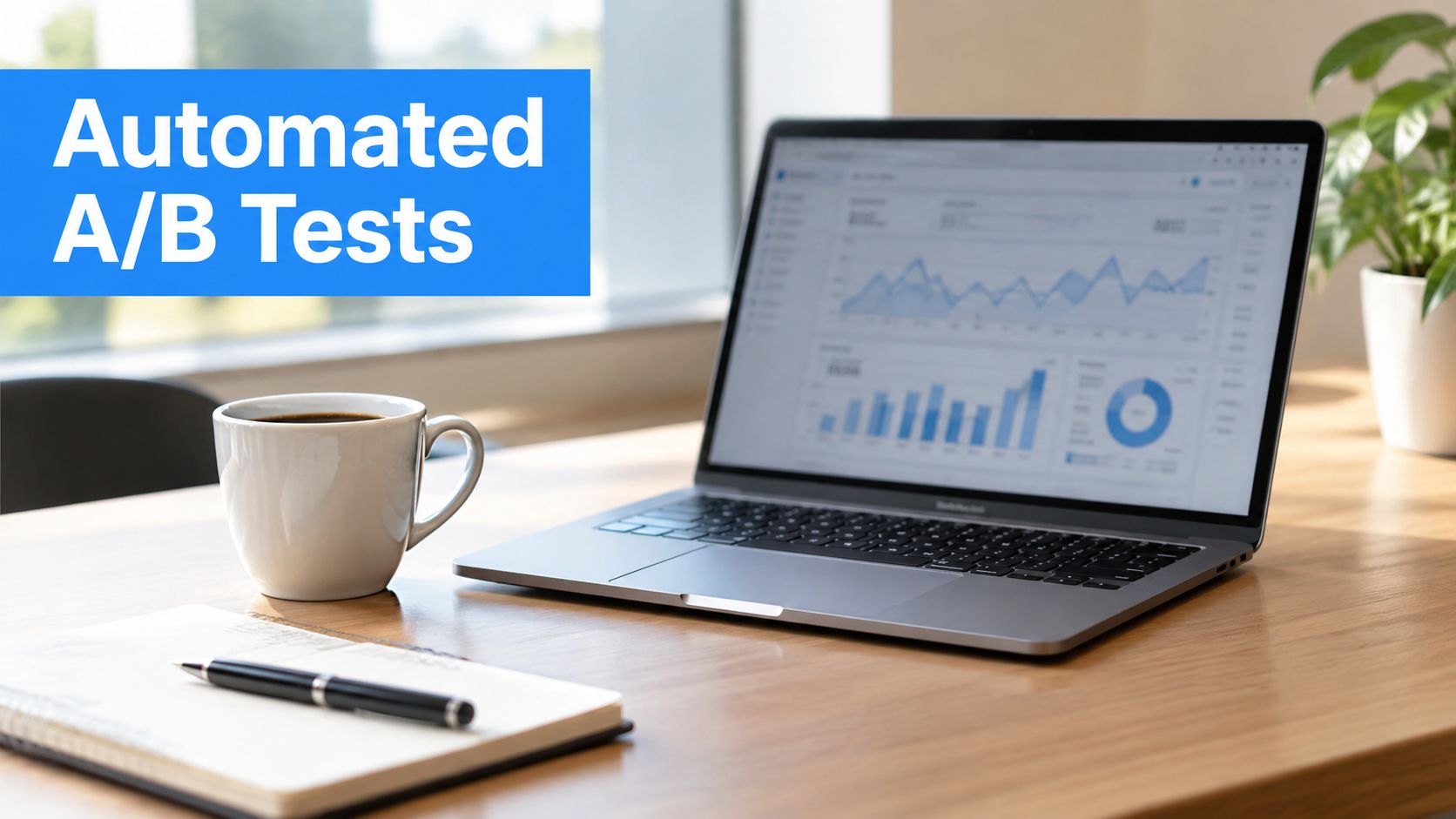
Tools such as ShortGenius AI ad generator can produce variations, but staff must verify intent, compliance, service accuracy, and landing-page alignment before publication. Use qualified calls, bookings, and completed estimates to decide whether automation should continue.
7. Dynamic Local Social Proof Integration in AI-Generated Ad Copy
Trust signals should answer the searcher's immediate concern: can this business handle the problem? Someone searching for pest control may look for licensing, treatment availability, and recent reviews. A dental patient may check emergency access, insurance information, new-patient availability, and whether the practice fits the appointment needed.
AI can organize approved proof points by service area and campaign, but every claim needs human verification. Use current reviews, verified credentials, documented service history, and accurate availability. If a rating, review count, or appointment promise changes, update the ad, landing page, and Google Business Profile rather than leaving stale information in circulation.
Choose proof that matches the search
A pest-control ad can feature a current rating, licensing, and same-day service when each statement is accurate. A dental practice could mention emergency appointments or insurance acceptance when those services are available. An HVAC company might cite local experience or 24-hour service if it can support the claim. A chiropractor can state that it accepts new patients, but should avoid implying a medical outcome it cannot substantiate.
The proof should also fit the platform. Google Search and Local Services Ads can connect a service promise to calls and bookings. Facebook creative can use a verified customer experience, provided the wording does not suggest unsupported personal attributes or guaranteed results. Maps visibility depends on accurate profile information and a reputation process that supports the same message.
Ask satisfied customers for honest feedback, respond professionally, and resolve service problems before increasing the ad's persuasive language. For testimonial-style creative, review how to make UGC ads in 2026 while keeping every customer statement accurate and authorized.
Proof should reduce uncertainty, not manufacture authority. A real rating, specific credential, or clearly stated availability is stronger than an unsupported “best” claim.
Place social proof close to the action. If an ad mentions reviews or local experience, the landing page should show matching evidence and a clear call or booking path. An AI workflow can map approved proof to HVAC repair, plumbing emergencies, pest treatments, dental appointments, and other local services. The business owner must verify every number, credential, testimonial, and promise before launch, then compare qualified calls and completed bookings rather than clicks alone.
8. Semantic Search Optimization in Ad Copy Using Large Language Models
Transactional searches rarely use one fixed service label. A homeowner might search “burst water pipe,” “emergency plumbing,” or “flooding basement.” Those phrases differ, yet each can signal an immediate need for a plumber who can respond locally.
Large language models can group related wording and identify the problem behind each query. Use that analysis to expand coverage without making the ad vague. A plumbing headline might mention burst pipes or water leaks, while the description states “emergency plumbing response” and directs the user to call or request service. The landing page should repeat the service area, explain the next step, and match the promise.
Match meaning without losing the service
Start with the customer's situation, then connect it to the service being sold:
- An HVAC campaign can relate “AC won't turn on,” “no cold air,” and “broken air conditioner” to emergency repair. The headline should name AC repair, while the CTA can prompt a call for same-day availability when that claim is accurate.
- A dental campaign can distinguish wisdom-tooth pain, tooth extraction, and emergency dental care. Separate landing pages may be appropriate when treatment details, compliance requirements, or booking expectations differ.
- Pest-control copy can group bed bugs, insect infestation, and pest problems, while clarifying that inspection and treatment depend on the property and pest involved.
Apply semantic analysis to the assets and destination:
- Headline coverage: Combine the problem, service, and location when space allows.
- Description clarity: Explain what happens after the click, such as a call, quote request, or appointment booking.
- Landing-page relevance: Answer the underlying concern in plain language and show the matching service area.
- Negative keyword decisions: Exclude research, employment, DIY, or unrelated searches that do not produce customers.
- LLM visibility: Keep business facts, services, hours, and locations consistent so AI systems can interpret them accurately. See AI search engine optimization for local businesses for the broader connection between local search, structured content, and AI discovery.
Google Ads combinations, Facebook variations, and Local Services Ads all need independent review. Each headline and description should make sense when paired with other approved assets. Every asset should carry its own service, benefit, or action clearly.
9. Multi-Industry Separation Strategy with Customized AI Ad Copy per Vertical
A template that works for an HVAC emergency rarely works for a dental appointment. The urgency, compliance requirements, customer vocabulary, proof signals, and conversion path all change by vertical. Transactional Marketing's central model is to build separate strategies for HVAC, plumbing, pest control, dental, roofing, electrical, chiropractic, med spa, and other service businesses.
Consider the difference in the promise:
- Dental: “Book Same-Day Appointment | Family & Emergency Dentistry”
- HVAC: “24/7 Emergency AC Repair | Licensed | Free Diagnostic”
- Pest control: “Bed Bug Elimination | Licensed | Same-Day Service”
- Plumbing: “Emergency Pipe Repair | Fast Response | Request Service”
These examples are useful only when the businesses can substantiate the claims. A dental practice must distinguish emergency care from routine cleanings. An HVAC company shouldn't advertise 24-hour response if calls go to voicemail overnight. A pest-control provider must follow applicable advertising and treatment rules, and a plumber should avoid promising a fee policy that isn't offered.
Keep reporting as separate as the messaging
Don't compare every vertical through one blended CTR or lead count. A dental campaign may optimize for booked appointments, while an emergency plumber may care more about answered calls and dispatchable jobs. A pest-control company may need to separate one-time treatments from recurring plans. The measurement model should follow the economics and customer journey of that industry.
AI can speed up research and drafting, but it shouldn't flatten vertical expertise. Use separate keyword groups, content silos, landing pages, profiles, compliance reviews, and conversion definitions. A business collaboration platform for restaurants, such as this loyalty platform for quick-service restaurants, illustrates why industry-specific positioning matters, even though restaurant marketing has different customer actions from local home services.
10. Urgency-Driven Messaging Optimization for Emergency vs. Routine Service Ad Copy
A homeowner searching “emergency AC repair near me” needs a fast route to help. Someone searching “AC maintenance near me” may be comparing appointment times, service plans, and ongoing convenience. Both queries show transactional intent, but the ad must reflect the customer's timeframe and decision.
For emergency campaigns, put the immediate problem, service area, availability, and next action in the headline or first description. “Emergency AC Down? Call Now | 24/7 Service” is appropriate only when the HVAC company supports that availability. A routine variant can use “Schedule AC Maintenance | Ask About Service Plans.” The landing page should repeat the same promise, show the covered area, and make calling or booking easy.
The distinction changes by vertical:
- Dental: Emergency copy can address severe tooth pain and prompt contact. Routine ads should direct patients to cleanings or new-patient scheduling.
- Plumbing: Burst-pipe ads should prioritize immediate calls, while drain-cleaning ads can invite planned appointments.
- Pest control: Bed bug campaigns may promote prompt inspection or treatment. Prevention campaigns can explain recurring service.
- Electrical: Outage messaging needs a direct contact path. Planned panel work needs estimate or consultation language.
- Roofing: An active leak calls for urgent repair. Inspection and replacement ads can support a longer decision cycle.
Use terms such as “emergency,” “now,” “today,” “same-day,” or “urgent” only when operations can meet the expectation. A service-area campaign should also name the city or coverage area when that detail is accurate. Artificial scarcity, vague response promises, and unsupported availability create mismatches between the ad, the landing page, and the call experience. Transactional search intent analysis explains why local phrases such as “roofer near me” and “dentist near me” signal a desire to take local action.
Match the CTA to the job. “Call Now” suits an active emergency, “Book an Appointment” fits a routine dental visit, and “Request Service” works for a planned estimate. In Google Ads, Facebook, Local Services Ads, and Maps-focused campaigns, report emergency calls, booked routine visits, estimates, and dispatchable jobs separately. That separation shows whether urgency improves qualified contacts or merely increases low-value clicks. For AI search and generated ad variants, retain the same operational limits and compliance review before publishing.
Ad Copy Best Practices: 10-Point Comparison
| Strategy | Implementation complexity | Resource requirements | Expected outcomes | Ideal use cases | Key advantages | Key limitations |
|---|---|---|---|---|---|---|
| AI-Powered Transactional Intent Matching for High-Intent Search Terms | High, ongoing AI training and real-time query integration | Search-query data, AI tooling, geo data, monthly updates | Higher conversions and call volume; rapid local ranking gains (30–60 days) | Local, high-intent service searches (HVAC, roofing, dental, pest control) | Matches exact transactional language; reduces non-transactional spend | Requires frequent retraining; industry- and locality-specific |
| LLM-Optimized Geographic Modifier Integration for Local Dominance | Medium, LLM setup plus precise service-area mapping | LLM access, geographic datasets, multi-market testing | Improved local relevance and Maps/top-three visibility per neighborhood | Multi-location services needing natural local phrasing | Natural regional language; scalable multi-city variants | Accuracy depends on mapping precision; needs regular updates |
| Google Maps Optimization Integrated Ad Copy Strategy | Medium, integrates GMB, Maps signals, and ad copy | GMB management, local citations, structured location data | Higher Maps rankings and increased map-driven calls (30–60 days) | Businesses where searches route users to Google Maps | Directly improves Maps prominence and high-intent traffic | Susceptible to algorithm changes; needs correct GMB setup/docs |
| AI-Driven Content Silo Architecture for Conversion-Focused Ad Copy | High, significant upfront planning and structured content build | Content writers, AI content engine, landing pages per silo, linking strategy | Higher Quality Scores, topical authority, improved conversion alignment | Multi-service/location businesses seeking SEO + PPC alignment | Lowers CPC via relevance; prevents keyword cannibalization | Time-consuming; requires ongoing content maintenance and rebuilds |
| High-Intent Keyword Clustering with AI-Powered Ad Copy Differentiation | Medium, cluster analysis and many ad variants | Keyword tools, AI clustering, campaign management resources | Higher CTRs and conversions by matching intent and urgency | Industries with distinct intent segments (emergency vs routine) | Precise messaging and ability to bid per intent cluster | Management complexity increases; intent varies by market/season |
| AI-Powered A/B Testing, Conversion Optimization & Real-Time Bid Automation | High, ML systems, conversion tracking, and bid automation setup | Significant ad spend, conversion pixels, call tracking, ML tools | Continuous ROI improvements; budget shifts to top-performing variants | High-volume advertisers seeking automated, data-driven scaling | Automates winner selection and bid allocation in real time | Needs sufficient traffic/spend and learning time; risk of premature over-optimization |
| Dynamic Local Social Proof Integration in AI-Generated Ad Copy | Medium, review API integration and dynamic template logic | Review platform/GMB APIs, reputation management, automation | Improved CTRs and trust-driven conversions; local differentiation | Trust-sensitive local services (healthcare, home services) | Real-time credibility signals that update automatically | Dependent on rating quality; can backfire with poor reviews |
| Semantic Search Optimization in Ad Copy Using LLMs | Medium–High, LLM semantic tuning and testing | LLMs, semantic analysis tools, ongoing refresh | More resilient to phrasing variation; captures related queries | Services with diverse terminology for same problem (plumbing, HVAC) | Future-proofs copy; captures conceptual intent beyond keywords | Requires advanced tools; may miss niche jargon without tuning |
| Multi-Industry Separation Strategy with Customized AI Ad Copy per Vertical | Medium, separate strategies and campaigns per vertical | Vertical specialists, tailored creatives, separate tracking/KPIs | Higher resonance and conversion per industry | Agencies or businesses serving multiple distinct industries | Avoids one-size-fits-all; improves relevance and compliance per vertical | Higher operational overhead; needs deep industry knowledge |
| Urgency-Driven Messaging Optimization for Emergency vs. Routine Services | Low–Medium, urgency detection plus separate templates | Urgency signal data, operational capacity (24/7), separate creatives | Significantly higher conversions for emergency searches; enables premium bids | Emergency response services (HVAC, plumbing, dental, electrical) | Captures highest-intent customers and supports premium bidding | Business must deliver on emergency promises (staffing, margins) |
Turn Strong Copy Into Local Calls
Good ad copy starts with campaign structure, not clever wording. Separate campaigns by industry, service, urgency, and service area. HVAC emergency repair needs its own message from HVAC maintenance. A dental emergency campaign should not share a landing page with routine cleanings. A pest-control company should separate bed bugs, termites, mosquitoes, and prevention when customers use different language and expect different outcomes.
Next, map transactional keywords to the locations the business can serve. Include phrases such as “roofer near me,” “dentist near me,” “air conditioning repair near me,” or city and neighborhood modifiers when they reflect real demand and legitimate coverage. Transactional Marketing is named for this focus. The objective is to help service businesses appear for searches made by people who are ready to spend money locally, not just collect broad informational traffic.
Write urgency-specific headlines and CTAs. Use the exact service in the opening message, add a location or service-area qualifier where appropriate, state one credible benefit or trust signal, and make the next step unmistakable. Call, book, schedule, and request service each imply a different action, so choose the one the business can fulfill promptly.
Then connect every ad to its supporting assets. The landing page should repeat the service and location, answer the searcher's immediate concern, show relevant proof, and make calling or booking easy. The Google Business Profile should contain accurate categories, services, hours, contact details, photos, and review information. Google's local visibility framework centers on relevance, distance, and prominence, so ad copy should support the broader local presence rather than operate as a disconnected promotion.
AI and LLM tools can help identify search patterns, cluster intent, generate location variations, organize content silos, and draft asset combinations. They can't verify whether a company is open overnight, serves a particular neighborhood, offers a free diagnostic, accepts a particular insurance plan, or can provide same-day treatment. Every claim needs a human review before publication.
Testing should follow a disciplined sequence. Define calls, forms, appointments, estimates, city, and service as conversion dimensions. Test one variable at a time, allow enough qualified conversion volume for a meaningful decision, and review results by location and intent cluster. Headline experiments can produce large gains when they win, but many produce no measurable difference, so don't treat every early fluctuation as a breakthrough.
Transactional Marketing can support this process through transactional search visibility, Google Maps optimization, Google Business Profile setup and management, AI-driven content silos, paid campaigns, website development, and transparent reporting. Its dashboard tracks keyword timelines by service city, map-ranking heat maps, Search Console queries, and traffic, with biweekly reporting. The company's contract-free model is designed for service businesses that need a focused local strategy rather than a generic marketing package.
The standard remains practical: promise only what the business can deliver, send each searcher to the right page, make the phone call or booking simple, and report the actions that create revenue. That's how ad copy best practices become a local growth system instead of a collection of attractive headlines.
Transactional LLC helps home service, pest control, dental, chiropractic, med spa, and other local businesses target transactional searches, improve Google Maps visibility, and connect AI-driven content silos with conversion-focused campaigns. Visit Transactional LLC to discuss a service-area strategy built around accurate ad copy, measurable calls and bookings, and transparent local reporting.